Transforming Movement: More Than Just Exercise

When we think about exercise, we often think about getting fitter, losing weight, building strength or looking after our physical health.

But movement can offer us so much more than that.

What if going for a walk wasn’t just about getting your steps in, but about clearing your head after a difficult day?

What if ten minutes of stretching wasn’t “not enough”, but exactly what your body needed?

And what if movement wasn’t something you had to force yourself to do because you ate too much or missed a workout?

For me, movement is about much more than exercise. its about how it makes me feel.

When You’re Stressed, Your Body Feels It Too

Have you ever had one of those days where your mind just won’t switch off?

Your thoughts are racing, your shoulders feel tense, you’re tired but wired, and even when you finally sit down, you don’t feel relaxed.

Stress doesn’t just affect our minds. We can feel it physically too.

This is one reason movement can be so helpful.

Something as simple as going for a walk can give you the chance to step away from whatever has been overwhelming you. You change your surroundings, get some fresh air and give your mind something else to focus on.

You don’t need to run five miles or complete an intense workout.

Sometimes, a gentle walk around the block is enough to change how you feel.

And I think we often forget just how powerful those simple things can be.

You Don’t Have to Exercise to Exhaustion

There can be so much pressure around exercise.

We’re constantly told to push harder, burn more calories, get more steps and work towards the next goal.

But more isn’t always better.

If you’re already exhausted, stressed and running on empty, another punishing workout might not be what you need.

Maybe you need to slow down.

Maybe you need some gentle yoga.

Maybe you need to walk in the sunshine.

Maybe you need to dance around the kitchen while making dinner.

Movement doesn’t have to look a certain way to count.

It doesn’t matter whether you’ve been to an expensive gym or walked around your local park. Moving your body can still be a positive act of self-care.

Movement Can Help You Feel More Grounded

There is a reason you can sometimes return from a walk feeling completely different from when you left.

Physical activity can support our mood and help us manage stress. But there’s something else about movement that I particularly love.

It can help us get out of our heads and back into our bodies.

We’re often thinking about yesterday, worrying about tomorrow and trying to keep up with everything that needs doing.

Movement can bring us back to the present moment.

When you’re walking, you might notice the trees, the weather, the sounds around you, your breathing or simply the feeling of your feet touching the ground.

You don’t have to turn it into a mindfulness exercise.

Just being outside and paying attention to what’s around you can be surprisingly grounding.

What If You Don’t Feel Motivated?

This is something I hear all the time:

“I know I should exercise, but I just can’t motivate myself.”

And honestly, I don’t think you always need motivation.

Sometimes you just need to make the first step really small.

Don’t tell yourself you’re going to complete a one-hour workout.

Tell yourself you’re going to put your trainers on and walk for ten minutes.

If you want to carry on, great.

If you don’t, that’s okay too.

Ten minutes still counts.

And sometimes, once you’ve started moving, you’ll naturally feel like doing a little more.

The hardest part can simply be getting started.

Movement Can Support Better Sleep

Sleep, stress, movement and our overall wellbeing are closely connected.

When we’re stressed, sleep can suffer. When we don’t sleep well, we can feel tired and unmotivated. And when we’re exhausted, exercise can be the last thing we want to do.

It can become a cycle.

Regular movement can be one piece of the puzzle, helping us stay active during the day and supporting healthier sleep habits.

Again, it doesn’t need to be extreme.

A walk after dinner.

A few gentle stretches.

A little movement during the day when you’ve been sitting for too long.

The aim isn’t to create another thing on your “must do” list.

It’s about finding small things that support you.

Let’s Stop Thinking About Exercise as Punishment

This is something I’m particularly passionate about.

Exercise shouldn’t be a punishment for eating a piece of cake.

You don’t need to “burn off” your dinner.

You don’t have to earn your food.

Food and movement don’t need to be tools for guilt or punishment.

Your body needs food for energy and nourishment. It also benefits from movement for strength, mobility, fitness and overall health.

These things can work together beautifully when we take guilt out of the equation.

Instead of thinking:

“I need to exercise because I ate too much.”

Try:

“I’m going to move because I want to look after my body.”

That small change in language can completely change how we think about exercise.

Find Something You Actually Enjoy

If you hate running, you don’t have to run. There are so many ways to move your body that you will enjoy:

  • Walking
  • Swimming
  • Cycling
  • Dancing
  • Gardening
  • Pilates
  • Yoga
  • Strength training
  • Tennis
  • Hiking
  • Fitness classes

Or simply put your favourite music on and dance around the house.

There is no single “best” form of exercise.

The best movement for you is something that fits into your life and that you’re actually going to want to do.

There’s no point following someone else’s perfect workout routine if you dread every minute of it.

Find what works for you.

Don’t Underestimate Walking

Walking is one of the simplest ways to add more movement to your day.

You don’t need special equipment.

You don’t have to be particularly fit.

You can do it alone, with a friend, with the family or even while listening to a podcast.

Or you can leave your headphones at home and simply enjoy some quiet.

One of my favourite things about walking is the space it creates.

Space to think.

Space to breathe.

Space to listen.

Or space to have absolutely nothing playing in your ears.

Just you, your thoughts and the world around you.

If you’re having a difficult day, try going outside for ten minutes before deciding that the day is a write-off.

You might be surprised by how much better you feel afterwards.

Movement and Nutrition Go Hand in Hand

As a nutrition and wellness coach, I also think it’s important to talk about food when we’re talking about movement.

Your body needs fuel.

If you’re constantly restricting food, skipping meals or trying to exercise as much as possible while eating as little as possible, you’re not necessarily supporting your wellbeing.

You need energy to move, nutrients to support your body and enough food to recover.

Eating well isn’t about being perfect.

It’s about giving your body what it needs most of the time.

Think about nourishing meals with plenty of variety — protein, whole grains, fruit and vegetables, healthy fats and plenty of fluids.

And please remember:

You don’t need to earn your food.

You are allowed to eat because you’re hungry.

You are allowed to enjoy food.

And you are allowed to move your body because it feels good.

So, How Much Movement Do You Really Need?

There isn’t one perfect amount of movement that works for everyone.

Your starting point matters.

Your health matters.

Your lifestyle matters.

And what feels realistic for you matters.

If you’re currently doing very little, you don’t need to suddenly decide you’re going to exercise for an hour every day.

Start somewhere manageable.

Ten minutes.

A short walk.

A few stretches.

Taking the stairs.

Getting up from your desk regularly.

Walking while you’re on the phone.

Those small moments of movement add up.

And once they become part of your routine, you can build from there if you want to.

Think About How You Want to Feel

Rather than focusing only on what exercise might change about your body, I’d encourage you to think about how you want to feel.

Do you want more energy?

To feel stronger?

To sleep better?

To feel less stressed?

To clear your head?

To feel more comfortable and confident in your body?

To spend more time outside?

Your answer might help you decide what type of movement feels right for you.

Because wellbeing isn’t just about how we look.

It’s about how we live and feel in our bodies every day.

Start Small

If movement hasn’t been part of your routine for a while, please don’t feel that you need to completely overhaul your life.

Start small.

Put your shoes on.

Go outside.

Walk around the block.

Stretch for five minutes.

Put some music on.

Do something that makes you feel good.

And tomorrow, come back to it again.

You don’t need to be perfect.

You just need to keep finding ways to look after yourself.

A Little Reminder From Me

I think sometimes we make looking after ourselves far more complicated than it needs to be.

We don’t always need another challenge, another diet or another intense workout programme.

Sometimes we need to eat a nourishing meal, get outside, move our bodies, have a good night’s sleep and give ourselves a little breathing space.

That’s what wellbeing means to me.

It’s not about doing everything perfectly.

It’s about making small choices, regularly, that help you feel more like you.

So next time you’re feeling stressed, tired or stuck in your head, try moving your body.

Not because you have to.

Not because you need to burn calories.

But simply because you deserve to feel good.

From the inside out. 🌿


I’d love to hear from you…

What’s your favourite way to move your body when you need a little lift?

Is it a walk, yoga, swimming, dancing, the gym — or something completely different?

I’d love to know.

Strength Training Made Easy for Everyone

If you’ve never lifted weights before, the gym can feel like a pretty intimidating place.

You walk in and there are people lifting weights that look ridiculously heavy, someone is making a noise on a machine you’ve never seen before, and you’re standing there wondering whether you’re even holding the dumbbells correctly!

If that sounds familiar, don’t worry, we all have to start somewhere.

You don’t need to know everything before you begin. You don’t need to be particularly strong. And you certainly don’t need to be lifting huge weights.

You just need to start with something that feels manageable and learn as you go.

As a health, wellness and nutrition coach, one of the things I really want people to understand is that strength training isn’t just for bodybuilders or people who spend five days a week in the gym.

Whether you’re in your 20s, 40s, 50s, 60s or beyond, getting stronger can make a real difference to everyday life.

And the best part? you can start very simply.

Why should you lift weights?

Let’s start with the obvious question.

Why?

Well, strength training isn’t just about bigger muscles or looking “toned”, It’s about being able to do things more easily.

Carrying your shopping.

Picking up your suitcase.

Lifting something onto a shelf.

Getting up from the floor.

Climbing the stairs without feeling completely exhausted.

These are the things that matter in everyday life.

Resistance training can help build and maintain muscle strength, and it also has benefits for bones, balance and physical function. The NHS recommends doing muscle-strengthening activities that work the major muscle groups on at least two days a week.

And there’s something else I really like about strength training. You start noticing what your body can do.

Maybe you couldn’t manage a particular weight a few weeks ago, and now you can.

Maybe you can do more repetitions.

Maybe carrying the shopping suddenly feels much easier.

Those little wins can be incredibly motivating.

Do I need to join a gym?

Not at all.

If you enjoy going to the gym, brilliant.

But if the idea of a gym makes you want to run in the opposite direction, you can still get started at home.

You can use your body weight, resistance bands, dumbbells or kettlebells.

You don’t need a room full of equipment.

In fact, I’d rather you started with a couple of pieces of equipment you will actually use than spend hundreds of pounds buying things that end up gathering dust.

A pair of dumbbells and a resistance band can give you plenty to work with when you’re starting out.

So, what weights should I start with?

This is where I think beginners can get themselves into a bit of a pickle.

You don’t need to know your “maximum weight”.

And please don’t choose a weight because somebody next to you is lifting it.

Your starting weight is your starting weight.

Choose something that allows you to perform the exercise properly while still making the last few repetitions feel challenging.

If you’re swinging the dumbbell around, holding your breath or completely losing your technique just to finish the set, it’s too heavy.

On the other hand, if you’ve finished your set and honestly feel like you could have carried on for another 20 repetitions, you might be ready to increase the challenge.

Starting lighter isn’t a sign that you’re weak.

It’s simply how you learn.

And believe me, you will have plenty of opportunities to lift heavier later.

Start with exercises you recognise

When you’re new to weights, you really don’t need a complicated programme.

I’d much rather you became comfortable with a handful of basic movements than tried 15 different exercises and ended up feeling overwhelmed.

Here are some good places to start.

1. Squats

You’ve probably done a squat without even thinking about it.

Every time you sit down on a chair and stand back up, you’re doing a version of the movement.

Squats work your legs and glutes and can be performed with or without weights.

Once bodyweight squats feel comfortable, you could hold a dumbbell or kettlebell close to your chest.

A good starting point: 2 sets of 8–12 repetitions.

Don’t worry if your squat doesn’t look exactly like somebody else’s.

Work within a comfortable range and gradually improve.


2. Dumbbell Rows

Rows are one of my favourite exercises for beginners because they work the upper back and arms without requiring a complicated movement.

You’ll need a dumbbell and something sturdy to support yourself on.

Place one hand on a bench or stable surface, keep your back comfortable and pull the dumbbell towards your body.

Then lower it slowly.

Don’t yank the weight upwards.

Think about pulling your elbow backwards and keeping the movement controlled.

Try 8–12 repetitions on each side.


3. Shoulder Press

This one works your shoulders and arms.

You can do it sitting or standing.

Hold a dumbbell in each hand around shoulder height and press the weights upwards.

Then lower them slowly.

One thing I see quite often is people leaning backwards to try to get the weight up.

Don’t do that.

If you have to throw your whole body into the movement, the weight is probably too heavy.

Drop the weight, concentrate on your technique and build from there.


4. Bicep Curls

A classic for a reason.

Stand or sit with a dumbbell in each hand and keep your elbows close to your sides.

Slowly bend your elbows and bring the weights towards your shoulders.

Then lower them again.

The lowering part matters too, so don’t just let the weights drop.

And no swinging!

If you have to rock backwards to get the dumbbells up, it’s time to go a little lighter.


5. Glute Bridges

You don’t need to stand up to do a strength exercise.

Glute bridges are a simple way to work your glutes and the muscles around your hips.

Lie on your back with your knees bent and your feet flat on the floor.

Push through your feet and gently lift your hips.

Pause at the top, then lower yourself back down.

It looks simple.

It doesn’t always feel simple after a few repetitions!

Start with around 10–12 repetitions and build from there.


6. Lunges

Lunges are brilliant for your legs and glutes, but they can be a little challenging if you’re new to exercise because they also require balance.

If you’re not comfortable with them, hold onto something sturdy.

You don’t need to go very deep either.

Start with a smaller movement and gradually build your strength and confidence.

And if lunges simply don’t feel good for your body, that’s okay.

There is always another exercise you can use instead.

Exercise shouldn’t feel like punishment.


7. Chest Press

The dumbbell chest press works your chest, shoulders and arms.

If you’re doing this at home, make sure you have a safe and stable setup before attempting it.

If you’re completely new to the exercise, it’s worth having someone qualified show you the movement first.

The basic idea is to press the dumbbells upwards and then slowly lower them again.

Don’t worry about how much you’re lifting.

Learn the movement first.

The weight can come later.


8. Plank

Fnally, the humble plank.

No weights required, but don’t let that fool you!

A plank works your core and asks your shoulders, arms, back and legs to help stabilise your body.

You don’t need to hold it for five minutes.

If you’re starting out, 10–20 seconds can be plenty.

As you get stronger, gradually increase the time.

And if a full plank is too difficult, put your knees down.

That isn’t cheating.

It’s modifying the exercise to suit your current level.

How many repetitions should I do?

This is one of those questions where you’ll find lots of different answers online.

For many beginner strength exercises, 8–12 repetitions is a useful starting range, and the NHS recommends this range as part of its strength-training guidance.

But please don’t get hung up on the number.

If you’re brand new to exercise and can only manage six good repetitions, start there.

If 12 feels comfortable and you can maintain good form, you can gradually make the exercise harder.

The important thing is that the exercise challenges you without turning into a battle with the dumbbells.

How often should I lift weights?

You don’t need to lift weights every day.

For general health, UK guidance recommends muscle-strengthening activities on at least two days each week, covering the major muscle groups.

For someone just starting out, two full-body strength sessions each week can be a very sensible place to begin.

For example:

Monday: Strength workout

Tuesday: Walk

Wednesday: Rest or gentle movement

Thursday: Strength workout

Friday: Walk or another activity you enjoy

Weekend: Get outside, move your body and enjoy yourself!

It doesn’t need to be complicated.

And what about cardio?

You don’t have to choose between strength training and cardio.

Both are useful.

UK guidance recommends adults aim for around 150 minutes of moderate-intensity activity each week, or 75 minutes of vigorous activity, alongside muscle-strengthening work on at least two days.

But don’t look at that number and think, “There’s no way I can do that.”

Start where you are.

A brisk walk counts.

Cycling counts.

Dancing counts.

Gardening can count as physical activity too.

If you’re currently doing very little, adding a couple of short walks and two strength sessions is already a positive step.

You can build from there.

Do I need to warm up?

I’d recommend spending a few minutes getting your body moving before you start lifting.

It doesn’t have to be complicated.

You could walk around for a few minutes, march on the spot, do some gentle squats and shoulder movements, and then practise your first exercise with a very light weight.

The NHS recommends starting gradually and building up over time, particularly if you’re new to exercise.

Think of your warm-up as getting your body ready rather than something you need to spend ages doing.

What does “progressive overload” actually mean?

This phrase sounds very technical, but it’s actually quite straightforward.

It means gradually making your training more challenging.

Perhaps you start doing squats with a 5kg dumbbell.

After a few weeks, that same weight doesn’t feel quite so difficult.

You might then move to 6kg.

Or perhaps you keep the same weight but manage more repetitions.

You could also slow the movement down or move to a slightly harder variation.

You don’t need to make things harder every single workout.

Just keep giving your body a reason to adapt.

“But I don’t want to get bulky…”

I hear this one a lot, especially from women.

Lifting weights does not mean you’re suddenly going to wake up one morning looking like a bodybuilder.

Building a significant amount of muscle takes time and consistent training.

For many people, strength training is simply about maintaining muscle, becoming stronger and feeling more capable.

And personally, I think we should be celebrating that.

Strong is not something to be afraid of.

What should I eat if I’m lifting weights?

This is where your training and nutrition comes together. Your body needs enough energy and nutrients to support your activity and recovery. One of the simplest things you can do is make sure you’re including a source of protein regularly throughout your day.

  • Greek yoghurt
  • Tofu
  • Beans
  • Lentils
  • Cottage cheese
  • Milk
  • Nuts and seeds

Also please don’t forget adding carbohydrates to your diet. Carbohydrates are an important source of energy for exercise.

There is no need to be frightened of potatoes, rice, oats, pasta or bread because you’ve started lifting weights.

Then you’ve got your fruit and vegetables, healthy fats and fluids.

It doesn’t need to be fancy.

Nutrition is about getting the basics right consistently.

Do I need a protein shake?

No you don’t! You can absolutely get all the protein you need from ordinary food.

Protein shakes can be convenient, particularly if you’re busy or struggle to get enough protein from meals, but they’re not compulsory.

How long should a weights workout take?

Please don’t fall into the trap of thinking you need to spend an hour and a half in the gym. Trust me you don’t have to.

A focused 30-minute workout can be incredibly useful, even 20 minutes of exercise a is worth doing. If you lead a a busy lifestyle and only able to fit 10 mins of exercise, that can still male a difference.

One of the biggest mistakes I see people making is creating unrealistic exercise routine. Stop trying to be perfect and giving up when life becomes busy. Start small and create reallistic routine that fits around your lifestyle.

A few beginner mistakes to avoid.

Stop going too heavy, and ignoring the technique, there is no rush. Learn the the movement correctly first and overtime you will get stronger.

Stop comparing yourself to others, everyone is different. Some people have been training for a longer time and have more experience, whilst you you are new to exercise and a begginger.

It’s very important to constantly change you workouts and keep them varid, so you don’t get bored, which would easily end up in quitting altogether.

Let me bust some of the myths we are told about what a good workout should look like and feel:

Feeling exhausted aftr a workout.

You doesn’t have to leave crawling out of the gym.

You don’t need to be incredibly sore the next day either.

Soreness isn’t a measure of success, progress is.

A simple starting point

So, If you’re now thinking, “Okay, but what am I actually supposed to do?”, here’s a simple paln to get you started.

Two full-body sessions each week

Workout 1

  • Squats — 2 sets of 8–12
  • Dumbbell rows — 2 sets of 8–12 each side
  • Glute bridges — 2 sets of 10–12
  • Shoulder press — 2 sets of 8–12
  • Plank — 2 short holds

Workout 2

  • Supported lunges — 2 sets of 8–10 each side
  • Chest press — 2 sets of 8–12
  • Glute bridges — 2 sets of 10–12
  • Bicep curls — 2 sets of 8–12
  • Plank — 2 short holds

Always have a rest day between your strength sessions, this will help your body to recover and make every workout effective.

If you can’t do the exact number of repetitions that I have mentioned above straight away., don’t worry jsut start with what you feel comfortable with and slowly increase the reps.

You don’t need to be fit before you start

Th most important thing I want you to take away from this article is that:

You don’t have to get fitter before you start exercising.

You don’t have to lose weight first.

You don’t have to know what every machine in the gym does.

And you certainly don’t need to feel confident before you enter the gym, it will only come with repeatedly going to the gym.

It’s perfectly normal if you don’t know how to use the gym equipment just ask one trainers.

Look for the little wins

Sometimes progress isn’t obvious when you look in the mirror. I promise if you stick to a routine overtime you will see progress in the mirror. At the beginning th following are also wins and should not be underestimated:

Instead, look at what you’re able to do, if your clothes fit better

Perhaps you can get up from the floor more easily.

Perhaps you’re using a heavier dumbbell than you were six weeks ago.

Perhaps you’re simply feeling more confident in the gym.

You have seen improvement in your overall body and mental health

Final thoughts

If you’ve been thinking about starting weight training but haven’t quite found the confidence to begin, I hope this helps you and shows you that it doesn’t have to be complicated.

You don’t need a fancy expensive gym.

You don’t need to lift heavy weights to have a good workout.

You don’t need a perfect diet or weight or body shape.

You won’t or don’t need to become an expert overnight. you will learn with a time and become an expert.

Just start with the basic: show up regularly, ask for help, Eat well and Give yourself time to recover.

The current UK guidance is clear that strength work is an important part of staying healthy, with adults encouraged to include muscle-strengthening activities at least twice a week.

A note from me

If you haven’t exercised for a while, or you have a medical condition, injury or concerns about starting a new exercise programme, Please speak with your GP.

And if you’re completely new to weight training, getting some hands-on guidance from a suitably qualified fitness professional can be a great investment in your confidence and technique.

8 Weight-Free Exercises to Tone Your Arms.

Want to work on your arms but don’t have any weights at home?

Don’t worry. I got you covered. You really don’t need a cupboard full of gym equipment to get started. There are plenty of exercises you can do using just your own body weight, and some of them are surprisingly challenging!

As a Wellness and Nutrition coach, I always encourage my clients to keep their workout routine simple and realistic. If an exercise routine feels complicated, expensive or like something you have to spend hours doing, it’s much harder to stick with it.

So, if you’re looking for a few easy exercises to add into your week, here are eight worth trying.

What does “toning” actually mean?

We hear the word toning all the time, especially when it comes to arms, stomachs and legs.

Technically, there’s no special exercise that “tones” fat from one particular part of your body. You can strengthen and build muscle in a particular area, but where your body stores and loses fat is influenced by things such as genetics, hormones and your overall lifestyle. That’s why I prefer to focus on getting stronger and feeling good in your body, rather than chasing a particular look.

  1. Arm CirclesLet’s start with something really simple. Arm circles are great as a warm-up, but don’t dismiss them just because they look easy. After a while, you may start to feel your shoulders working.Stand comfortably with your feet around hip-width apart.Stretch your arms out to the sides and start making small circles. Gradually make them a little bigger if that feels comfortable.After 20–30 seconds, change direction.Try: 20–30 seconds in each direction.My tip: Keep your shoulders relaxed. There’s no need to shrug them up towards your ears.
  2. Standing Front RaisesYou don’t need dumbbells to practise controlled arm raises.This is a nice, simple movement for your shoulders and can easily be done while you’re waiting for the kettle to boil!Stand tall with your arms by your sides.Keeping your core gently engaged, slowly raise both arms in front of you. Lift them to a comfortable height and then slowly lower them again.Try not to swing your arms. The slower you go, the more you’ll notice the muscles working.Try: 2–3 sets of 10–15 repetitions.If both arms feel too tiring, then work one arm at a time.
  3. Standing Lateral RaisesThis time, you’re taking your arms out to the sides.Again, the temptation is to rush through the movement, but try not to. Controlled movements are your friend here.Stand tall with your arms by your sides.Keeping a slight bend in your elbows, slowly lift your arms out to the sides.You don’t have to get them perfectly level with your shoulders. Go as far as feels comfortable and then lower them slowly.Try: 2–3 sets of 10–15 repetitions.Remember: If you notice yourself shrugging your shoulders, take a little break and reset.
  4. Wall AngelsThis is one of those exercises that looks incredibly simple until you actually try it!Wall angels work your shoulders and upper body while also encouraging good posture and shoulder movement.

How to do them

Stand with your back against a wall.

Place your arms so your elbows are bent, roughly like you’re making a cactus shape with your arms.

Slowly move your arms upwards and then bring them back down.

Don’t worry if your arms don’t stay completely flat against the wall. Everyone has different mobility.

The aim is to move comfortably and with control, not to force your body into a position it doesn’t like.

Try: 2 sets of 8–12 repetitions.

  1. Plank Shoulder TapsNow we’re making things a little harder.Plank shoulder taps are great because your arms and shoulders are working, but your core has to work hard too.Start in a high plank position with your hands underneath your shoulders.Keep your body as still as you can.Lift one hand and gently tap the opposite shoulder. Put your hand back down and repeat on the other side.The trick is trying not to rock your hips from side to side.Try: 6–10 taps on each side for 2–3 sets.

New to planks?

Put your knees on the floor.

There’s absolutely nothing wrong with modifying an exercise. In fact, I’d much rather see you doing an easier version with good control than struggling through a harder version with poor form.

  1. Downward Dog to PlankThis is a lovely full-body movement and a good one to include if you don’t want your workout to feel like you’re simply moving your arms up and down.

How to do it

Start in a high plank.

Push your hips back and up into a downward-facing dog position.

Take a breath, then slowly move forwards into your plank again.

Keep the movement steady and controlled.

Try: 8–12 repetitions.

If your wrists don’t enjoy this position, take a break and try another exercise instead.

  1. Push-UpsI couldn’t write an article about strengthening your arms without mentioning the one and only push-ups.They’re a classic for a reason.Push-ups work your chest, shoulders and triceps, while your core helps keep your body stable.But here’s something I want you to remember: you don’t have to do a full push-up.

Try this instead

If you’re a beginner, start with wall push-ups.

Once those become easier, move to an incline push-up using a sturdy worktop or bench.

From there, you can gradually work towards doing them from the floor.

For a standard push-up

Start in a high plank position.

Bend your elbows and slowly lower your body towards the floor, keeping your body in a strong, straight position.

Then push yourself back up.

Try: 2–3 sets of 5–12 repetitions.

And if you can only manage three good ones, that’s three more than you could do before!

  1. Triceps DipsTriceps dips can be done using a sturdy chair, although you do need to make sure it is completely stable and won’t move underneath you.

How to do them

Sit on the edge of the chair and place your hands beside your hips.

Carefully move your bottom just beyond the edge of the chair.

Keep your feet on the floor and bend your elbows slightly to lower yourself.

Then press through your hands to come back up.

You don’t need to go very low.

In fact, I’d recommend starting with a small movement and seeing how your shoulders feel.

Try: 2 sets of 6–10 repetitions.

If dips don’t feel comfortable for your shoulders, leave them out. There are plenty of other ways to work your triceps.

A Simple Arm Workout You Can Do at Home

If you’re wondering how to put all of these exercises together, I have put together a simple routine as a starting point.

Warm-up

Spend around two minutes doing:

Arm circles

Shoulder rolls

Marching on the spot

Then work through the exercises below:

ExerciseAmount
Arm circles30 seconds
Standing front raises10–15
Wall angels8–12
Plank shoulder taps6–10 each side
Push-ups5–12
Triceps dips6–10

Have a rest whenever you need one.

Start with one round if you’re new to exercise and when that starts to feel comfortable, try doing two rounds.

Remember, you don’t need to finish the workout dripping with sweat for it to have been worthwhile.

How often should you do arm exercises?

For most people, two strength sessions a week is a sensible place to start.

You don’t need to train your arms every single day.

Your muscles need time to recover, particularly when you’re doing exercises that challenge them.

And as you get stronger, don’t feel that you have to keep adding more and more repetitions.

Instead, you can make the exercise itself a little harder.

For example, you might:

Add a few more repetitions

Slow the movement down

Try a more challenging variation

Increase your range of movement

Eventually add resistance bands or weights

That’s how you keep giving your body a reason to adapt.

What about nutrition?

This is the bit that often gets overlooked.

If you’re exercising because you want to become stronger and feel healthier, then your nutrition matters.

Your body needs fuel to exercise and nutrients to help recover.

Try to include a good source of protein in all your meals. This could be Greek yoghurt, tofu, beans, lentils or another protein-rich food you enjoy. It doesn’t have to be overcomplicated or expensive.

Don’t forget your carbohydrates.

Foods such as oats, potatoes, rice, wholegrains and fruit aren’t something you need to be afraid of. They will provide you with valuable energy, particularly when you’re active.

Then equally important are your fruit, vegetables and healthy fats.

What most people don’t pay attention to is hydration, which is key for a healthy body. If you are not fully hydrated, you will not see the results from your workout and nutrition.

You don’t need to eat a fancy or expensive diet to achieve proper nutrition. I always coach my clients about the 80/20 rule.

You don’t need a gym to get stronger

One of the things I love about bodyweight exercises is how accessible they are. You can do many of them at home, when you’re travelling, or even when you only have 10–15 minutes to spare. This is how I started my journey.

A little note from me

If you’re new to exercise, have an injury or experience pain while doing any of these movements, please get appropriate professional advice from your GP before continuing.

Exercise should challenge you, but it shouldn’t hurt.

The Power of Protein: Why It Matters for Your Health Beyond the Gym.

When you hear the word protein, what comes to mind? For many people, it is gym workouts, fitness goals, or building muscle. But protein is not just for athletes or people who spend hours in the gym. It is something our bodies need every day to stay strong, healthy, and supported.

Following on from my previous blog about muscle mass, I wanted to explore the important role protein plays in our overall wellbeing.

At Inside Out Wellbeing, I believe looking after our health starts with understanding our bodies and giving them the care they need. Nutrition is not about strict rules or trying to be perfect — it is about making choices that help us feel good, have energy, and support our wellbeing from the inside out.

Why Is Protein Important?

Protein is one of the essential nutrients our bodies rely on. It helps repair and maintain tissues, supports our muscles, and plays an important role in keeping our bodies functioning properly.

Our bodies are constantly working behind the scenes repairing cells, supporting our immune system, and helping us move, think, and recover. Protein provides the building blocks our bodies need for these everyday processes.

Protein and Maintaining Muscle Strength

As we get older, keeping our muscles strong becomes even more important. Muscle is not just about appearance; it supports the things we do every day, from carrying shopping bags to climbing stairs and staying active.

Including enough protein in our diet can help support:

  • Maintaining muscle strength
  • Recovery after activity
  • Mobility and independence
  • Healthy ageing

Looking after our muscles is one of the ways we can support our future health and continue doing the activities we enjoy.

Protein Is About More Than Muscle

While protein is well known for supporting muscle, its benefits go beyond that.

Protein can also help us:

  • Feel satisfied after meals
  • Maintain steady energy throughout the day
  • Support the body’s natural repair process
  • Create balanced and nourishing meals

When we eat well, we are not just feeding our bodies we are supporting our overall wellbeing.

Easy Ways to Add More Protein Into Your Meals

Adding protein to your meals does not need to be complicated or expensive.

Some everyday sources of protein include:

  • Greek yoghurt
  • Beans and lentils
  • Nuts and seeds
  • Tofu and other plant-based options

A simple way to start is by looking at your meals and asking:

Have I included something that will nourish and support my body?

Small changes can make a difference over time.

Finding Balance With Food

It is important to remember that nutrition is personal. What works for one person may not work for another, and there is no perfect way of eating.

Food should not create stress or guilt. It should be something that supports our health while still bringing enjoyment and connection.

A balanced approach is about listening to your body, making informed choices, and finding what works for you.

Final Thoughts

Protein is an important part of a healthy lifestyle, but it is only one piece of the wellbeing puzzle.

Alongside regular movement, good quality sleep, hydration, and looking after our mental health, nourishing our bodies with the right foods can help us feel stronger and more energised.

Our bodies support us through every stage of life. Taking care of them through simple, everyday choices is one of the greatest forms of self-care.

Small steps, consistent habits, and a little understanding can help us build a healthier relationship with our bodies from the inside out.

Understanding Muscle Mass: Key to Health Beyond Weight

If you’ve ever stepped on the scales and felt disappointed by the number looking back at you, you’re definitely not alone. But here’s something I often tell my clients: your weight is only one small piece of the puzzle.

Two people can weigh exactly the same, yet have completely different body compositions, energy levels and overall health. That’s because our bodies are made up of much more than just body fat. Muscle plays a huge role too.

Understanding your muscle mass can help you see your progress in a much more positive and realistic way, especially if your goal is to become stronger, healthier and more confident rather than simply losing weight.

So, what is muscle mass?

When we talk about muscle mass, we’re usually referring to skeletal muscle. These are the muscles attached to your bones that help you move, lift, walk, climb the stairs and carry out everyday tasks.

Unlike the muscle in your heart or digestive system, skeletal muscle responds to exercise and nutrition. It can become stronger, grow over time and, if we don’t use it, gradually decrease as we get older.

What does muscle mass percentage actually mean?

Muscle mass percentage is simply the proportion of your body weight made up of muscle.

For example, if you weigh 70 kg and 28 kg of that is muscle, your muscle mass percentage would be 40%.

While that sounds straightforward, it’s important not to get too caught up in the exact figure. Different body composition scales use different formulas, so your results can vary depending on the machine you’re using.

Instead of chasing a specific percentage, it’s much more useful to look at whether your muscle mass is staying the same or gradually improving over time.

Why is muscle so important?

Many people think building muscle is only for athletes or people who spend hours in the gym. In reality, muscle is something we all need, regardless of age or fitness level.

Having healthy muscle helps you:

  • Feel stronger in everyday life
  • Improve balance and coordination
  • Support your joints
  • Maintain good posture
  • Stay active as you get older
  • Make everyday tasks feel easier, from carrying shopping to climbing stairs

Muscle also uses energy to maintain itself, although its impact on metabolism is often smaller than social media would have you believe. The biggest benefit is how it supports your overall health, mobility and independence throughout life.

Does muscle naturally decrease with age?

Unfortunately, yes.

From around our thirties onwards, we gradually begin to lose muscle if we don’t actively work to maintain it. This happens slowly at first but tends to speed up later in life.

The good news is that this isn’t something you simply have to accept. Regular strength training and eating enough protein can make a real difference, helping you stay strong and active well into older age.

Is there an ideal muscle mass percentage?

This is one of the questions I get asked most often.

The honest answer is no.

There’s no single “perfect” muscle percentage because we’re all different. Your age, sex, genetics, lifestyle and activity levels all influence how much muscle you naturally carry.

Rather than comparing yourself to someone else online, it’s far more helpful to compare yourself to… well, yourself.

If you’re getting stronger, feeling fitter, recovering well and your body composition is improving over time, you’re moving in the right direction.

How can you measure your muscle mass?

Many people now own smart scales that estimate muscle mass using a method called bioelectrical impedance.

They’re quick, affordable and useful for spotting trends, but they’re not perfectly accurate. Your hydration levels, what you’ve eaten and even the time of day can all affect the reading.

If you’re using a smart scale, try to measure yourself under similar conditions each time so you can track progress more consistently.

For the most accurate assessment, clinics can offer DEXA scans, which provide a much more detailed breakdown of your body composition.

How can you build or maintain muscle?

The great news is that you don’t need to spend every evening in the gym.

Strength train regularly

The NHS recommends adults include muscle-strengthening activities at least twice a week.

That could be:

  • Lifting weights
  • Resistance bands
  • Pilates
  • Bodyweight exercises
  • Heavy gardening or manual work

The key is to challenge your muscles consistently and gradually increase the difficulty over time.

Eat enough protein

Protein gives your body the building blocks it needs to repair and maintain muscle.

Include a source of protein with each meal, such as:

  • Chicken or turkey
  • Fish
  • Eggs
  • Greek yoghurt
  • Cottage cheese
  • Beans
  • Lentils
  • Tofu
  • Tempeh

For people who regularly exercise or are looking to build muscle, protein needs may be higher than the general UK recommendation, so it’s worth discussing your individual requirements with a qualified professional.

Keep moving

Strength training is important, but so is staying active throughout the day.

Walking, cycling, swimming and other forms of movement all support your overall health and help keep your body functioning well.

Don’t forget recovery

Muscles don’t grow while you’re exercising—they adapt afterwards.

Getting enough sleep, managing stress, staying hydrated and allowing time to recover are all part of looking after your muscles.

The bottom line

Your muscle mass is just one measurement. It doesn’t define your health or your progress.

Instead of obsessing over a number on the scales or your body composition report, ask yourself a few simple questions.

Am I getting stronger?

Do I have more energy than I did a few months ago?

Can I do everyday tasks more easily?

Am I building habits I can actually stick to?

Those answers will usually tell you far more than any scale ever could.

At the end of the day, building and maintaining muscle isn’t about looking a certain way. It’s about feeling strong, staying healthy and giving your body the support it needs for years to come.

National Wellness Month Challenge: 7 Days of Simple Self-Care

I have created this 7-day challenge as a gentle reminder that self-care doesn’t have to be complicated or time-consuming. Often, it’s the small things we do for ourselves like taking a quiet moment, slowing down, or simply checking in with how we feel that can make the biggest difference. Even a few mindful moments each day can help us reconnect with ourselves and bring a little more balance into our busy lives.

I invite you to give this 7-day challenge a try and share your thoughts with me. Your experiences and reflections may inspire someone else on their own wellbeing journey.

A gentle reminder to slow down, reconnect with yourself, and make your wellbeing a priority.

When was the last time you truly took a moment for yourself?

Not to catch up on emails, not to complete another task on your list, and not because you needed to do something for someone else — but simply to pause and check in with how you are feeling.

August is National Wellness Month, and it is the perfect time to think about the small ways we can care for ourselves. Self-care does not always have to mean expensive treatments, long routines, or making big changes to our lifestyle. Sometimes, it is the simple things — a quiet moment, a walk outside, a good night’s sleep, or giving ourselves permission to rest.

At Inside Out Wellbeing, we believe that wellbeing begins with the relationship we have with ourselves. When we take care of our mind, body, and emotions, we create more balance and space to enjoy life.

This 7-day self-care challenge is designed to help you introduce small moments of care into your week. There is no pressure to do everything perfectly — simply choose what feels right for you.

Day 1: Begin Your Day With Intention

The way we start our morning can set the tone for the rest of the day.

Before reaching for your phone or rushing into your routine, take a few quiet moments for yourself. Sit with your morning drink, take some deep breaths, stretch, or simply think about what you need from the day ahead.

Ask yourself:

“How can I support myself today?”

Sometimes, a little awareness is all we need to start feeling more grounded.

Day 2: Move in a Way That Feels Good

Movement is not just about fitness — it is also about releasing stress and reconnecting with your body.

Today, choose something that feels enjoyable:

  • Take a walk and enjoy some fresh air
  • Stretch your body gently
  • Put on your favourite music and dance
  • Try yoga or another activity you enjoy

There is no right or wrong way to move. The important thing is to find something that makes you feel good.

Day 3: Give Your Body Some Love

Our bodies work hard for us every day, so they deserve care and attention.

Take some time today to think about how you are nourishing yourself. Enjoy a healthy meal, drink more water, or slow down and really appreciate the food you are eating.

Self-care can be as simple as listening to what your body needs.

Day 4: Make Space for Your Mind

Our minds rarely get a chance to switch off. We are constantly thinking, planning, and responding to the world around us.

Today, create a small moment of calm.

You could:

  • Write your thoughts in a journal
  • Sit quietly for a few minutes
  • Spend time outdoors
  • Take a break from social media
  • Practise deep breathing

Even a few minutes of stillness can help you feel more peaceful.

Day 5: Speak Kindly to Yourself

The way we talk to ourselves matters.

We are often much kinder to others than we are to ourselves. Today, notice your inner voice. If you make a mistake or have a difficult moment, try responding with understanding rather than criticism.

Remind yourself:

“I am doing my best, and that is enough.”

Self-compassion is an important part of wellbeing.

Day 6: Do Something That Makes You Smile

Wellbeing is not only about reducing stress — it is also about creating moments of happiness.

Make time today for something that brings you joy.

It could be:

  • Calling a friend
  • Reading a book
  • Listening to music
  • Spending time in nature
  • Enjoying a hobby you love
  • Doing something creative

Small moments of happiness can brighten even the busiest days.

Day 7: Reflect and Carry It Forward

As the week comes to an end, take a moment to reflect.

Ask yourself:

  • What made me feel calmer?
  • What activities gave me energy?
  • What small habit would I like to continue?

Self-care is not something we only practise during National Wellness Month. It is something we can bring into our everyday lives.

Final Thoughts

Taking care of yourself does not mean you have to change everything at once. It starts with small choices and small moments of kindness towards yourself.

This National Wellness Month, give yourself permission to slow down, breathe, and reconnect with what you need.

Your wellbeing matters.

Start small. Be kind to yourself. Take one step at a time — because caring for yourself is one of the most valuable things you can do.

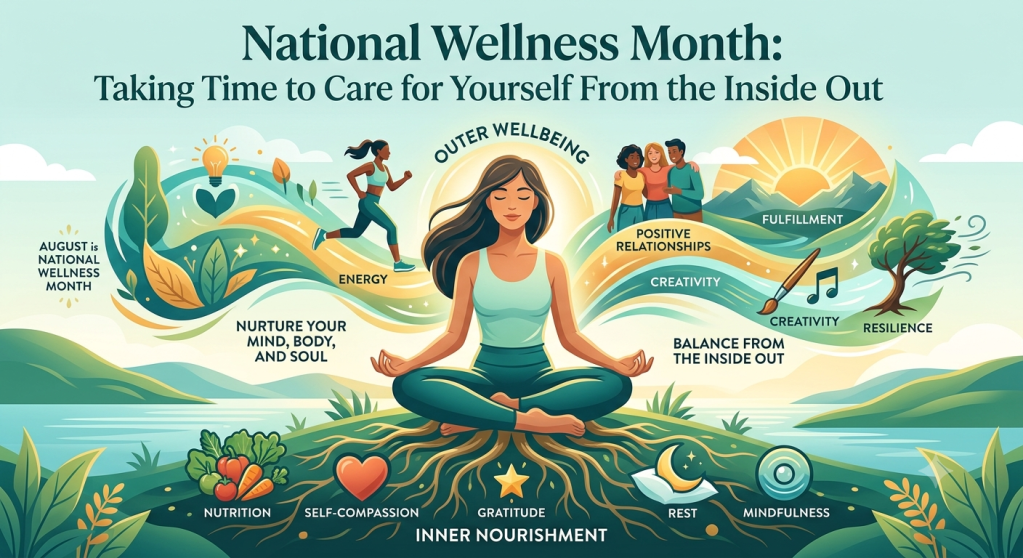
National Wellness Month: Taking Time to Care for Yourself From the Inside Out.

August is National Wellness Month, a wonderful opportunity to pause, reflect, and think about how we are really looking after ourselves.

With the pace of everyday life, it is easy to get caught up in work, responsibilities, and endless to-do lists. We often spend so much time caring for others that we forget to check in with ourselves. But our own wellbeing matters too.

Wellness is not just about being physically healthy. It is about how we feel, how we cope with challenges, how we connect with others, and how we create balance in our lives.

At Inside Out Wellbeing, we believe that true wellbeing starts from within. When we take care of our thoughts, emotions, and bodies, we create a stronger foundation for living a more balanced and fulfilling life.

What Does Wellness Mean to You?

Wellness means something different to everyone.

For some people, it may mean having more energy and taking better care of their physical health. For others, it may mean finding calm during stressful times, improving confidence, or learning to be kinder to themselves.

Wellness is not about changing everything overnight or trying to live a perfect life. It is about making small choices every day that help us feel better and more connected to ourselves.

Looking After Your Physical Wellbeing

Our bodies do so much for us every day, yet they are often the first thing we neglect when life gets busy.

Taking care of your physical wellbeing can be simple:

  • Going for a walk and enjoying some fresh air
  • Choosing nourishing foods that make you feel good
  • Drinking enough water
  • Getting better quality sleep
  • Giving yourself time to rest

Movement does not have to be about exercise goals or pushing yourself harder. Sometimes, it is simply about enjoying the feeling of moving your body and giving yourself some time away from daily pressures.

Caring for Your Mental Health

Our minds are constantly busy — thinking, planning, worrying, and processing everything happening around us. Taking care of our mental wellbeing helps us feel more grounded and able to handle life’s ups and downs.

Simple practices that can support your mental health include:

  • Taking a few quiet moments for yourself each day
  • Spending time outdoors
  • Writing down your thoughts
  • Practising mindfulness or deep breathing
  • Taking breaks from technology and social media

Even small moments of calm can make a difference.

Making Space for Your Emotions

Our emotions are a natural part of who we are. Some days feel easier than others, and that is completely normal.

Emotional wellbeing is about allowing ourselves to experience our feelings without judgement. It means recognising when we need support, setting healthy boundaries, and treating ourselves with the same kindness we would offer to someone we care about.

Sometimes, simply acknowledging how we feel can be the first step towards feeling better.

Small Changes Can Make a Big Difference

Wellness does not have to involve huge lifestyle changes. Often, the smallest actions have the greatest impact.

This August, why not choose one small thing to focus on?

It could be:

  • Taking a few minutes each morning to slow down
  • Spending more time doing something you enjoy
  • Connecting with a friend or loved one
  • Creating a healthier routine
  • Practising gratitude for the little things

Small steps, repeated consistently, can help create lasting positive changes.

Creating a Life That Supports Your Wellbeing

National Wellness Month is a reminder that self-care is not selfish. Looking after yourself allows you to show up more fully in every area of your life.

When we feel balanced and supported, we are better able to nurture our relationships, manage challenges, and enjoy the moments that matter.

Wellbeing is not about having a perfect life. It is about creating a life where you feel connected, supported, and able to be yourself.

Final Thoughts

This National Wellness Month, take some time to reconnect with yourself.

Listen to your body. Be mindful of your thoughts. Give yourself permission to rest. Celebrate the progress you have made and remember that your wellbeing deserves attention every day — not just in August.

Wellness begins from within, and every small step you take towards caring for yourself matters.

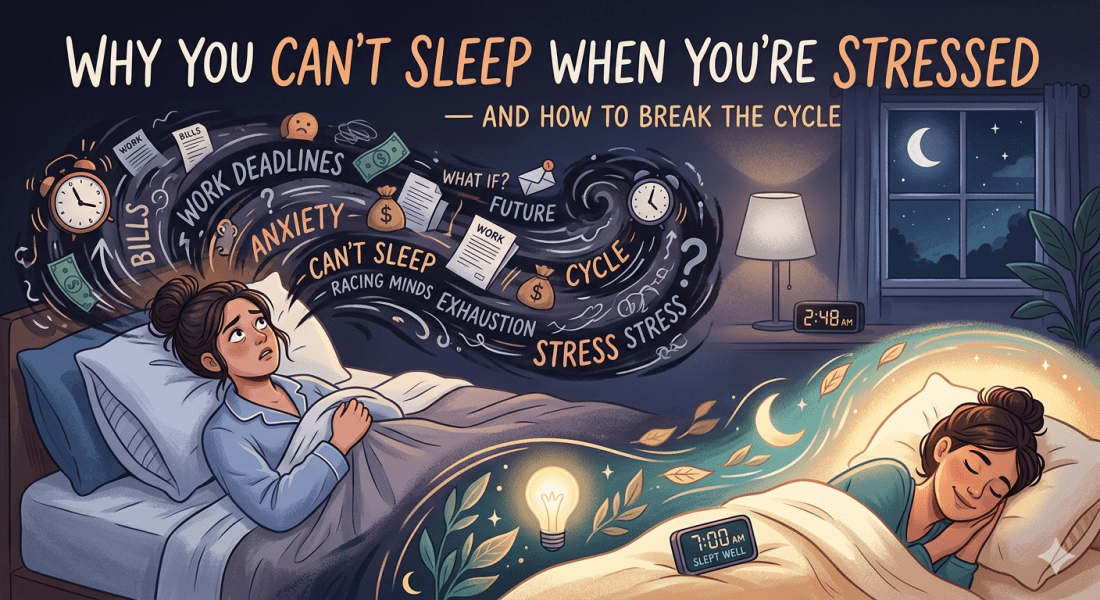
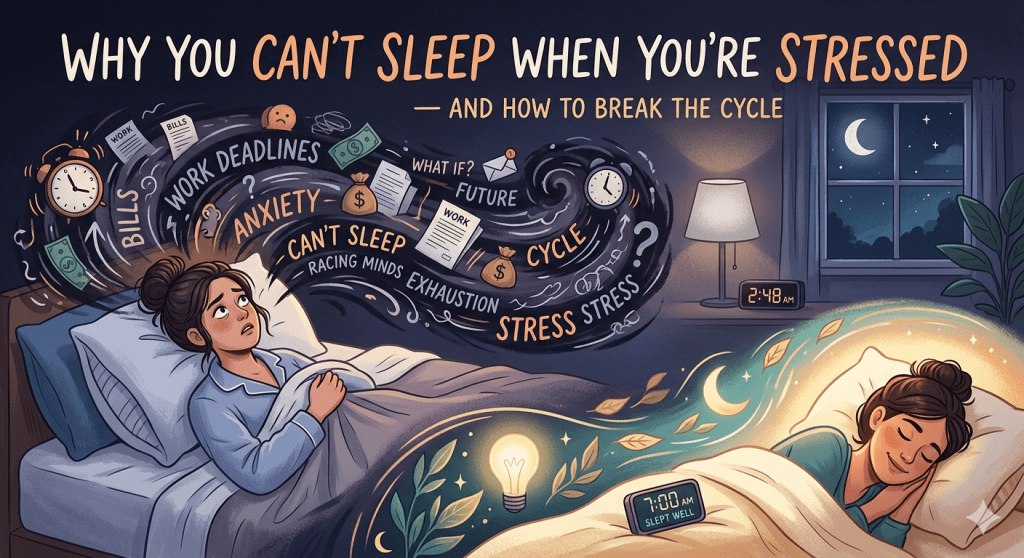
Why You Can’t Sleep When You’re Stressed and How to Break the Cycle

Let me paint a picture.

It’s 11pm. You’re exhausted. You’ve been looking forward to bed all day. And then the moment your head hits the pillow, your mind switches on. The to-do list. The conversation you keep replaying. The low hum of worry that refuses to be quiet.

Sound familiar?

You are not broken. You are not imagining it. What’s happening is a very real, very physical process inside your body and once you understand it, everything starts to make more sense.

Your Stress Response Was Never Designed for Modern Life

When your body detects stress any stress, whether it’s a physical threat or a difficult email from your manager  it activates the same ancient survival response. Cortisol and adrenaline flood your system. Your heart rate rises. Your muscles tense. Your brain sharpens into high alert.

This response was designed to help you run from danger. The problem is, your nervous system cannot tell the differe nce between a lion and a looming deadline.

And the cruel irony? This is precisely the state your body goes into when you most desperately need to sleep.

What Stress Actually Does to Your Sleep

Cortisol has a natural rhythm. It’s meant to be lowest at night that’s what makes you feel sleepy — and highest just before you wake up. But when you’re stressed, your body produces more cortisol than it should, at exactly the wrong time. It delays sleep, fragments the sleep you do get, and suppresses the deep, restorative phases your brain needs to process emotions and consolidate memories.

This is why a stressful week doesn’t just make you feel tired. It makes you feel emotionally fragile, foggy, and overwhelmed too. Sleep isn’t just rest for your body. It’s medicine for your mind.

And Then It Becomes a Cycle

Here’s where it gets particularly difficult. Poor sleep doesn’t just leave you tired it makes everything harder to cope with. Small things feel enormous. Your resilience drops. Your ability to regulate your emotions becomes compromised.

And so the very stress that kept you awake last night is now harder to manage today, because you’re running on depleted sleep. Which makes tonight harder. Which makes tomorrow harder.

This is the sleep-stress cycle. And so many women I speak to are living inside it without realising it has a name or a way out.

How to Gently Break the Cycle

You cannot force sleep. But you can create the conditions that make it possible.

Stop fighting the wakefulness. When you lie awake getting frustrated that you’re not asleep, you add another layer of stress onto an already activated nervous system. Try reframing bedtime as rest time. Even simply lying still, in the dark, is giving your body something it needs.

Give yourself a proper wind-down window. Your nervous system needs at least an hour to begin shifting from sympathetic (fight or flight) into parasympathetic (rest and digest) mode. Dim the lights. Step away from screens. Make something warm to drink. Signal to your body that the day is over.

Write it down before you lie down. Your brain holds onto unfinished thoughts to make sure you don’t forget them. A simple brain dump everything on your mind, onto paper gives your mind permission to let go. It doesn’t need to hold on if it’s already written.

Look at your cortisol triggers during the day. Skipping meals, too much caffeine, never taking a proper break — all of these keep cortisol elevated, which makes night-time winding down much harder. Eating regular meals with protein and fibre, moving your body gently, and building even ten minutes of genuine stillness into your day can make a real difference to how you sleep that night.

Be kind to yourself when sleep doesn’t come. Self-blame and frustration are themselves stressors. They raise cortisol. The most counterintuitive thing you can do and often the most effective is to release the pressure entirely.

When to Speak to Someone

If you’re regularly lying awake, waking repeatedly in the night, or finding that stress feels unmanageable, please don’t suffer in silence. Your GP can rule out any physical causes, and a qualified practitioner can support you in addressing the root of what’s driving the cycle.

You deserve sleep. You deserve rest. And you deserve to feel well not just surviving, but genuinely, deeply okay.

💬 I’d Love to Hear From You

Which comes first for you the stress or the sleeplessness? And which part of breaking the cycle feels hardest right now?

Drop your thoughts in the comments below. I read and reply to every single one.

With warmth,

Leena 🌿

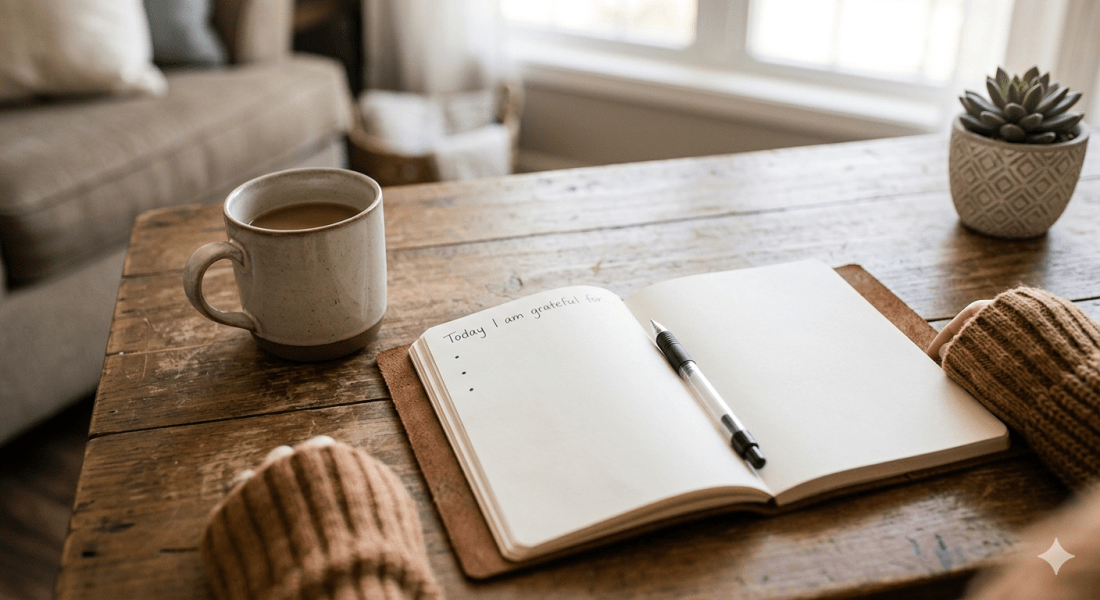
How to Start Journaling (Even If You’ve Tried and Given Up Before)

If you’ve ever bought a beautiful notebook, written in it twice, and then felt guilty every time you walked past it  this post is for you.

Journaling is one of the most powerful tools I know for mental clarity, emotional processing, and nervous system regulation. And yet it’s one of the things women tell me they want to do but just can’t seem to make stick.

The reason it hasn’t worked yet isn’t a lack of willpower. It’s that nobody taught you how to actually do it.

Let’s change that today.

Why Journaling Works: The Science Bit.

Journaling isn’t just putting words on a page. It’s a form of emotional processing that has been studied extensively and shown to:

Reduce cortisol levels writing about your feelings helps your brain move from emotional reaction to rational processing, which physically lowers your stress response.

Improve sleep a 2018 study published in the Journal of Experimental Psychology found that writing a to-do list or brain dump before bed helped people fall asleep faster by offloading unfinished thoughts from the mind.

Support mental health expressive writing has been shown to reduce symptoms of anxiety and depression, particularly in people who tend to internalise their emotions.

Increase self-awareness  when you write consistently, patterns emerge. You begin to notice what drains you, what lights you up, and what your body is trying to tell you.

Your journal is not a diary. It is a tool for healing.

Why Most People Give Up

Before we talk about how to start, let’s talk about why it hasn’t worked before before because I hear the same reasons again and again.

“I don’t know what to write”

You sit down, pen in hand, and your mind goes completely blank. So you close the notebook and tell yourself you’ll try again tomorrow.

“I don’t have time” You imagine journaling has to be a long, elaborate ritual. It doesn’t.

“I feel silly”

You start writing and immediately feel self-conscious, as though someone is reading over your shoulder. Even when you’re completely alone.

“I’m not consistent enough”

You miss a few days and decide you’ve failed, so you stop altogether.

Every single one of these is completely normal. And every single one is solvable.

How to Actually Start

Start with just five minutes

Not thirty minutes. Not a full page. Five minutes. Set a timer, pick up your pen, and write until it goes off. That’s it. Five minutes of journaling done consistently will always beat an hour of journaling done once a month.

Write by hand, not on your phone

There is something about the physical act of handwriting that slows the brain down and creates a different quality of thought. Typing is fast and functional. Handwriting is reflective and healing. If you want the full benefit of journaling, use a pen and paper.

Don’t write for anyone but yourself

Your journal does not need to be eloquent, grammatically correct, or even coherent. It is not a performance. Nobody will ever read it. Give yourself full permission to be messy, honest, and raw.

Use a prompt if you’re stuck

You don’t need to stare at a blank page. A simple prompt gives your brain a starting point and the words tend to flow from there. I’ve included some of my favourites below.

Make it part of an existing routine

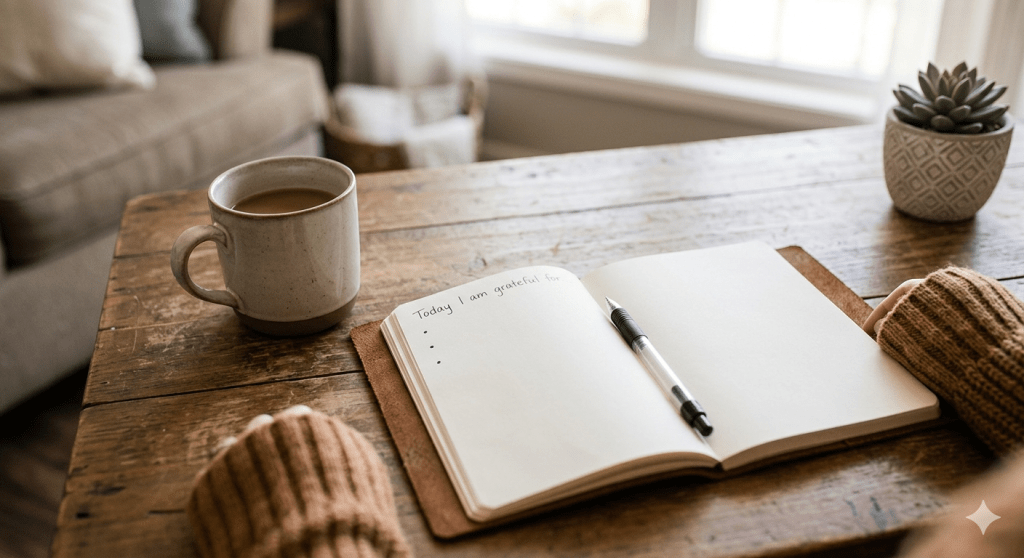
The easiest way to build a journaling habit is to attach it to something you already do. Morning coffee. Before bed. After your walk. Tuck your journal into that existing slot and it will start to feel natural within a week.

10 Journal Prompts to Get You Started

These are gentle, open-ended prompts that work whether you’re brand new to journaling or coming back after a long break.

How am I really feeling right now in my body and in my mind?

What is taking up the most space in my head today?

What do I need more of in my life right now?

What am I finding hardest at the moment, and why?

What would I tell my best friend if she was going through what I’m going through?

What am I holding onto that I need to let go of?

What has drained my energy this week? What has filled it?

What does my body need from me today?

What am I most proud of recently, however small?

What would feel really good to do for myself this week?

Pick  just one and write for five minutes without stopping.

If You’ve Tried Before and Given Up

I want to say something directly to you.

Giving up doesn’t mean journaling isn’t for you. It means you were probably trying to do too much, too perfectly, too soon.

Start smaller than feels necessary. One prompt. Five minutes. No pressure to be consistent right away. Just begin again, today, without any story about what happened last time.

The notebook doesn’t remember. And neither does your nervous system it only knows what you give it right now.

What to Do When You Miss a Day

Nothing. Absolutely nothing.

Pick up your journal the next day and carry on. Missing a day is not failure. It is just a Tuesday. The only way journaling stops working is if you stop doing it altogether and the only way that happens is if you make missing a day mean something it doesn’t.

The Invitation

You don’t need a perfect journal, a perfect routine, or a perfect mindset to begin. You just need five minutes and a pen.

Your thoughts deserve to be heard. Your feelings deserve to be processed. And you deserve the clarity, the calm, and the self-understanding that journaling can bring.

Start tonight. One prompt. Five minutes.

That’s enough.

💬 I’d love to hear from you

Are you a journaling beginner or someone coming back after a break? Which of the ten prompts are you going to try first?

Drop a comment below I read and reply to every single one. And if this post helped you, share it with a woman in your life who’s been meaning to start journaling. You might just give her the nudge she needed. 🌿

With warmth,

Leena 🌿

Do You Actually Need a Fibre Supplement? Here’s What You Should Know

We talk a lot about fibre in the wellness world and for good reason. It’s one of the most powerful, underrated tools we have for supporting digestion, blood sugar, mood, and even heart health.

But what happens when you’re not getting enough from food alone? That’s where fibre supplements come in 

Like most things in nutrition, the answer isn’t one-size-fits-all.

Who Might Actually Benefit From a Fibre Supplement?

The honest truth is that most of us aren’t getting enough fibre from our diets. In the UK, the recommended daily amount is 30g for all adults yet most of us are only getting around 20g a day. That’s a significant gap, and it has real consequences for our digestion, energy, and mood.

There are a few reasons this happens. Access to fresh, whole foods isn’t equal cost and location matter more than we like to admit. Some popular eating approaches, like the ketogenic diet, naturally reduce fibre-rich plant foods. And for others, certain health conditions like constipation, type 2 diabetes, or high blood pressure may genuinely benefit from supplementation.

If you’re unsure whether a supplement is right for you, it’s always worth speaking with your GP or a registered dietitian first. They can help you understand whether you’re getting enough from food and where a supplement might genuinely help.

Soluble vs. Insoluble Fibre What’s the Difference?

If you’ve been reading along on the blog, you’ll know we recently covered this in depth. But here’s the quick version:

Soluble fibre dissolves in water and forms a gel in your digestive tract. It helps regulate blood sugar, supports cholesterol levels, and can improve both constipation and diarrhoea.

Insoluble fibre doesn’t dissolve instead, it adds bulk to your stool and keeps things moving efficiently through your gut.

Most fibre supplements contain one type or a blend of both. When you’re reading labels, here’s what to look out for:

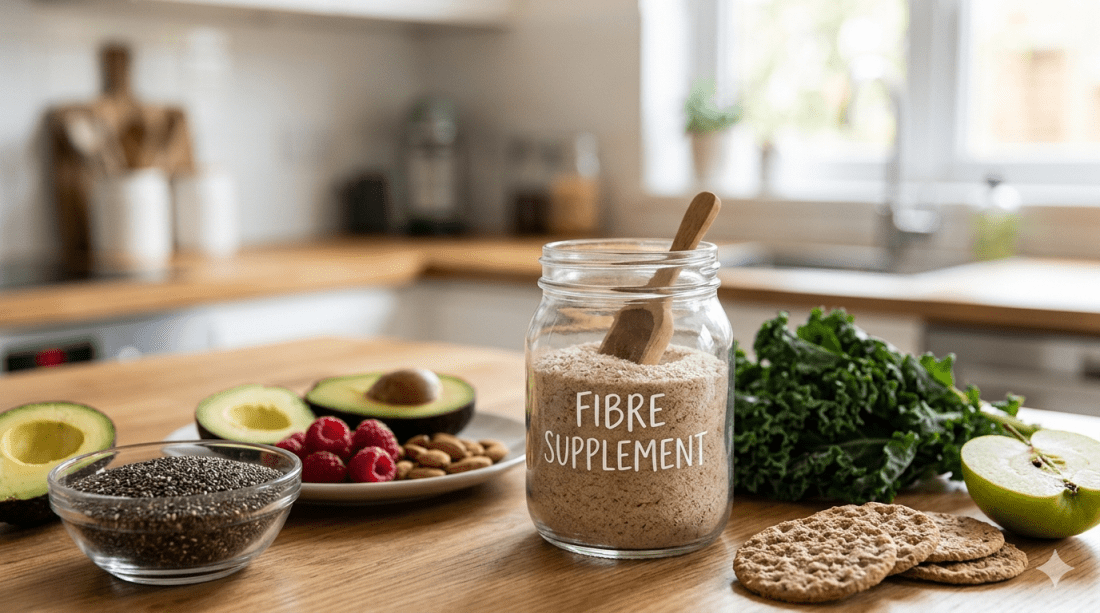
Soluble fibre sources include psyllium, inulin, and glucomannan. Insoluble sources include wheat bran and cellulose. Supplements come in powders, capsules, liquids, and gummies whichever form fits most easily into your daily routine is the right one for you.

Are Fibre Supplements Safe to Take Every Day?

Generally, yes.A  few things are worth keeping in mind:

Always drink plenty of water when taking a fibre supplement. Without adequate hydration, you may experience bloating, gas, or cramping — especially when you’re just starting out. If you’re new to a higher-fibre intake, increase gradually rather than all at once. Your gut needs time to adjust.

And while supplements can be genuinely helpful, they don’t replace the full nutritional benefit of whole foods. A handful of chickpeas, some berries, a bowl of oats these bring not just fibre but vitamins, minerals, antioxidants, and phytonutrients that a supplement simply can’t replicate.

When to Speak to a Professional First

Some people should be cautious with fibre supplements or avoid them entirely — including those with certain digestive conditions, people taking blood thinners or diabetes medications, and anyone with swallowing difficulties or known gut obstructions.

If your digestive symptoms are persistent or severe, please don’t rely on supplements alone. Chronic changes in bowel habits, bloating, or discomfort should always be assessed by a healthcare professional to rule out anything more serious.

The Inside Out View

Fibre is foundational. It feeds your gut bacteXria, supports your mood (remember — 90% of serotonin is made in the gut), stabilises your blood sugar, and keeps your digestion running smoothly.

The UK recommendation of 30g a day is achievable but it does require intention. Whole foods first, always. Think wholegrains, legumes, fruits, vegetables, nuts, and seeds at every meal. But if you’re genuinely struggling to meet your needs through diet alone, a good quality supplement — wisely can be a supportive addition to your routine.

As always, the goal isn’t perfection. It’s nourishment. 🌿

Have you ever tried a fibre supplement? I’d love to know your experience drop a comment below.

With warmth,

Leena 🌿