

Want to work on your arms but don’t have any weights at home?
Don’t worry. I got you covered. You really don’t need a cupboard full of gym equipment to get started. There are plenty of exercises you can do using just your own body weight, and some of them are surprisingly challenging!
As a Wellness and Nutrition coach, I always encourage my clients to keep their workout routine simple and realistic. If an exercise routine feels complicated, expensive or like something you have to spend hours doing, it’s much harder to stick with it.
So, if you’re looking for a few easy exercises to add into your week, here are eight worth trying.
What does “toning” actually mean?
We hear the word toning all the time, especially when it comes to arms, stomachs and legs.
Technically, there’s no special exercise that “tones” fat from one particular part of your body. You can strengthen and build muscle in a particular area, but where your body stores and loses fat is influenced by things such as genetics, hormones and your overall lifestyle. That’s why I prefer to focus on getting stronger and feeling good in your body, rather than chasing a particular look.
- Arm CirclesLet’s start with something really simple. Arm circles are great as a warm-up, but don’t dismiss them just because they look easy. After a while, you may start to feel your shoulders working.Stand comfortably with your feet around hip-width apart.Stretch your arms out to the sides and start making small circles. Gradually make them a little bigger if that feels comfortable.After 20–30 seconds, change direction.Try: 20–30 seconds in each direction.My tip: Keep your shoulders relaxed. There’s no need to shrug them up towards your ears.
- Standing Front RaisesYou don’t need dumbbells to practise controlled arm raises.This is a nice, simple movement for your shoulders and can easily be done while you’re waiting for the kettle to boil!Stand tall with your arms by your sides.Keeping your core gently engaged, slowly raise both arms in front of you. Lift them to a comfortable height and then slowly lower them again.Try not to swing your arms. The slower you go, the more you’ll notice the muscles working.Try: 2–3 sets of 10–15 repetitions.If both arms feel too tiring, then work one arm at a time.
- Standing Lateral RaisesThis time, you’re taking your arms out to the sides.Again, the temptation is to rush through the movement, but try not to. Controlled movements are your friend here.Stand tall with your arms by your sides.Keeping a slight bend in your elbows, slowly lift your arms out to the sides.You don’t have to get them perfectly level with your shoulders. Go as far as feels comfortable and then lower them slowly.Try: 2–3 sets of 10–15 repetitions.Remember: If you notice yourself shrugging your shoulders, take a little break and reset.
- Wall AngelsThis is one of those exercises that looks incredibly simple until you actually try it!Wall angels work your shoulders and upper body while also encouraging good posture and shoulder movement.
How to do them
Stand with your back against a wall.
Place your arms so your elbows are bent, roughly like you’re making a cactus shape with your arms.
Slowly move your arms upwards and then bring them back down.
Don’t worry if your arms don’t stay completely flat against the wall. Everyone has different mobility.
The aim is to move comfortably and with control, not to force your body into a position it doesn’t like.
Try: 2 sets of 8–12 repetitions.
- Plank Shoulder TapsNow we’re making things a little harder.Plank shoulder taps are great because your arms and shoulders are working, but your core has to work hard too.Start in a high plank position with your hands underneath your shoulders.Keep your body as still as you can.Lift one hand and gently tap the opposite shoulder. Put your hand back down and repeat on the other side.The trick is trying not to rock your hips from side to side.Try: 6–10 taps on each side for 2–3 sets.
New to planks?
Put your knees on the floor.
There’s absolutely nothing wrong with modifying an exercise. In fact, I’d much rather see you doing an easier version with good control than struggling through a harder version with poor form.
- Downward Dog to PlankThis is a lovely full-body movement and a good one to include if you don’t want your workout to feel like you’re simply moving your arms up and down.
How to do it
Start in a high plank.
Push your hips back and up into a downward-facing dog position.
Take a breath, then slowly move forwards into your plank again.
Keep the movement steady and controlled.
Try: 8–12 repetitions.
If your wrists don’t enjoy this position, take a break and try another exercise instead.
- Push-UpsI couldn’t write an article about strengthening your arms without mentioning the one and only push-ups.They’re a classic for a reason.Push-ups work your chest, shoulders and triceps, while your core helps keep your body stable.But here’s something I want you to remember: you don’t have to do a full push-up.
Try this instead
If you’re a beginner, start with wall push-ups.
Once those become easier, move to an incline push-up using a sturdy worktop or bench.
From there, you can gradually work towards doing them from the floor.
For a standard push-up
Start in a high plank position.
Bend your elbows and slowly lower your body towards the floor, keeping your body in a strong, straight position.
Then push yourself back up.
Try: 2–3 sets of 5–12 repetitions.
And if you can only manage three good ones, that’s three more than you could do before!
- Triceps DipsTriceps dips can be done using a sturdy chair, although you do need to make sure it is completely stable and won’t move underneath you.
How to do them
Sit on the edge of the chair and place your hands beside your hips.
Carefully move your bottom just beyond the edge of the chair.
Keep your feet on the floor and bend your elbows slightly to lower yourself.
Then press through your hands to come back up.
You don’t need to go very low.
In fact, I’d recommend starting with a small movement and seeing how your shoulders feel.
Try: 2 sets of 6–10 repetitions.
If dips don’t feel comfortable for your shoulders, leave them out. There are plenty of other ways to work your triceps.
A Simple Arm Workout You Can Do at Home
If you’re wondering how to put all of these exercises together, I have put together a simple routine as a starting point.
Warm-up
Spend around two minutes doing:
Arm circles
Shoulder rolls
Marching on the spot
Then work through the exercises below:
| Exercise | Amount |
| Arm circles | 30 seconds |
| Standing front raises | 10–15 |
| Wall angels | 8–12 |
| Plank shoulder taps | 6–10 each side |
| Push-ups | 5–12 |
| Triceps dips | 6–10 |
Have a rest whenever you need one.
Start with one round if you’re new to exercise and when that starts to feel comfortable, try doing two rounds.
Remember, you don’t need to finish the workout dripping with sweat for it to have been worthwhile.
How often should you do arm exercises?
For most people, two strength sessions a week is a sensible place to start.
You don’t need to train your arms every single day.
Your muscles need time to recover, particularly when you’re doing exercises that challenge them.
And as you get stronger, don’t feel that you have to keep adding more and more repetitions.
Instead, you can make the exercise itself a little harder.
For example, you might:
Add a few more repetitions
Slow the movement down
Try a more challenging variation
Increase your range of movement
Eventually add resistance bands or weights
That’s how you keep giving your body a reason to adapt.
What about nutrition?
This is the bit that often gets overlooked.
If you’re exercising because you want to become stronger and feel healthier, then your nutrition matters.
Your body needs fuel to exercise and nutrients to help recover.
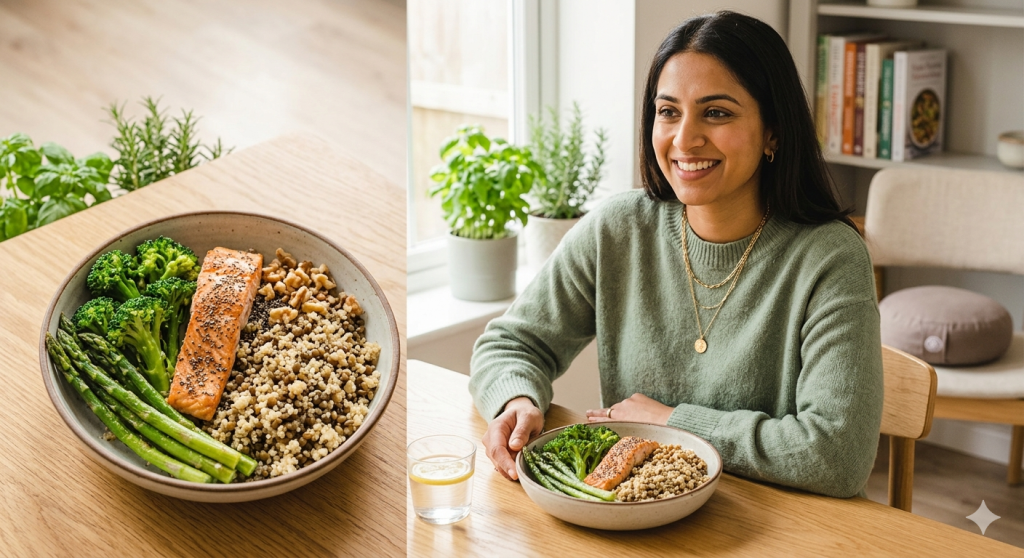
Try to include a good source of protein in all your meals. This could be Greek yoghurt, tofu, beans, lentils or another protein-rich food you enjoy. It doesn’t have to be overcomplicated or expensive.
Don’t forget your carbohydrates.
Foods such as oats, potatoes, rice, wholegrains and fruit aren’t something you need to be afraid of. They will provide you with valuable energy, particularly when you’re active.
Then equally important are your fruit, vegetables and healthy fats.
What most people don’t pay attention to is hydration, which is key for a healthy body. If you are not fully hydrated, you will not see the results from your workout and nutrition.
You don’t need to eat a fancy or expensive diet to achieve proper nutrition. I always coach my clients about the 80/20 rule.
You don’t need a gym to get stronger
One of the things I love about bodyweight exercises is how accessible they are. You can do many of them at home, when you’re travelling, or even when you only have 10–15 minutes to spare. This is how I started my journey.
A little note from me
If you’re new to exercise, have an injury or experience pain while doing any of these movements, please get appropriate professional advice from your GP before continuing.
Exercise should challenge you, but it shouldn’t hurt.