

I have created this 7-day challenge as a gentle reminder that self-care doesn’t have to be complicated or time-consuming. Often, it’s the small things we do for ourselves like taking a quiet moment, slowing down, or simply checking in with how we feel that can make the biggest difference. Even a few mindful moments each day can help us reconnect with ourselves and bring a little more balance into our busy lives.
I invite you to give this 7-day challenge a try and share your thoughts with me. Your experiences and reflections may inspire someone else on their own wellbeing journey.
A gentle reminder to slow down, reconnect with yourself, and make your wellbeing a priority.
When was the last time you truly took a moment for yourself?
Not to catch up on emails, not to complete another task on your list, and not because you needed to do something for someone else — but simply to pause and check in with how you are feeling.
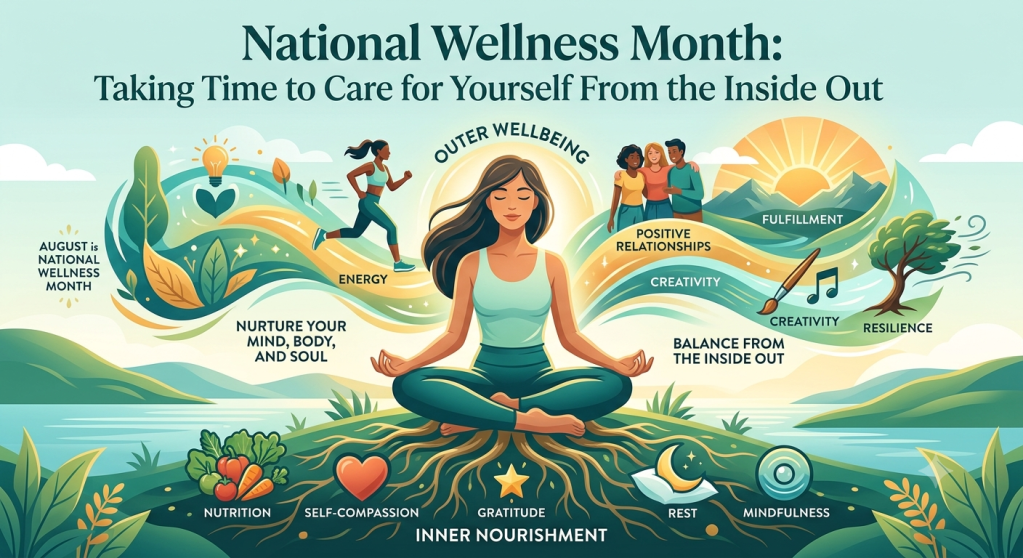
August is National Wellness Month, and it is the perfect time to think about the small ways we can care for ourselves. Self-care does not always have to mean expensive treatments, long routines, or making big changes to our lifestyle. Sometimes, it is the simple things — a quiet moment, a walk outside, a good night’s sleep, or giving ourselves permission to rest.
At Inside Out Wellbeing, we believe that wellbeing begins with the relationship we have with ourselves. When we take care of our mind, body, and emotions, we create more balance and space to enjoy life.
This 7-day self-care challenge is designed to help you introduce small moments of care into your week. There is no pressure to do everything perfectly — simply choose what feels right for you.
Day 1: Begin Your Day With Intention
The way we start our morning can set the tone for the rest of the day.
Before reaching for your phone or rushing into your routine, take a few quiet moments for yourself. Sit with your morning drink, take some deep breaths, stretch, or simply think about what you need from the day ahead.
Ask yourself:
“How can I support myself today?”
Sometimes, a little awareness is all we need to start feeling more grounded.
Day 2: Move in a Way That Feels Good
Movement is not just about fitness — it is also about releasing stress and reconnecting with your body.
Today, choose something that feels enjoyable:
- Take a walk and enjoy some fresh air
- Stretch your body gently
- Put on your favourite music and dance
- Try yoga or another activity you enjoy
There is no right or wrong way to move. The important thing is to find something that makes you feel good.
Day 3: Give Your Body Some Love
Our bodies work hard for us every day, so they deserve care and attention.
Take some time today to think about how you are nourishing yourself. Enjoy a healthy meal, drink more water, or slow down and really appreciate the food you are eating.
Self-care can be as simple as listening to what your body needs.
Day 4: Make Space for Your Mind
Our minds rarely get a chance to switch off. We are constantly thinking, planning, and responding to the world around us.
Today, create a small moment of calm.
You could:
- Write your thoughts in a journal
- Sit quietly for a few minutes
- Spend time outdoors
- Take a break from social media
- Practise deep breathing
Even a few minutes of stillness can help you feel more peaceful.
Day 5: Speak Kindly to Yourself
The way we talk to ourselves matters.
We are often much kinder to others than we are to ourselves. Today, notice your inner voice. If you make a mistake or have a difficult moment, try responding with understanding rather than criticism.
Remind yourself:
“I am doing my best, and that is enough.”
Self-compassion is an important part of wellbeing.
Day 6: Do Something That Makes You Smile
Wellbeing is not only about reducing stress — it is also about creating moments of happiness.
Make time today for something that brings you joy.
It could be:
- Calling a friend
- Reading a book
- Listening to music
- Spending time in nature
- Enjoying a hobby you love
- Doing something creative
Small moments of happiness can brighten even the busiest days.
Day 7: Reflect and Carry It Forward
As the week comes to an end, take a moment to reflect.
Ask yourself:
- What made me feel calmer?
- What activities gave me energy?
- What small habit would I like to continue?
Self-care is not something we only practise during National Wellness Month. It is something we can bring into our everyday lives.
Final Thoughts
Taking care of yourself does not mean you have to change everything at once. It starts with small choices and small moments of kindness towards yourself.
This National Wellness Month, give yourself permission to slow down, breathe, and reconnect with what you need.
Your wellbeing matters.
Start small. Be kind to yourself. Take one step at a time — because caring for yourself is one of the most valuable things you can do.