

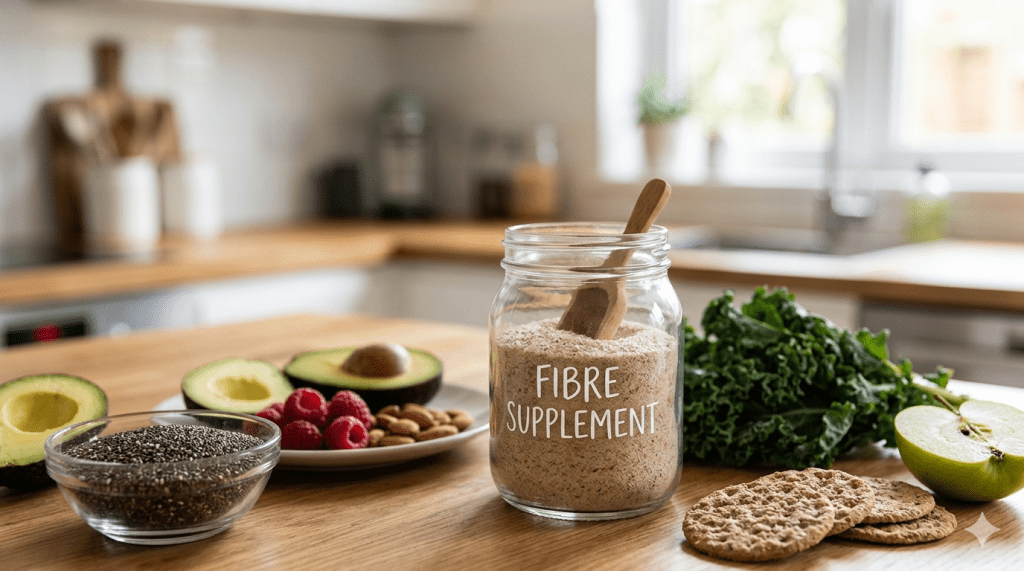
We talk a lot about fibre in the wellness world and for good reason. It’s one of the most powerful, underrated tools we have for supporting digestion, blood sugar, mood, and even heart health.
But what happens when you’re not getting enough from food alone? That’s where fibre supplements come in
Like most things in nutrition, the answer isn’t one-size-fits-all.
Who Might Actually Benefit From a Fibre Supplement?
The honest truth is that most of us aren’t getting enough fibre from our diets. In the UK, the recommended daily amount is 30g for all adults yet most of us are only getting around 20g a day. That’s a significant gap, and it has real consequences for our digestion, energy, and mood.
There are a few reasons this happens. Access to fresh, whole foods isn’t equal cost and location matter more than we like to admit. Some popular eating approaches, like the ketogenic diet, naturally reduce fibre-rich plant foods. And for others, certain health conditions like constipation, type 2 diabetes, or high blood pressure may genuinely benefit from supplementation.
If you’re unsure whether a supplement is right for you, it’s always worth speaking with your GP or a registered dietitian first. They can help you understand whether you’re getting enough from food and where a supplement might genuinely help.
Soluble vs. Insoluble Fibre What’s the Difference?
If you’ve been reading along on the blog, you’ll know we recently covered this in depth. But here’s the quick version:
Soluble fibre dissolves in water and forms a gel in your digestive tract. It helps regulate blood sugar, supports cholesterol levels, and can improve both constipation and diarrhoea.
Insoluble fibre doesn’t dissolve instead, it adds bulk to your stool and keeps things moving efficiently through your gut.
Most fibre supplements contain one type or a blend of both. When you’re reading labels, here’s what to look out for:
Soluble fibre sources include psyllium, inulin, and glucomannan. Insoluble sources include wheat bran and cellulose. Supplements come in powders, capsules, liquids, and gummies whichever form fits most easily into your daily routine is the right one for you.
Are Fibre Supplements Safe to Take Every Day?
Generally, yes.A few things are worth keeping in mind:
Always drink plenty of water when taking a fibre supplement. Without adequate hydration, you may experience bloating, gas, or cramping — especially when you’re just starting out. If you’re new to a higher-fibre intake, increase gradually rather than all at once. Your gut needs time to adjust.
And while supplements can be genuinely helpful, they don’t replace the full nutritional benefit of whole foods. A handful of chickpeas, some berries, a bowl of oats these bring not just fibre but vitamins, minerals, antioxidants, and phytonutrients that a supplement simply can’t replicate.
When to Speak to a Professional First
Some people should be cautious with fibre supplements or avoid them entirely — including those with certain digestive conditions, people taking blood thinners or diabetes medications, and anyone with swallowing difficulties or known gut obstructions.
If your digestive symptoms are persistent or severe, please don’t rely on supplements alone. Chronic changes in bowel habits, bloating, or discomfort should always be assessed by a healthcare professional to rule out anything more serious.
The Inside Out View
Fibre is foundational. It feeds your gut bacteXria, supports your mood (remember — 90% of serotonin is made in the gut), stabilises your blood sugar, and keeps your digestion running smoothly.
The UK recommendation of 30g a day is achievable but it does require intention. Whole foods first, always. Think wholegrains, legumes, fruits, vegetables, nuts, and seeds at every meal. But if you’re genuinely struggling to meet your needs through diet alone, a good quality supplement — wisely can be a supportive addition to your routine.
As always, the goal isn’t perfection. It’s nourishment. 🌿
Have you ever tried a fibre supplement? I’d love to know your experience drop a comment below.
With warmth,
Leena 🌿


I never really thought about collagen and digestion before. This was a simple and interesting read!
https://coupon4sure.in/store/hk-vitals-coupon-code/
LikeLiked by 1 person
Thank you, Tanisha! 😊 I’m so glad you found it interesting. Collagen and digestion isn’t something we always think about together, but there are some really interesting connections between the two. Thanks so much for taking the time to read and comment! 💚
LikeLike