
Understanding Muscle Mass: Key to Health Beyond Weight

If you’ve ever stepped on the scales and felt disappointed by the number looking back at you, you’re definitely not alone. But here’s something I often tell my clients: your weight is only one small piece of the puzzle.

Two people can weigh exactly the same, yet have completely different body compositions, energy levels and overall health. That’s because our bodies are made up of much more than just body fat. Muscle plays a huge role too.

Understanding your muscle mass can help you see your progress in a much more positive and realistic way, especially if your goal is to become stronger, healthier and more confident rather than simply losing weight.

So, what is muscle mass?

When we talk about muscle mass, we’re usually referring to skeletal muscle. These are the muscles attached to your bones that help you move, lift, walk, climb the stairs and carry out everyday tasks.

Unlike the muscle in your heart or digestive system, skeletal muscle responds to exercise and nutrition. It can become stronger, grow over time and, if we don’t use it, gradually decrease as we get older.

What does muscle mass percentage actually mean?

Muscle mass percentage is simply the proportion of your body weight made up of muscle.

For example, if you weigh 70 kg and 28 kg of that is muscle, your muscle mass percentage would be 40%.

While that sounds straightforward, it’s important not to get too caught up in the exact figure. Different body composition scales use different formulas, so your results can vary depending on the machine you’re using.

Instead of chasing a specific percentage, it’s much more useful to look at whether your muscle mass is staying the same or gradually improving over time.

Why is muscle so important?

Many people think building muscle is only for athletes or people who spend hours in the gym. In reality, muscle is something we all need, regardless of age or fitness level.

Having healthy muscle helps you:

  • Feel stronger in everyday life
  • Improve balance and coordination
  • Support your joints
  • Maintain good posture
  • Stay active as you get older
  • Make everyday tasks feel easier, from carrying shopping to climbing stairs

Muscle also uses energy to maintain itself, although its impact on metabolism is often smaller than social media would have you believe. The biggest benefit is how it supports your overall health, mobility and independence throughout life.

Does muscle naturally decrease with age?

Unfortunately, yes.

From around our thirties onwards, we gradually begin to lose muscle if we don’t actively work to maintain it. This happens slowly at first but tends to speed up later in life.

The good news is that this isn’t something you simply have to accept. Regular strength training and eating enough protein can make a real difference, helping you stay strong and active well into older age.

Is there an ideal muscle mass percentage?

This is one of the questions I get asked most often.

The honest answer is no.

There’s no single “perfect” muscle percentage because we’re all different. Your age, sex, genetics, lifestyle and activity levels all influence how much muscle you naturally carry.

Rather than comparing yourself to someone else online, it’s far more helpful to compare yourself to… well, yourself.

If you’re getting stronger, feeling fitter, recovering well and your body composition is improving over time, you’re moving in the right direction.

How can you measure your muscle mass?

Many people now own smart scales that estimate muscle mass using a method called bioelectrical impedance.

They’re quick, affordable and useful for spotting trends, but they’re not perfectly accurate. Your hydration levels, what you’ve eaten and even the time of day can all affect the reading.

If you’re using a smart scale, try to measure yourself under similar conditions each time so you can track progress more consistently.

For the most accurate assessment, clinics can offer DEXA scans, which provide a much more detailed breakdown of your body composition.

How can you build or maintain muscle?

The great news is that you don’t need to spend every evening in the gym.

Strength train regularly

The NHS recommends adults include muscle-strengthening activities at least twice a week.

That could be:

  • Lifting weights
  • Resistance bands
  • Pilates
  • Bodyweight exercises
  • Heavy gardening or manual work

The key is to challenge your muscles consistently and gradually increase the difficulty over time.

Eat enough protein

Protein gives your body the building blocks it needs to repair and maintain muscle.

Include a source of protein with each meal, such as:

  • Chicken or turkey
  • Fish
  • Eggs
  • Greek yoghurt
  • Cottage cheese
  • Beans
  • Lentils
  • Tofu
  • Tempeh

For people who regularly exercise or are looking to build muscle, protein needs may be higher than the general UK recommendation, so it’s worth discussing your individual requirements with a qualified professional.

Keep moving

Strength training is important, but so is staying active throughout the day.

Walking, cycling, swimming and other forms of movement all support your overall health and help keep your body functioning well.

Don’t forget recovery

Muscles don’t grow while you’re exercising—they adapt afterwards.

Getting enough sleep, managing stress, staying hydrated and allowing time to recover are all part of looking after your muscles.

The bottom line

Your muscle mass is just one measurement. It doesn’t define your health or your progress.

Instead of obsessing over a number on the scales or your body composition report, ask yourself a few simple questions.

Am I getting stronger?

Do I have more energy than I did a few months ago?

Can I do everyday tasks more easily?

Am I building habits I can actually stick to?

Those answers will usually tell you far more than any scale ever could.

At the end of the day, building and maintaining muscle isn’t about looking a certain way. It’s about feeling strong, staying healthy and giving your body the support it needs for years to come.
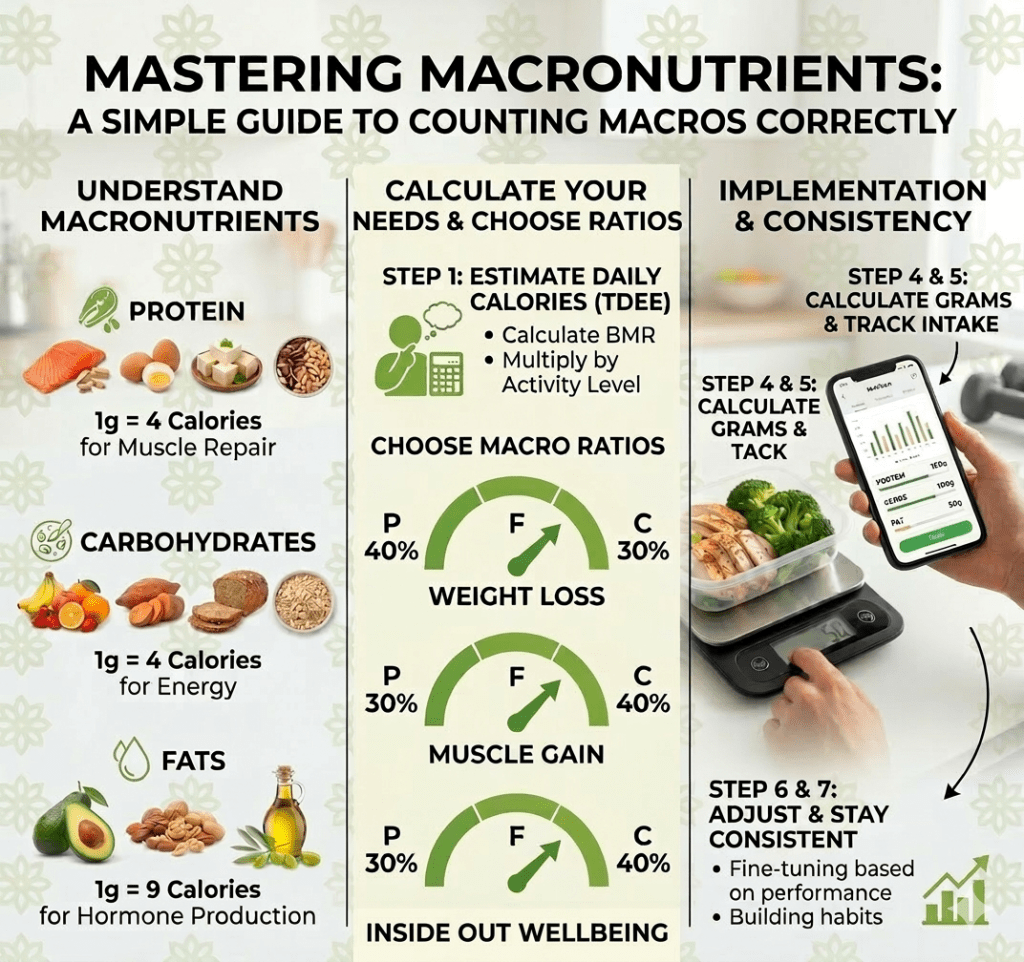
Mastering Macronutrients: A Simple Guide to Counting Macros Correctly

Whether you’re a seasoned gym-goer, an athlete, or just beginning your wellness journey, understanding macronutrients can be a game changer for reaching your health goals.

If you’ve ever wondered how to break down your diet into protein, fats, and carbohydrates to maximise results, this guide will walk you through the process step by step.

Let’s get started.

Step 1: Understand Macronutrients

Before you start counting macros, it’s important to know what they are and why they matter.

Protein

Protein is essential for muscle repair, growth, and overall body function.

1 gram of protein = 4 calories

Common sources include lean meats, fish, eggs, dairy, tofu, beans and legumes.

Fats

Healthy fats help with hormone production, brain health, and long-lasting energy.

1 gram of fat = 9 calories

Good sources include avocados, nuts, seeds, olive oil and fatty fish.

Carbohydrates

Carbohydrates are the body’s primary source of energy, especially for exercise and daily activity.

1 gram of carbohydrates = 4 calories

Healthy carbs include fruits, vegetables, whole grains and legumes.

Step 2: Calculate Your Daily Calorie Needs

To determine how many macros you should consume, you first need to estimate your daily calorie requirements.

This involves calculating your Basal Metabolic Rate (BMR) and Total Daily Energy Expenditure (TDEE).

1. Calculate Your BMR

BMR represents the calories your body needs to perform basic functions like breathing and circulation.

For men:

BMR = 88.362 + (13.397 × weight in kg) + (4.799 × height in cm) − (5.677 × age)

For women:

BMR = 447.593 + (9.247 × weight in kg) + (3.098 × height in cm) − (4.330 × age)

2. Calculate Your TDEE

Multiply your BMR by your activity level:

Activity Level Multiplier

Sedentary (little or no exercise) BMR × 1.2

Light activity (1–3 days/week) BMR × 1.375

Moderate activity (3–5 days/week) BMR × 1.55

Very active (6–7 days/week) BMR × 1.725

Extremely active (physical job/training twice daily) BMR × 1.9

Your TDEE gives you an estimate of how many calories you need each day.

Step 3: Choose Your Macronutrient Ratios

Your macro ratio depends on your health or fitness goal.

For Weight Loss

Protein: 40%

Fat: 30%

Carbohydrates: 30%

Higher protein helps maintain muscle and improves satiety.

For Muscle Gain

Protein: 30%

Fat: 30%

Carbohydrates: 40%

Extra carbs help fuel workouts and recovery.

For Maintenance

Protein: 30%

Fat: 30%

Carbohydrates: 40%

This balanced approach supports general health and energy levels.

Step 4: Convert Percentages into Grams

Once you know your daily calories and macro percentages, you can convert them into grams.

1. Calculate Calories per Macronutrient

Total Calories × Percentage

Example (2000 calories with 30% protein):

2000 × 0.30 = 600 calories from protein

2. Convert Calories into Grams

Use the calorie value of each macro:

Protein: Cal ÷ 4 Carbs: Calories ÷ 4

Fat: Calories ÷ 9

For example:

600 calories from protein ÷ 4 = 150g protein

Step 5: Track Your Food Intake

Tracking helps ensure you’re staying within your macro targets.

Use a Tracking App

Read Nutrition Labels

Check the macronutrient content per serving to track accurately.

Weigh Your Food

Using a kitchen scale ensures accurate portion sizes and macro tracking.

Step 6: Adjust and Fine-Tune

Your body is unique, so adjustments may be necessary.

Pay attention to:

Energy levels

Workout performance

Weight changes

Hunger levels

If your progress stalls, then tweak your calories or macro ratios accordingly.

Step 7: Stay Consistent

Consistency is the most important factor for long-term success.

Don’t worry about being perfect every day. Focus on building sustainable habits and finding a macro balance that works for your lifestyle.

Over time, tracking macros becomes easier and more intuitive.

Final Thoughts

Counting macronutrients might feel overwhelming at first, but with practice it becomes a powerful tool for improving your nutrition.

By understanding your calorie needs, choosing the right macro balance, and tracking your intake, you can fuel your body effectively and move closer to your health goals.

Remember: the goal isn’t perfection — it’s progress and consistency.

If you found this guide helpful, feel free to share it with friends and family who want to improve their nutrition. And if you have any tips or questions about macro tracking, drop them in the comments below!

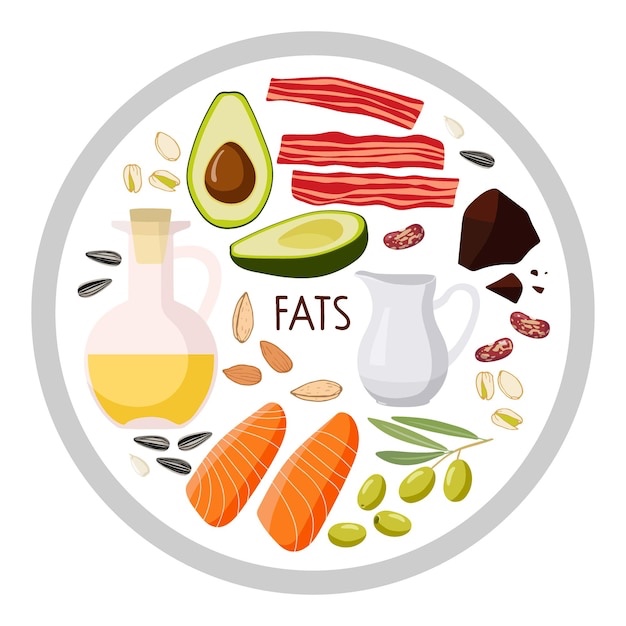
Let’s talk about the macronutrient FAT.

macronutrient: FAT

Let’s talk about the macronutrient FAT

Fat breaks down into fatty acids to provide the body with energy. Apart from being a rich source of energy, it has many of the essential roles in the body:

Provides the body with essential fatty acids.

structural compounds, which body is unable to produce itself and can only get from food.

absorb fat-soluble vitamins.

Creates hormones.

promotes healthy skin and hair.

Essential for brain health, as the brain is composed of 60% fat.

Fats found in the following foods:

Oils – olive, canola, sunflower, vegetable, soybean, sesame, peanut, etc

Dairy: Butter, margarine,
Full fat and 2% dairy &
Eggs.

Meat, poultry and
fish.
Nuts & seeds
Avocado

Trans fats should be cut out or reduced from thr diet. They mostly come from hydrogenating or adding hydrogen molecules to unsaturated fats. It can be found in margarine, shortening, baked goods, doughs, and fried foods.

Large quantities of saturated fat caused high cholesterol levels and increase risk of heart disease. It’s very
beneficial to reduce the amount of saturated fat in diet. Saturated fat is found mainly in animal sources like, fatty beef, lamb, pork, poultry with skin, lard, cream, butter, full fat cheese, and dairy.

Unsaturated fats are healthy fats and can help with decreasing thr risk of heart disease. They originate from plant sources; avocados, nuts and nut butters, seeds, olives, and oils (olive, canola, safflower etc.). Also found animal products like, fatty fish including salmon, mackerel, sardines, tuna, and herring.

Non Exercise Activity Thermogenesis.

Fastest and cheapest way to burn BODY FAT

Famlrise yourself with the concept – N.E.A.T it is a super effective for FAT LOSS when it’s done the correct way.

The beat part is you don’t need a expensive gym membership or any special equipment.

What is N.E.A.T?

It stands for Non-Exercise Activity Thermogenesis.

When small activities are done in the day to induce thermogenesis in the body.

What is thermogenesis?

The body’s ability to burn fat, even when you are sitting or not being too active.

Best examples of N.E.A.T activities to start stright away.

👉 Walk and talk.

👉 Doing a fee squats or surya namaskers.

👉 always Squat to pick up things up from the floor.

👉 while watching Netflix stand up and stretch in between.

👉 small dance break in between lunch break workday.

👉 Do your chores like the dishes, making the bed, hoovering
Laundry etc

👉 stairs climbing will help to engage with exercising the lower body.

Here are 3 good yoga poses.

Virabhadrasana Pose Pose Vrikshasana
Utkatasana Pose