National Wellness Month Challenge: 7 Days of Simple Self-Care

I have created this 7-day challenge as a gentle reminder that self-care doesn’t have to be complicated or time-consuming. Often, it’s the small things we do for ourselves like taking a quiet moment, slowing down, or simply checking in with how we feel that can make the biggest difference. Even a few mindful moments each day can help us reconnect with ourselves and bring a little more balance into our busy lives.

I invite you to give this 7-day challenge a try and share your thoughts with me. Your experiences and reflections may inspire someone else on their own wellbeing journey.

A gentle reminder to slow down, reconnect with yourself, and make your wellbeing a priority.

When was the last time you truly took a moment for yourself?

Not to catch up on emails, not to complete another task on your list, and not because you needed to do something for someone else — but simply to pause and check in with how you are feeling.

August is National Wellness Month, and it is the perfect time to think about the small ways we can care for ourselves. Self-care does not always have to mean expensive treatments, long routines, or making big changes to our lifestyle. Sometimes, it is the simple things — a quiet moment, a walk outside, a good night’s sleep, or giving ourselves permission to rest.

At Inside Out Wellbeing, we believe that wellbeing begins with the relationship we have with ourselves. When we take care of our mind, body, and emotions, we create more balance and space to enjoy life.

This 7-day self-care challenge is designed to help you introduce small moments of care into your week. There is no pressure to do everything perfectly — simply choose what feels right for you.

Day 1: Begin Your Day With Intention

The way we start our morning can set the tone for the rest of the day.

Before reaching for your phone or rushing into your routine, take a few quiet moments for yourself. Sit with your morning drink, take some deep breaths, stretch, or simply think about what you need from the day ahead.

Ask yourself:

“How can I support myself today?”

Sometimes, a little awareness is all we need to start feeling more grounded.

Day 2: Move in a Way That Feels Good

Movement is not just about fitness — it is also about releasing stress and reconnecting with your body.

Today, choose something that feels enjoyable:

  • Take a walk and enjoy some fresh air
  • Stretch your body gently
  • Put on your favourite music and dance
  • Try yoga or another activity you enjoy

There is no right or wrong way to move. The important thing is to find something that makes you feel good.

Day 3: Give Your Body Some Love

Our bodies work hard for us every day, so they deserve care and attention.

Take some time today to think about how you are nourishing yourself. Enjoy a healthy meal, drink more water, or slow down and really appreciate the food you are eating.

Self-care can be as simple as listening to what your body needs.

Day 4: Make Space for Your Mind

Our minds rarely get a chance to switch off. We are constantly thinking, planning, and responding to the world around us.

Today, create a small moment of calm.

You could:

  • Write your thoughts in a journal
  • Sit quietly for a few minutes
  • Spend time outdoors
  • Take a break from social media
  • Practise deep breathing

Even a few minutes of stillness can help you feel more peaceful.

Day 5: Speak Kindly to Yourself

The way we talk to ourselves matters.

We are often much kinder to others than we are to ourselves. Today, notice your inner voice. If you make a mistake or have a difficult moment, try responding with understanding rather than criticism.

Remind yourself:

“I am doing my best, and that is enough.”

Self-compassion is an important part of wellbeing.

Day 6: Do Something That Makes You Smile

Wellbeing is not only about reducing stress — it is also about creating moments of happiness.

Make time today for something that brings you joy.

It could be:

  • Calling a friend
  • Reading a book
  • Listening to music
  • Spending time in nature
  • Enjoying a hobby you love
  • Doing something creative

Small moments of happiness can brighten even the busiest days.

Day 7: Reflect and Carry It Forward

As the week comes to an end, take a moment to reflect.

Ask yourself:

  • What made me feel calmer?
  • What activities gave me energy?
  • What small habit would I like to continue?

Self-care is not something we only practise during National Wellness Month. It is something we can bring into our everyday lives.

Final Thoughts

Taking care of yourself does not mean you have to change everything at once. It starts with small choices and small moments of kindness towards yourself.

This National Wellness Month, give yourself permission to slow down, breathe, and reconnect with what you need.

Your wellbeing matters.

Start small. Be kind to yourself. Take one step at a time — because caring for yourself is one of the most valuable things you can do.
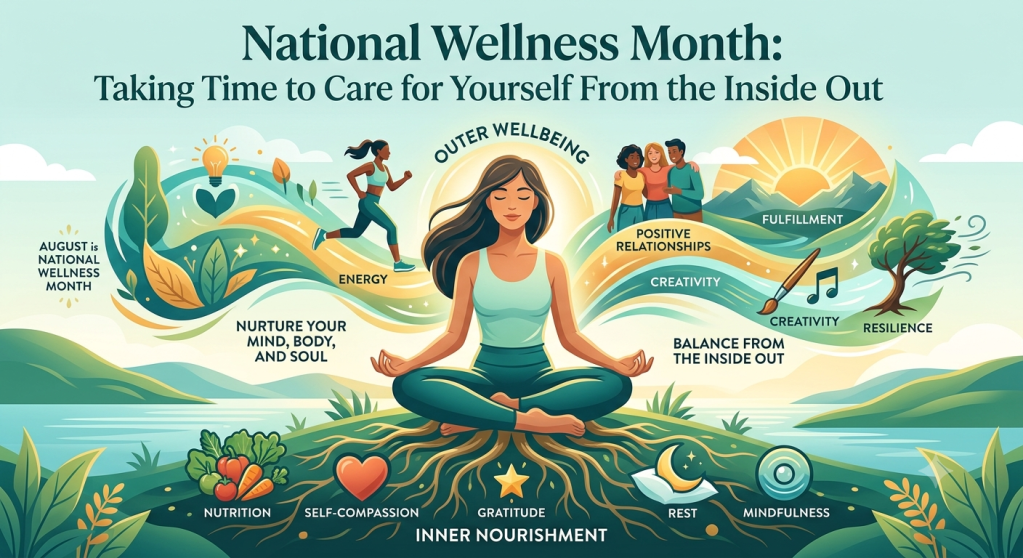

National Wellness Month: Taking Time to Care for Yourself From the Inside Out.

August is National Wellness Month, a wonderful opportunity to pause, reflect, and think about how we are really looking after ourselves.

With the pace of everyday life, it is easy to get caught up in work, responsibilities, and endless to-do lists. We often spend so much time caring for others that we forget to check in with ourselves. But our own wellbeing matters too.

Wellness is not just about being physically healthy. It is about how we feel, how we cope with challenges, how we connect with others, and how we create balance in our lives.

At Inside Out Wellbeing, we believe that true wellbeing starts from within. When we take care of our thoughts, emotions, and bodies, we create a stronger foundation for living a more balanced and fulfilling life.

What Does Wellness Mean to You?

Wellness means something different to everyone.

For some people, it may mean having more energy and taking better care of their physical health. For others, it may mean finding calm during stressful times, improving confidence, or learning to be kinder to themselves.

Wellness is not about changing everything overnight or trying to live a perfect life. It is about making small choices every day that help us feel better and more connected to ourselves.

Looking After Your Physical Wellbeing

Our bodies do so much for us every day, yet they are often the first thing we neglect when life gets busy.

Taking care of your physical wellbeing can be simple:

  • Going for a walk and enjoying some fresh air
  • Choosing nourishing foods that make you feel good
  • Drinking enough water
  • Getting better quality sleep
  • Giving yourself time to rest

Movement does not have to be about exercise goals or pushing yourself harder. Sometimes, it is simply about enjoying the feeling of moving your body and giving yourself some time away from daily pressures.

Caring for Your Mental Health

Our minds are constantly busy — thinking, planning, worrying, and processing everything happening around us. Taking care of our mental wellbeing helps us feel more grounded and able to handle life’s ups and downs.

Simple practices that can support your mental health include:

  • Taking a few quiet moments for yourself each day
  • Spending time outdoors
  • Writing down your thoughts
  • Practising mindfulness or deep breathing
  • Taking breaks from technology and social media

Even small moments of calm can make a difference.

Making Space for Your Emotions

Our emotions are a natural part of who we are. Some days feel easier than others, and that is completely normal.

Emotional wellbeing is about allowing ourselves to experience our feelings without judgement. It means recognising when we need support, setting healthy boundaries, and treating ourselves with the same kindness we would offer to someone we care about.

Sometimes, simply acknowledging how we feel can be the first step towards feeling better.

Small Changes Can Make a Big Difference

Wellness does not have to involve huge lifestyle changes. Often, the smallest actions have the greatest impact.

This August, why not choose one small thing to focus on?

It could be:

  • Taking a few minutes each morning to slow down
  • Spending more time doing something you enjoy
  • Connecting with a friend or loved one
  • Creating a healthier routine
  • Practising gratitude for the little things

Small steps, repeated consistently, can help create lasting positive changes.

Creating a Life That Supports Your Wellbeing

National Wellness Month is a reminder that self-care is not selfish. Looking after yourself allows you to show up more fully in every area of your life.

When we feel balanced and supported, we are better able to nurture our relationships, manage challenges, and enjoy the moments that matter.

Wellbeing is not about having a perfect life. It is about creating a life where you feel connected, supported, and able to be yourself.

Final Thoughts

This National Wellness Month, take some time to reconnect with yourself.

Listen to your body. Be mindful of your thoughts. Give yourself permission to rest. Celebrate the progress you have made and remember that your wellbeing deserves attention every day — not just in August.

Wellness begins from within, and every small step you take towards caring for yourself matters.

Gut Health Talk

Let’s talk about Gut Health

Our gut is home to trillions of microorganisms, including bacteria, viruses, fungi, and other microbes, collectively known as the gut microbiome. This ecosystem plays a critical role in maintaining your overall health, influencing everything from your immune system to your mental well-being.

The gut microbiome is involved in several crucial processes, including:

Digestion and nutrient absorption: The gut microbiome helps break down complex carbohydrates and fibres, making it easier for your body to absorb the nutrients it needs.

Immune system regulation: The gut microbiome is a key component of your body’s immune system, helping to defend against harmful pathogens and promoting overall health.

Mental health: Studies have shown a strong connection between gut health and mental health, with an imbalanced gut microbiome potentially contributing to conditions such as depression and anxiety.

How to maintain and improve your gut health:

💪 Eat a diverse and balanced diet: A diet that includes a variety of foods, including
fibre rich fruits and vegetables, whole grains, and fermented foods, can help
promote a healthy gut microbiome.

💪 Limit processed and high-sugar foods: Processed foods and high-sugar diets
have been shown to have a negative impact on gut health, leading to an
imbalanced microbiome.

💪 Stay hydrated: Drinking enough water is essential for maintaining a healthy gut,
as it helps regulate digestion and promotes healthy bowel movements.

💪 Exercise regularly: Regular physical activity has been shown to improve gut
health by promoting healthy digestion and reducing inflammation.

💪 Reduce stress: Chronic stress has been linked to an imbalanced gut microbiome,
so taking steps to manage stress through activities such as meditation, yoga, or
exercise can have a positive impact on gut health.

To sum it up maintaining a healthy gut microbiome is crucial for overall health and well-being. By incorporating a balanced diet, staying hydrated, exercising regularly, reducing stress, and limiting processed foods, you can help support and improve your gut health.

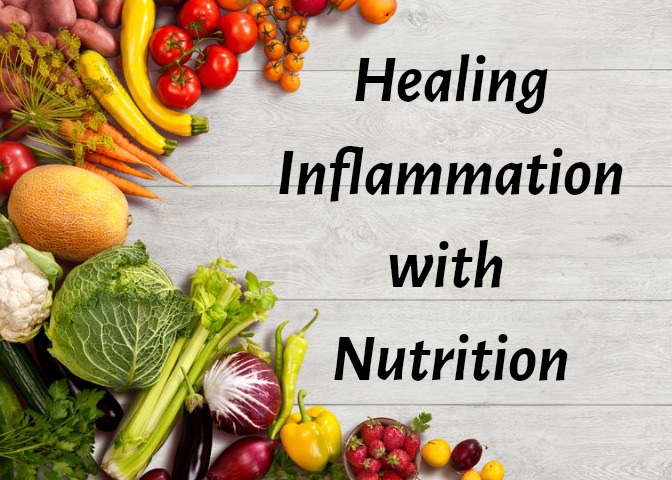
Inflammation in the body: How food can help to fight it.

Food has the power to heal. It’s a potent tool to treat and prevent illnesses.

Inflammation & Nutrition. Inflammation acts like the body’s defense mechanism. The immune system recognises harmful and foreign stimuli and starts to elimate it from the body so it can start the healing process .

Food has power to heal. It’s a potent tool to treat & prevent Illnesses.

There are 2 types of inflammation:

Chronic inflammation: Is referred to as a slow, long-term inflammation lasting for prolonged time in the body. It’s mainly connected to the environment around us, our dietary choices, stress levels and general health. It can be harmful and may increase the risk of several diseases.

Acute inflammation occurs when our body sees harm coming like an infection, and starts to fight in a short period. Thus, known as a normal response for the body ans immune stern to promote the healing process.

Nutrition & inflammation. Our daily diet choices can help to keep both our body and immune system healthy and strong.

Plant based protein. Research over time has shown us that consuming high intake of red meat and dairy products in our diet can increase high level of inflammation in our body. Where as Plant bases proteins such as lentils and beans have a lower levels of inflammation levels. They consist of high fibre levels and anyhocyanin.

Herbs and spices. Herbs and spice have high levels of antioxidants and phytonutrients and have many anti-inflammatory properties. They can help to flavour our meals without adding excess salt and fats. Turmeric, Cardamom, Rosemary, Black pepper and Cinnamon are antiinflammatory herb and spices and should be included in our diet to naturally lower inflammation.

Dietary Choices. Eating a high intake of rainbow colour of fruits and vegetables can help to fight inflammation and strengthen our immune health. Fruits such as cranberries, blackberries, and blueberries are known as anti- inflammatory foods. Anti inflammatory veg includes brocli, cabbage and leafy green vegetables.

Garlic consist of organosulfur compounds and flavonoids. These are known to help with fighting inflammation, infections and cardiovascular diseases.

Ginger is packed with antioxidants and contains gingerols. Gingerols has proven to fight inflammation and with high levels of antioxidants, ginger is able to prevent free radical production anti inflammatory disease.

Onions Onions has a flavonoid called quercetin, which is know as the following Anti- carcinogenic, Anti- inflammatory, Antiviral

Other factors that can help with fighting inflammation.

Vitamin D Research has shown that having low levels of vitamin D in the body can cause inflammation. It always good to check Vitamin D levels and correct them if needed to.

Sleep. A good sleeping pattern is vital for optimal health. Disturbed sleep patterns has been associated weak immune system and increased inflammation levels in the body.

Managing stress Excessive stress levels can have an effect on our physical and emotional health. This also contribute to high level of inflammation in the body. The best techniques for stress management at home is to practice meditation daily and simple breathing exercises. Alway consualt a healthcare professional for ongoing support is advised if needed.