

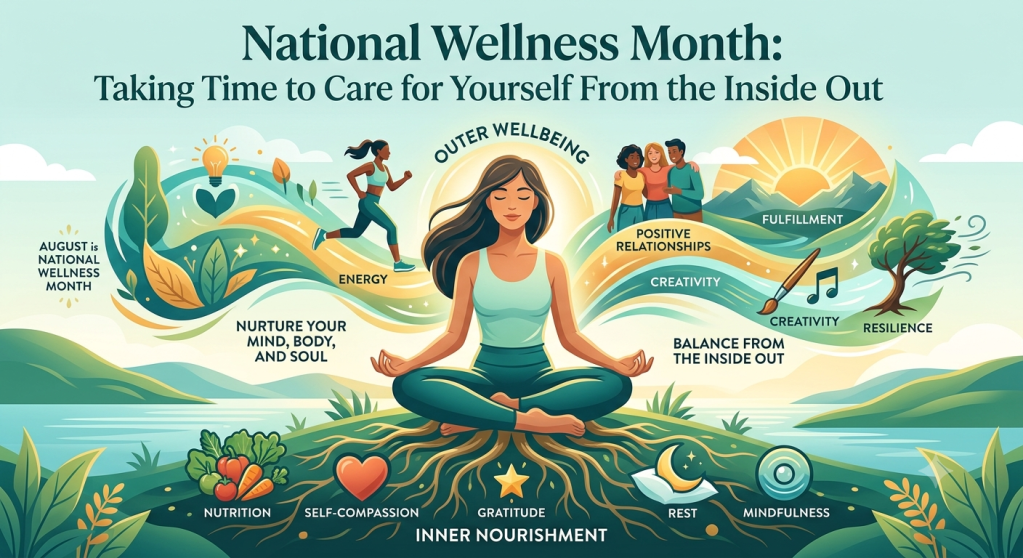
August is National Wellness Month, a wonderful opportunity to pause, reflect, and think about how we are really looking after ourselves.
With the pace of everyday life, it is easy to get caught up in work, responsibilities, and endless to-do lists. We often spend so much time caring for others that we forget to check in with ourselves. But our own wellbeing matters too.
Wellness is not just about being physically healthy. It is about how we feel, how we cope with challenges, how we connect with others, and how we create balance in our lives.
At Inside Out Wellbeing, we believe that true wellbeing starts from within. When we take care of our thoughts, emotions, and bodies, we create a stronger foundation for living a more balanced and fulfilling life.
What Does Wellness Mean to You?
Wellness means something different to everyone.
For some people, it may mean having more energy and taking better care of their physical health. For others, it may mean finding calm during stressful times, improving confidence, or learning to be kinder to themselves.
Wellness is not about changing everything overnight or trying to live a perfect life. It is about making small choices every day that help us feel better and more connected to ourselves.
Looking After Your Physical Wellbeing
Our bodies do so much for us every day, yet they are often the first thing we neglect when life gets busy.
Taking care of your physical wellbeing can be simple:
- Going for a walk and enjoying some fresh air
- Choosing nourishing foods that make you feel good
- Drinking enough water
- Getting better quality sleep
- Giving yourself time to rest
Movement does not have to be about exercise goals or pushing yourself harder. Sometimes, it is simply about enjoying the feeling of moving your body and giving yourself some time away from daily pressures.
Caring for Your Mental Health
Our minds are constantly busy — thinking, planning, worrying, and processing everything happening around us. Taking care of our mental wellbeing helps us feel more grounded and able to handle life’s ups and downs.
Simple practices that can support your mental health include:
- Taking a few quiet moments for yourself each day
- Spending time outdoors
- Writing down your thoughts
- Practising mindfulness or deep breathing
- Taking breaks from technology and social media
Even small moments of calm can make a difference.
Making Space for Your Emotions
Our emotions are a natural part of who we are. Some days feel easier than others, and that is completely normal.
Emotional wellbeing is about allowing ourselves to experience our feelings without judgement. It means recognising when we need support, setting healthy boundaries, and treating ourselves with the same kindness we would offer to someone we care about.
Sometimes, simply acknowledging how we feel can be the first step towards feeling better.
Small Changes Can Make a Big Difference
Wellness does not have to involve huge lifestyle changes. Often, the smallest actions have the greatest impact.
This August, why not choose one small thing to focus on?
It could be:
- Taking a few minutes each morning to slow down
- Spending more time doing something you enjoy
- Connecting with a friend or loved one
- Creating a healthier routine
- Practising gratitude for the little things
Small steps, repeated consistently, can help create lasting positive changes.
Creating a Life That Supports Your Wellbeing
National Wellness Month is a reminder that self-care is not selfish. Looking after yourself allows you to show up more fully in every area of your life.
When we feel balanced and supported, we are better able to nurture our relationships, manage challenges, and enjoy the moments that matter.
Wellbeing is not about having a perfect life. It is about creating a life where you feel connected, supported, and able to be yourself.
Final Thoughts
This National Wellness Month, take some time to reconnect with yourself.
Listen to your body. Be mindful of your thoughts. Give yourself permission to rest. Celebrate the progress you have made and remember that your wellbeing deserves attention every day — not just in August.
Wellness begins from within, and every small step you take towards caring for yourself matters.
 Inside Out Wellbeing