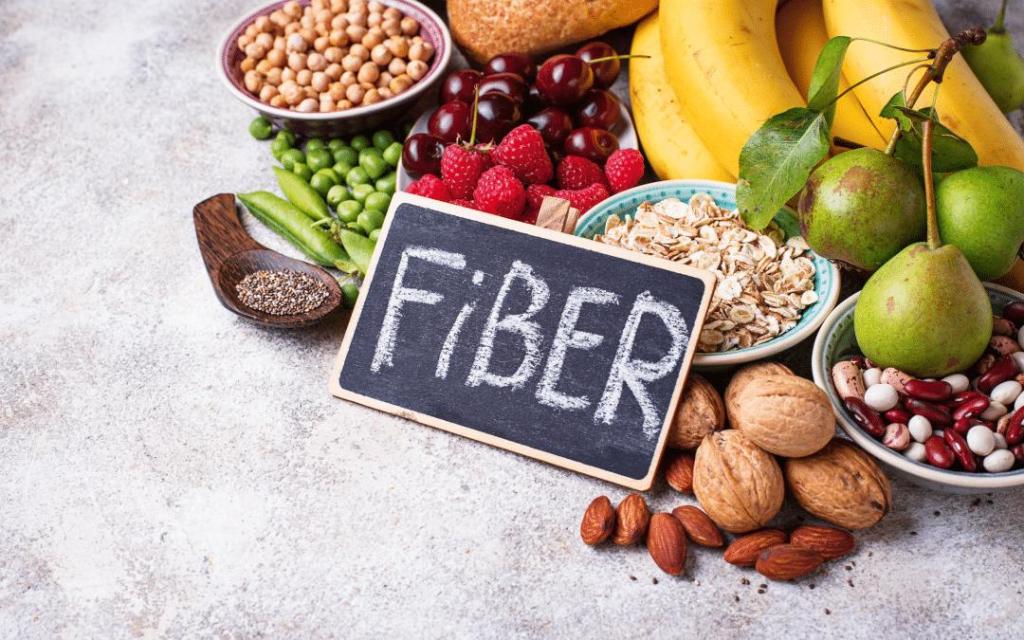
What Is Fibre and Why Does It Matter?

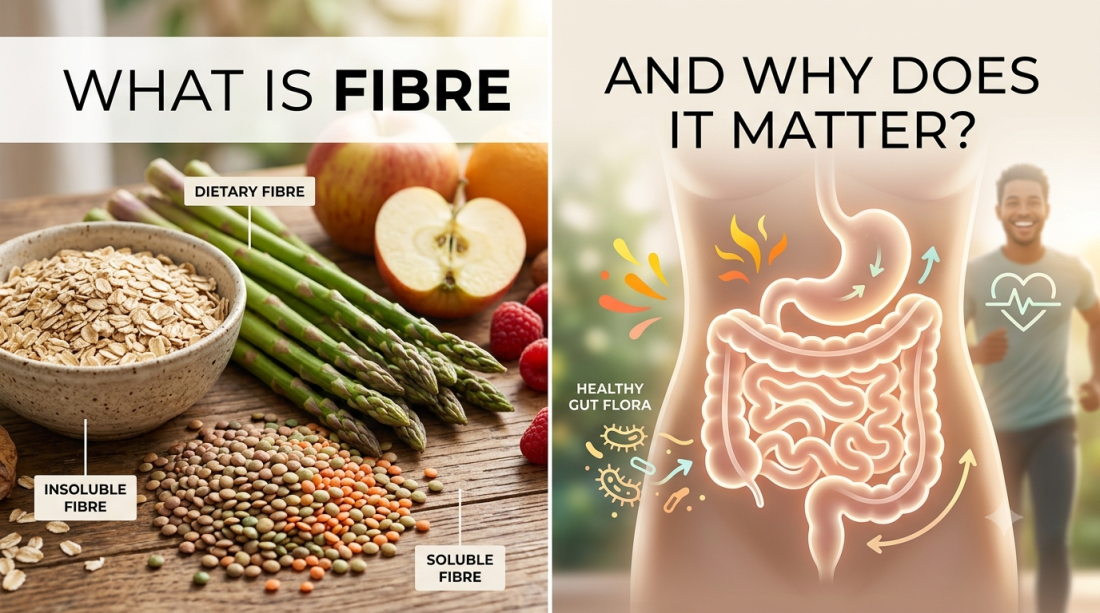
Fibre is the part of plant foods that your body cannot digest. That’s exactly what makes it so powerful.

While it passes through your digestive system largely intact, it does extraordinary things along the way feeding your beneficial gut bacteria, slowing the absorption of sugar into your bloodstream, keeping your bowels moving, and reducing inflammation throughout the body.

Fibre isn’t just a digestive aid. It directly influences your mood, your energy, your hormones, and your long-term health.

So How Much Do You Actually Need?

The NHS recommends 30g of fibre per day for adults. Most people in the UK are getting around 18g barely half of what their body needs.

To put 30g into perspective:

1 slice of wholegrain bread = roughly 2g

1 medium apple = roughly 4g

portion of broccoli = roughly 3g

1 tin of chickpeas = roughly 10g

1 tablespoon of chia seeds = roughly 5g

You can see how quickly the gap appears — especially if your diet includes a lot of processed or refined foods, which contain very little fibre at all.

What Happens When You Don’t Get Enough?

Low fibre intake is linked to:

Unstable blood sugar without fibre to slow things down, sugar hits your bloodstream fast, spiking cortisol and triggering that mid-morning anxiety or afternoon crash.

Poor gut health your beneficial gut bacteria literally feed on fibre. Without it, they starve, and your microbiome diversity drops. Since 90% of your serotonin is produced in your gut, this has a direct impact on your mood.

Sluggish digestion — constipation, bloating, and that heavy, uncomfortable feeling are classic signs of too little fibre.

Increased inflammation low fibre diets are associated with higher levels of chronic inflammation, which affects everything from your energy levels to your immune system.

5 Simple Ways to Eat More Fibre Every Day

You don’t need to overhaul your diet overnight. Small, consistent additions make a huge difference.

1Add seeds to everything

A tablespoon of chia seeds or ground flaxseed into your yoghurt, porridge, or smoothie adds 4–5g of fibre instantly. You won’t even taste it.

Choose whole grains over refined

Swap white bread for wholegrain, white rice for brown or wild rice. The fibre content can be two to three times higher.

Eat the skin

Leave the skin on your potatoes, apples, courgettes, and cucumbers. That’s where a significant portion of the fibre lives.

Add legumes to your meals

Chickpeas, lentils, black beans, and butter beans are fibre powerhouses. Add a handful to soups, salads, or stews  even one portion a day makes a noticeable difference.

Aim for variety, not just quantity

Different plants feed different strains of beneficial gut bacteria. Try to eat 30 different plant foods a week — this includes fruits, vegetables, wholegrains, nuts, seeds, herbs, and spices. It sounds like a lot, but a mixed salad alone can contain eight to ten.

One Important Thing to remember

If you’re currently eating very little fibre, increase it gradually. Adding too much too quickly can cause bloating and discomfort as your gut bacteria adjust. Increase slowly, drink plenty of water, and give your digestive system time to adapt.

The Bottom Line

Fibre is one of the most powerful and most underrated tools for your health. It stabilises your blood sugar, supports your mood, nourishes your gut, and protects your long-term wellbeing — all for the cost of a handful of seeds or an extra portion of vegetables.

Thirty grams a day. That’s your goal. And with small, intentional changes, it’s completely achievable.

💬 I’d love to hear from you

Do you think you’re hitting 30g a day? Or does this post make you realise the gap might be bigger than you thought?

Drop a comment below I read and reply to every single one. And if this was useful, please share it with someone who needs to hear it. You never know whose health you might change today. 🌿

With warmth,

Leena 🌿

The Stress-Blood Sugar Connection Nobody Talks About

We talk a lot about sugar and diabetes. But we don’t talk nearly enough about stress.

And that is a conversation that needs to change.

Your Stress Hormones Raise Your Blood Sugar

Here is something that surprises most people: you don’t have to eat anything to experience a spike in blood sugar. Stress alone can do it.

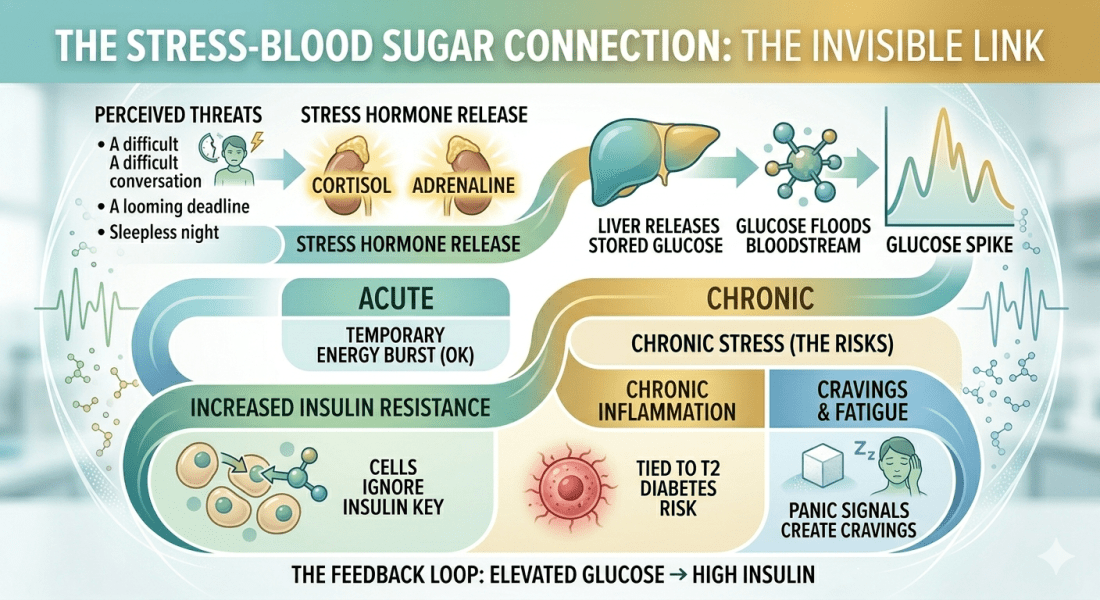
When your body perceives a threat — whether that’s a difficult conversation, a looming deadline, a sleepless night, or simply never switching off  it releases cortisol and adrenaline. These hormones signal the liver to release stored glucose into the bloodstream, giving your body the energy it needs to fight or flee.

This is a brilliant survival mechanism. But when stress is chronic — when it happens day after day, week after week your body is constantly flooding your bloodstream with glucose. And your cells are constantly being asked to manage it. Over time, this wears the system down.

What Chronic Stress Does to Blood Sugar

Increased insulin resistance meaning your cells become less responsive to insulin’s signals

Elevated fasting blood sugar levels

Increased cravings for sugar and refined carbohydrates

Disrupted sleep, which further impairs blood sugar regulation

Increased inflammation, which is closely linked to Type 2 diabetes risk

This does not mean that stress causes diabetes. The picture is always more complex than that. But it does mean that nervous system health and metabolic health are far more connected than most people realise. L

The Women Who Are Most at Risk:

The women I speak to most often are the ones carrying everything. The ones who are managing households, careers, relationships, and everyone else’s emotional needs often while neglecting their own.

These women are frequently exhausted, frequently anxious, and frequently dismissing their own symptoms as “just stress.”

But the body keeps score. And chronically elevated cortisol is one of the most significant and least discussed risk factors for metabolic health challenges, including blood sugar dysregulation.

What Actually Helps

You cannot think your way out of a stressed nervous system, but you can nourish it.

Eat regularly. Skipping meals when you’re stressed is one of the worst things you can do for your blood sugar. Three balanced meals with protein, fat, and fibre at each keeps cortisol from spiking and your energy from crashing.

Prioritise magnesium. Stress depletes magnesium rapidly, and magnesium plays a key role in insulin sensitivity. Dark leafy greens, pumpkin seeds, dark chocolate, and almonds are your friends.

Build moments of stillness into every day. Not scrolling. Not multitasking. Just breathing. Even five minutes of slow, intentional breath activates your parasympathetic nervous system and begins to lower cortisol.

Sleep as though your health depends on it. Because it does.

Seek support. Whether that’s a trusted friend, a therapist, or a coach you are not meant to carry all of this alone.

This Diabetes Week

If you are living with diabetes, I see the invisible work you do every single day to manage your condition. You deserve support, not judgement.

And if you don’t have a diagnosis but recognise yourself in these words your body is asking you for something. It’s worth listening.

💬 Did this change how you think about stress and your health? Share your thoughts in the comments below. And if this post spoke to you, please share it with someone who needs to hear it.

With warmth,

Leena 🌿

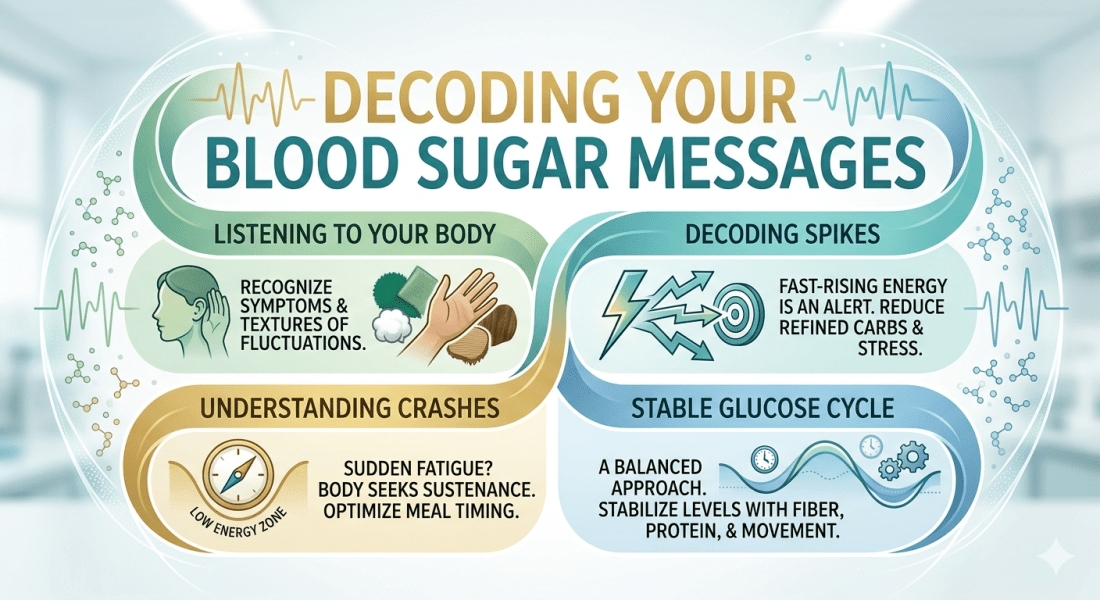
What Your Blood Sugar Is Really Trying to Tell You (and How to Listen)

This week is Diabetes Week in UK whether you have diabetes, are at risk, or simply want to understand your body better, this post is for you.

Because here’s something most people don’t realise: your blood sugar is talking to you every single day. Through your energy levels, your mood, your cravings, your concentration, and the way you feel between meals. Most of us just haven’t been taught how to listen.

What Blood Sugar Instability Actually Feels Like

You don’t have to have diabetes to experience blood sugar fluctuations. In fact, millions of people live with the symptoms of blood sugar instability without ever connecting them to what they’ve eaten.

Here are some signs your blood sugar may be on a rollercoaster:

You feel irritable, anxious, or shaky if you skip a meal.

You experience an energy crash in the mid-morning or mid-afternoon..

You crave sugar or carbohydrates after eating.

You feel foggy or unable to concentrate between meals.

You wake at 3am and can’t get back to sleep.

You feel better immediately after eating but tired again an hour later.

If any of these feel familiar, your blood sugar is asking for support.

Why This Matters Beyond Diabetes

Chronically unstable blood sugar puts your nervous system under stress. Every time your blood sugar crashes, your body releases cortisol and adrenaline to bring it back up. Over time, this constant stress response contributes to fatigue, anxiety, inflammation, hormonal imbalance, and yes over time, an increased risk of Type 2 diabetes.

Understanding your blood sugar isn’t just for people with a diagnosis. It is for every person who wants to feel well in their body.

5 Ways to Support Your Blood Sugar Every Day

Never eat carbohydrates alone. Always pair them with protein, healthy fat, or fibre. Toast with nut butter. Apple with almonds. Rice with eggs or salmon. This slows the release of sugar into the bloodstream and prevents spikes and crashes.

Eat within 90 minutes of waking. Skipping breakfast sends your blood sugar crashing first thing, triggering a cortisol spike that sets an anxious, reactive tone for your entire day.

Prioritise your sleep. Poor sleep directly impairs insulin sensitivity meaning your body struggles to manage blood sugar effectively when you’re tired. Seven to eight hours is not a luxury. It is metabolic medicine.

Move after meals. Even a ten-minute walk after eating helps your muscles absorb glucose from the bloodstream, reducing post-meal blood sugar spikes significantly.

Reduce ultra-processed foods gradually. You don’t have to be perfect. Start by crowding them out adding more whole foods to your plate rather than focusing on what to remove.

A Gentle Reminder This Diabetes Week

If you have diabetes Type 1, Type 2, or gestational please know that your condition is not a reflection of your worth, your willpower, or your character. Diabetes is a complex condition influenced by genetics, environment, stress, and so much more.

This week, let’s commit to understanding more and judging less.

💬 Did any of the blood sugar signs above resonate with you? Drop a comment below I read and reply to every one.

With warmth,

Leena 🌿

Soluble vs. Insoluble Fiber: What’s the Difference and Why Do You Need Both?

Key Takeaways

  • Soluble fibre dissolves in water and forms a gel-like substance that may help regulate blood sugar, support heart health, and improve digestion.
  • Insoluble fibre does not dissolve in water and helps promote regular bowel movements by adding bulk to stool.
  • Most plant-based foods contain a combination of both types of fibre.
  • Adults should aim for approximately 22–34 grams of fibre daily, depending on age and sex.
  • Eating a variety of fruits, vegetables, legumes, nuts, seeds, and whole grains is the easiest way to get enough fibre.

What Is Fibre?

Fibre is a type of carbohydrate found in plant foods that the body cannot fully digest. Unlike other carbohydrates that are broken down into sugar and absorbed into the bloodstream, fibre passes through much of the digestive system largely intact.

Although it isn’t digested, fibre plays a vital role in overall health. It supports digestion, helps regulate blood sugar, promotes healthy cholesterol levels, and may reduce the risk of several chronic diseases.

There are two primary types of dietary fibre:

Soluble Fiber

Soluble fibre dissolves in water and forms a gel-like substance in the digestive tract. This slows digestion and can help control blood sugar and cholesterol levels.

Insoluble Fiber

Insoluble fibre does not dissolve in water. Instead, it adds bulk to stool and helps food move more efficiently through the digestive system.

Most plant foods contain both types, although some foods provide higher amounts of one than the other.

Benefits of Dietary Fibre

A diet rich in fibre has been associated with numerous health benefits, including:

  • Supporting digestive health
  • Promoting regular bowel movements
  • Helping regulate blood sugar levels
  • Lowering LDL (“bad”) cholesterol
  • Supporting healthy weight management
  • Increasing feelings of fullness
  • Reducing inflammation
  • Supporting heart health
  • Potentially lowering the risk of certain cancers, including colorectal cancer

Benefits of Soluble Fibre

Soluble fibre is particularly known for its ability to absorb water and form a gel. This process may help:

Improve Blood Sugar Control

By slowing digestion, soluble fibre can reduce rapid spikes in blood glucose after meals. This can be particularly beneficial for people with insulin resistance or diabetes.

Lower Cholesterol Levels

Soluble fibre binds with cholesterol-containing compounds in the digestive tract, helping remove them from the body and potentially lowering LDL cholesterol.

Help Manage Diarrhoea

Because it absorbs water and adds consistency to stool, soluble fibre may help improve loose stools and diarrhoea.

Increase Fullness

The gel-forming effect of soluble fibre slows stomach emptying and may help control appetite.

Benefits of Insoluble Fibre

Insoluble fibre acts differently within the digestive tract.

Supports Regular Bowel Movements

By adding bulk to stool, insoluble fibre helps move waste through the intestines more efficiently.

Helps Prevent Constipation

Insoluble fibre attracts water into stool, making it easier to pass and reducing straining during bowel movements.

Supports Digestive Health

A healthy digestive system depends on regular movement through the gut. Insoluble fibre helps maintain this process and may contribute to long-term bowel health.

Soluble vs. Insoluble Fibre: Which Is Better?

Neither type is better than the other. They simply provide different benefits.

Health GoalSoluble FiberInsoluble Fiber
Relieve Diarrhea✓✓
Relieve Constipation✓✓
Lower Cholesterol✓✓
Improve Blood Sugar Control✓✓
Increase Fullness✓✓
Support Weight Management✓✓
Promote Regular Digestion✓✓

For optimal health, it’s best to consume a variety of foods that provide both types of fibre.

Best Sources of Soluble Fibre

Foods rich in soluble fibre include:

  • Oats and oat bran
  • Barley
  • Apples
  • Citrus fruits
  • Bananas
  • Pears
  • Carrots
  • Sweet potatoes
  • Brussels sprouts
  • Beans
  • Lentils
  • Chickpeas
  • Psyllium husk

Best Sources of Insoluble Fibre

Foods rich in insoluble fibre include:

  • Whole wheat
  • Wheat bran
  • Brown rice
  • Quinoa
  • Nuts
  • Seeds
  • Leafy greens
  • Broccoli
  • Cauliflower
  • Fruit skins and vegetable peels

How Much Fibre Do You Need?

General daily recommendations suggest:

GroupDaily Fibre Target
Women22–28 grams
Men28–34 grams

Unfortunately, many adults consume far less than recommended. Increasing intake gradually can help prevent digestive discomfort while allowing the body to adapt.

Can You Eat Too Much Fibre?

While fibre is beneficial, suddenly increasing intake can sometimes lead to:

  • Bloating
  • Gas
  • Abdominal discomfort
  • Cramping
  • Changes in bowel habits

These symptoms are more common when fibre intake increases rapidly or when adequate water intake is not maintained. Drinking plenty of fluids is essential when consuming a high-fibre diet.

People with certain digestive conditions, including active inflammatory bowel disease flare-ups, may need personalised guidance from a healthcare professional before significantly increasing fibre intake.

Frequently Asked Questions

Is soluble or insoluble fibre better?

Both are important. Soluble fibre supports cholesterol, blood sugar, and appetite regulation, while insoluble fibre helps maintain regular bowel movements and digestive health.

Which fibre helps with constipation?

Both can help, but insoluble fibre is particularly effective because it adds bulk to stool and promotes movement through the digestive tract.

Which fibre helps with diarrhoea?

Soluble fibre may help by absorbing excess water and improving stool consistency.

Do I need fibre supplements?

Whole foods should be your primary source of fibre. Supplements can be useful in certain situations but generally provide fewer nutritional benefits than fruits, vegetables, legumes, and whole grains.

Final Comments

Soluble and insoluble fibre each play unique roles in maintaining good health. Soluble fibre supports blood sugar control, cholesterol management, and digestive balance, while insoluble fibre promotes regular bowel movements and digestive efficiency.

Rather than focusing on one type over the other, aim to eat a wide range of plant-based foods every day. A varied diet rich in fruits, vegetables, legumes, nuts, seeds, and whole grains will naturally provide the balance of fibre your body needs to thrive.

Sd

Nourishing Breakfasts That Take Less Than 5 Minutes (and Support Your Mood All Day)

Let’s talk about breakfast. Not in a complicated, track-your-macros way. In a simple, nourish-your-nervous-system, feel-good-all-morning way.

what you eat within the first 90 minutes of waking up sets your blood sugar — and your mood — for the entire day.

Here are three of my favourite quick, nourishing breakfasts that I genuinely make and eat myself.

1. Greek Yoghurt with Berries and Seeds

Spoon full-fat Greek yoghurt into a bowl. Add a handful of frozen berries (they defrost in minutes), a tablespoon of pumpkin seeds, and a drizzle of honey.

Why it works: The protein in the yoghurt stabilises your blood sugar. The berries are full of antioxidants that support your mood and reduce inflammation. The pumpkin seeds are one of the richest sources of magnesium the mineral most of us are deficient in and the one most linked to anxiety and poor sleep.

This breakfast takes three minutes and it genuinely changes how you feel by 11am.

2. Oats with Nut Butter and Banana

Make your porridge however you like it. Stir in a tablespoon of almond or peanut butter while it’s still warm. Slice half a banana on top.

Why it works: Oats are a slow-release carbohydrate, meaning they release energy steadily rather than spiking and crashing your blood sugar. The nut butter adds healthy fat and protein to keep you full and focused. And bananas contain tryptophan — a precursor to serotonin, your feel-good hormone.

Warm, comforting, and genuinely good for your brain chemistry.

3. Eggs on Rye Toast with Avocado

Toast one slice of rye bread. Slice a quarter of an avocado. Done.

Why it works: Avocado provides healthy monounsaturated fats that support hormone production. Rye bread is lower on the glycaemic index than white bread, so it won’t spike your blood sugar.

This is the breakfast I eat when I want to feel sharp, calm, and completely nourished.

None of these breakfasts require meal prep, complicated ingredients, or more than five minutes of your morning. They just require the decision to nourish yourself first before the emails, before the chaos, before everything else.

You are worth five minutes,

Which one are you trying this weekend? Let me know in the comments.


With warmth,
Leena 🌿

The Gut-Mental Health Connection: Why Your Stomach Holds the Key to Your Mood

Have you ever had a gut feeling about something? 

Felt butterflies before a big moment? Noticed your stomach tighten when you’re anxious, or felt nauseous when you’re scared?

That is not a coincidence. That is your gut and your brain in constant, real-time conversation and what’s happening in your digestive system has a profound effect on your mental health, your mood, and your ability to cope with stress.

Have you ever had a gut feeling about something? 

Felt butterflies before a big moment? Noticed your stomach tighten when you’re anxious, or felt nauseous when you’re scared?

That is not a coincidence. That is your gut and your brain in constant, real-time conversation and what’s happening in your digestive system has a profound effect on your mental health, your mood, and your ability to cope with stress.

This is one of the most exciting areas of nutrition science right now, and it could completely change how you think about your mental wellbeing.

Meet Your Second Brain

Your gut contains over 500 million neuron’s more than your spinal cord. Scientists now call it the “enteric nervous system” or your second brain, and it operates largely independently of the brain in your head.

But here’s the part that surprises most people: approximately 90% of your serotonin  your primary feel good neurotransmitter  is produced in your gut and not your brain.

This means that the health of your digestive system directly impacts your mood, your anxiety levels, your sleep, and your emotional resilience.

What Damages Your Gut-Mental Health Connection

Chronic stress: cortisol disrupts your gut microbiome, reducing the diversity of beneficial bacteria.

Ultra-processed foods:  sugar, artificial sweeteners, and refined carbs feed harmful bacteria and reduce serotonin production

Antibiotics  while sometimes necessary, they wipe out both harmful and beneficial gut bacteria

Not enough fibre: Your  beneficial gut bacteria feeds on fibre., without it, they would starve.

Eating too fast: your gut needs a calm, parasympathetic state to digest properly. Eating on the go or under stress impairs digestion significantly.

5 Ways to Nourish Your Gut for Better Mental Health.

Eat fermented foods daily; Yogurt, kefir, sauerkraut, kimchi, and miso are all rich in beneficial probiotics that support a healthy microbiome and better mood regulation.

Increase your fibre intake; Aim for a wide variety of plant foods  vegetables, fruits, legumes, wholegrains, nuts and seeds. Each different plant feeds a different strain of beneficial bacteria.

Reduce ultra-processed foods

This doesn’t mean perfection. It means gradually crowding out the processed foods with more whole, nourishing alternatives.

Eat slowly and mindfully

Chew your food properly. Sit down to eat. Take three deep breaths before your meal to shift your nervous system into rest and digest mode. Your gut absorbs nutrients far more effectively in a calm state.

Manage your stress

Since stress directly damages your gut microbiome, nervous system regulation isn’t just good for your mind  it’s essential for your gut health too.

The Beautiful Truth

You cannot separate mental health from physical health. They are the same conversation, happening in the same body.

When you nourish your gut, you nourish your mind. When you calm your nervous system, you improve your digestion. When you eat well, you feel better emotionally. Everything is connected  and that is genuinely good news, because it means every small positive choice you make ripples through your entire wellbeing.

💬 I’d Love to Hear From You

Did you know that 90% of serotonin is made in the gut? Does that change how you think about what you eat?

Leave a comment below 

 I’d love to know your thoughts. And if this post opened your eyes to the gut-brain connection, share it with someone who might need to hear it.

Hit subscribe at the bottom of the page to get every new post straight to your inbox.

With warmth,

Leena 🌿

Nutrition & Wellness Coach | Inside Out Wellbeing

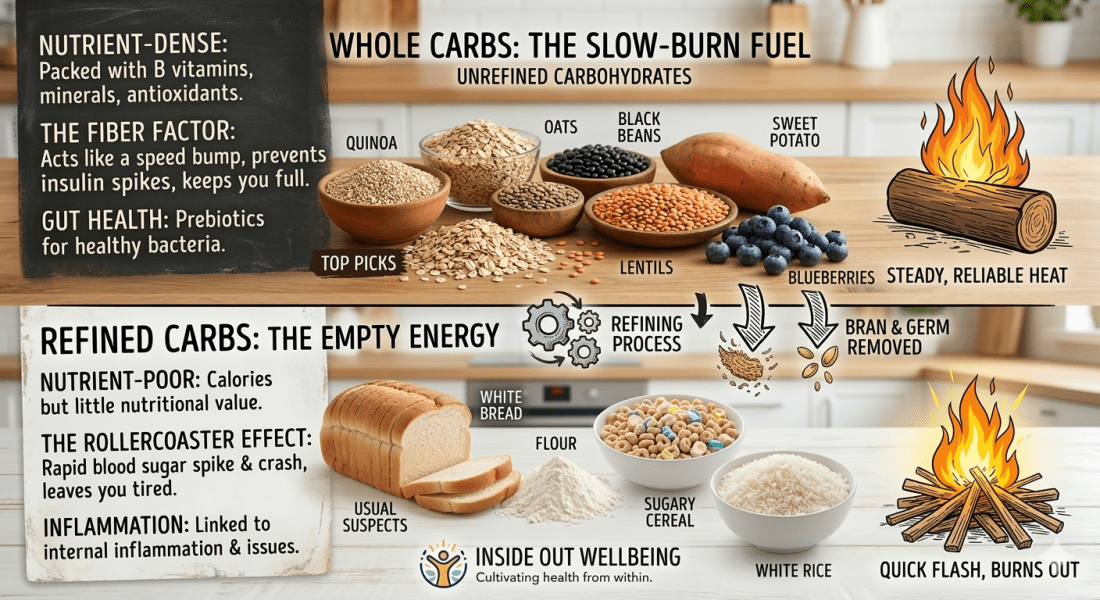
Carbs: Whole vs. Refined – What’s the Difference?

In the world of nutrition, carbohydrates often get a bad rap. You’ve likely heard advice to cut carbs, but the truth is more nuanced: it’s about quality, not just quantity.

Understanding the difference between whole and refined carbohydrates is the secret to fueling your body without the energy crashes.

1. What Are Carbs, Anyway?
Carbohydrates are one of the three primary macronutrients (alongside protein and fat) that provide energy. When you eat carbs, your body breaks them down into glucose, the preferred fuel for your brain and muscles.
However, the speed at which that fuel enters your system depends entirely on the structure of the carb.

2. Whole Carbs: The Slow-Burn Fuel
Whole carbohydrates are minimally processed, meaning they arrive at your plate with their natural fiber and nutrients intact.

Nutrient-Dense: 
They are nature’s multivitamin, packed with B vitamins, minerals, and antioxidants.

The Fiber Factor: 
Fibre acts like a speed bump for your digestion. It slows down glucose absorption, preventing insulin spikes and keeping you satiated for hours.

Gut Health: 
The non-digestible fibers in whole carbs act as prebiotics—essentially “food” for the healthy bacteria in your microbiome.

Top Picks:
Grains: Quinoa, oats, buckwheat, and brown rice.
Legumes: Lentils, chickpeas, and black beans.
Produce: All fruits and starchy vegetables (like sweet potatoes).

Refined Carbs: The Empty Energy
Refined carbs have been milled a process that removes the bran (the fiber-rich outer layer) and the germ(the nutrient-rich core). What’s left is just the starchy endosperm.

Nutrient-Poor: Without the bran and germ, you’re left with calories but very little nutritional value.

The Rollercoaster Effect
aAs they lack fiber, these carbs hit your bloodstream almost instantly. This causes a rapid spike in blood sugar, followed by an inevitable “crash” that leaves you tired and reaching for more sugar.

Inflammation: Frequent consumption of highly refined carbs is linked to increased internal inflammation and metabolic issues.
The Usual Suspects:

White Flour Products: White bread, flour tortillas, and standard pasta.

Added Sugars: Soda, sugary cereals, and pastries.

Processed Grains: White rice and “instant snacks.

4. Easy Swaps for a Smarter Plate
Transitioning to whole carbs doesn’t require a kitchen overhaul.

For instance, replacing white rice with quinoa or farro not only introduces a pleasant, nutty texture to your meals but also increases your protein intake. You can transform your morning routine by trading sugary cereals for steel-cut oats, which provide the sustained fuel needed to keep you feeling full until lunch.

When it comes to wraps or tacos, opting for corn or whole wheat tortillas over standard flour varieties is an easy way to boost your fiber consumption. Even snack time offers an opportunity for a nutritional upgrade; swapping potato chips for air-popped popcorn gives you a satisfying, whole-grain crunch with much more volume and fewer empty calories.

Final thoughs
Think of Whole Carbs as a slow-burning log on a campfire providing steady, reliable heat. Think of Refined Carbs as kindling a bright flash of energy that burns out quickly.
By choosing whole more often, you aren’t just eating; you’re investing in steady energy, better digestion, and long-term health.
Next time you shop, look for “100% Whole Grain” on the label—your body will thank you!

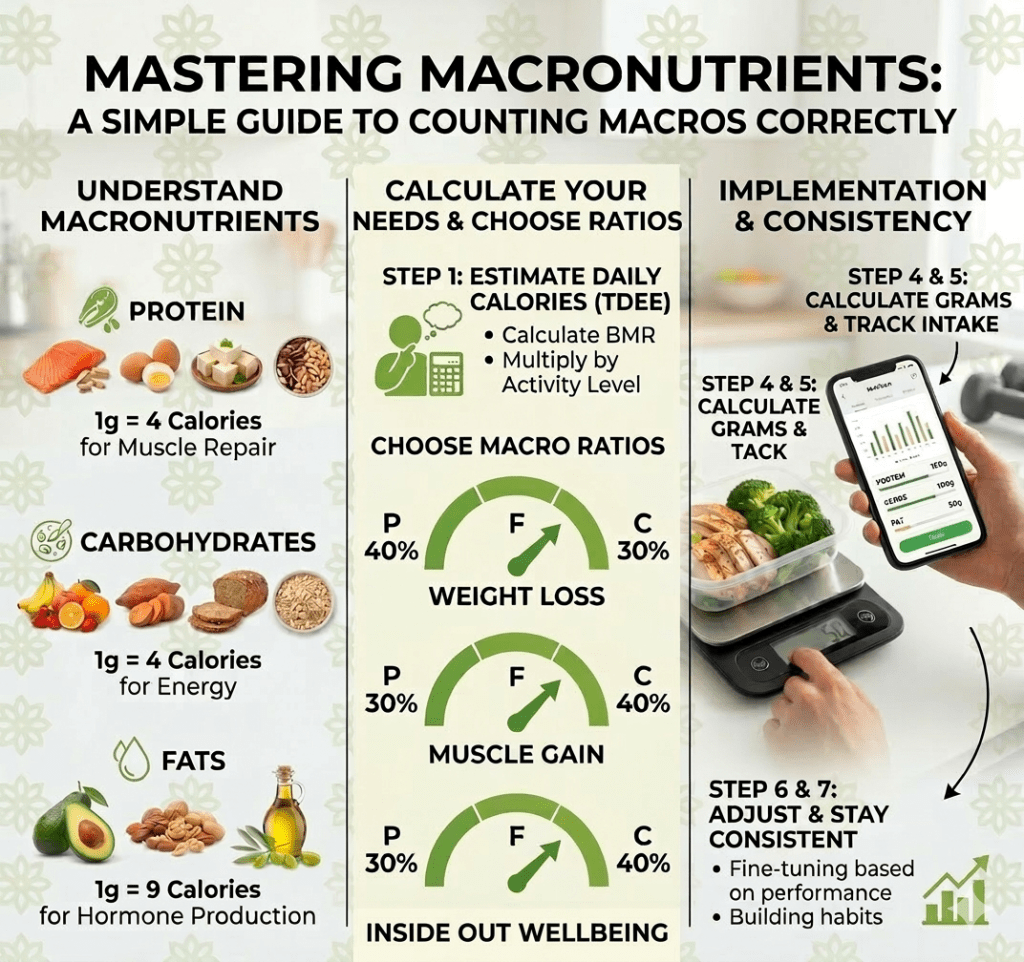
Mastering Macronutrients: A Simple Guide to Counting Macros Correctly

Whether you’re a seasoned gym-goer, an athlete, or just beginning your wellness journey, understanding macronutrients can be a game changer for reaching your health goals.

If you’ve ever wondered how to break down your diet into protein, fats, and carbohydrates to maximise results, this guide will walk you through the process step by step.

Let’s get started.

Step 1: Understand Macronutrients

Before you start counting macros, it’s important to know what they are and why they matter.

Protein

Protein is essential for muscle repair, growth, and overall body function.

1 gram of protein = 4 calories

Common sources include lean meats, fish, eggs, dairy, tofu, beans and legumes.

Fats

Healthy fats help with hormone production, brain health, and long-lasting energy.

1 gram of fat = 9 calories

Good sources include avocados, nuts, seeds, olive oil and fatty fish.

Carbohydrates

Carbohydrates are the body’s primary source of energy, especially for exercise and daily activity.

1 gram of carbohydrates = 4 calories

Healthy carbs include fruits, vegetables, whole grains and legumes.

Step 2: Calculate Your Daily Calorie Needs

To determine how many macros you should consume, you first need to estimate your daily calorie requirements.

This involves calculating your Basal Metabolic Rate (BMR) and Total Daily Energy Expenditure (TDEE).

1. Calculate Your BMR

BMR represents the calories your body needs to perform basic functions like breathing and circulation.

For men:

BMR = 88.362 + (13.397 × weight in kg) + (4.799 × height in cm) − (5.677 × age)

For women:

BMR = 447.593 + (9.247 × weight in kg) + (3.098 × height in cm) − (4.330 × age)

2. Calculate Your TDEE

Multiply your BMR by your activity level:

Activity Level Multiplier

Sedentary (little or no exercise) BMR × 1.2

Light activity (1–3 days/week) BMR × 1.375

Moderate activity (3–5 days/week) BMR × 1.55

Very active (6–7 days/week) BMR × 1.725

Extremely active (physical job/training twice daily) BMR × 1.9

Your TDEE gives you an estimate of how many calories you need each day.

Step 3: Choose Your Macronutrient Ratios

Your macro ratio depends on your health or fitness goal.

For Weight Loss

Protein: 40%

Fat: 30%

Carbohydrates: 30%

Higher protein helps maintain muscle and improves satiety.

For Muscle Gain

Protein: 30%

Fat: 30%

Carbohydrates: 40%

Extra carbs help fuel workouts and recovery.

For Maintenance

Protein: 30%

Fat: 30%

Carbohydrates: 40%

This balanced approach supports general health and energy levels.

Step 4: Convert Percentages into Grams

Once you know your daily calories and macro percentages, you can convert them into grams.

1. Calculate Calories per Macronutrient

Total Calories × Percentage

Example (2000 calories with 30% protein):

2000 × 0.30 = 600 calories from protein

2. Convert Calories into Grams

Use the calorie value of each macro:

Protein: Cal ÷ 4 Carbs: Calories ÷ 4

Fat: Calories ÷ 9

For example:

600 calories from protein ÷ 4 = 150g protein

Step 5: Track Your Food Intake

Tracking helps ensure you’re staying within your macro targets.

Use a Tracking App

Read Nutrition Labels

Check the macronutrient content per serving to track accurately.

Weigh Your Food

Using a kitchen scale ensures accurate portion sizes and macro tracking.

Step 6: Adjust and Fine-Tune

Your body is unique, so adjustments may be necessary.

Pay attention to:

Energy levels

Workout performance

Weight changes

Hunger levels

If your progress stalls, then tweak your calories or macro ratios accordingly.

Step 7: Stay Consistent

Consistency is the most important factor for long-term success.

Don’t worry about being perfect every day. Focus on building sustainable habits and finding a macro balance that works for your lifestyle.

Over time, tracking macros becomes easier and more intuitive.

Final Thoughts

Counting macronutrients might feel overwhelming at first, but with practice it becomes a powerful tool for improving your nutrition.

By understanding your calorie needs, choosing the right macro balance, and tracking your intake, you can fuel your body effectively and move closer to your health goals.

Remember: the goal isn’t perfection — it’s progress and consistency.

If you found this guide helpful, feel free to share it with friends and family who want to improve their nutrition. And if you have any tips or questions about macro tracking, drop them in the comments below!

Unlocking the Power of Micronutrients for Your Health

,

When we think about nutrition, our minds often jump to macronutrients: proteins, carbs, and fats. But there’s another category of nutrients that, while needed in smaller amounts, are just as crucial for our health—micronutrients. These tiny powerhouses, including vitamins and minerals, are essential for everything from energy production to immune function. Let’s dive into the world of micronutrients, exploring their types, functions, benefits, and why they deserve a place in the spotlight.

What Are Micronutrients?

Micronutrients are vitamins and minerals required by the body in minute amounts, yet they play an enormous role in maintaining optimal health. Unlike macronutrients, which provide the energy necessary to fuel our bodies, micronutrients are involved a vast array of physiological functions, ensuring that our bodies operate smoothly.

Types of Micronutrients

Micronutrients can be broadly categorized into two groups: vitamins and minerals.

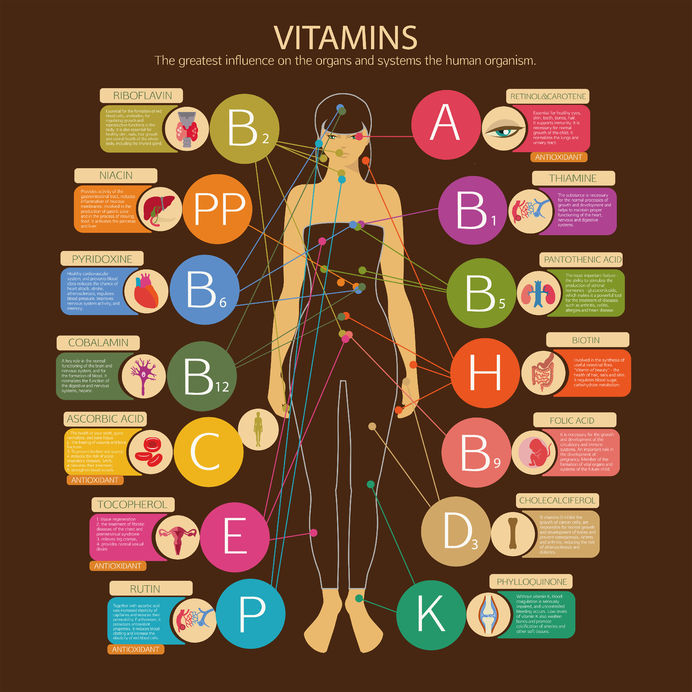
  1. Vitamins: These organic compounds are vital for various metabolic processes. There are two types of vitamins:
    • Water-soluble vitamins: These include the B-complex vitamins and vitamin C. They dissolve in water, meaning they are not stored in the body and need to be consumed regularly.
    • Fat-soluble vitamins: These include vitamins A, D, E, and K. They are absorbed along with fats in the diet and can be stored in the body’s fatty tissues.
  2. Minerals: These inorganic elements come from soil and water, and they’re absorbed by plants or consumed by animals. There are two categories of minerals:
    • Microminerals: Needed in larger amounts, these include calcium, potassium, magnesium, and sodium.
    • Trace minerals: Required in smaller quantities, these include iron, zinc, copper, and selenium.

Functions of Micronutrients

Micronutrients play diverse and critical roles in the body. Here’s a snapshot of their functions:

  • Energy Production: B-vitamins, such as B6 and B12, are crucial for converting food into energy.
  • Bone Health: Calcium and vitamin D are essential for strong bones and teeth.
  • Immune Support: Vitamins C and E, along with zinc and selenium, are key players in maintaining a robust immune system.
  • Blood Clotting: Vitamin K is necessary for the blood clotting process, which prevents excessive bleeding from injuries.
  • Antioxidant Protection: Vitamins A, C, and E function as antioxidants, protecting cells from damage caused by free radicals.
  • Growth and Development: Micronutrients like iron, iodine, and zinc are crucial for growth, development, and overall cellular function.

Benefits of Getting Enough Micronutrients

Adequate intake of micronutrients has far-reaching benefits for health and well-being:

  1. Boosts Immune Function: Regular intake of vitamins and minerals helps in building a strong immune system, reducing the risk of infections.
  2. Promotes Healthy Aging: Antioxidant vitamins protect the body from oxidative stress, slowing down the aging process and reducing the risk of chronic diseases.
  3. Enhances Mental Clarity: Certain micronutrients, like B-vitamins and omega-3 fatty acids, support brain health, improving focus, memory, and cognitive function.
  4. Supports Reproductive Health: Micronutrients like folate and zinc are essential for fertility and healthy pregnancy outcomes.
  5. Prevents Deficiencies: Ensuring an adequate intake of micronutrients prevents deficiency diseases such as scurvy (vitamin C deficiency), rickets (vitamin D deficiency), and anaemia (iron deficiency).

How to Ensure Adequate Intake of Micronutrients

To reap the benefits of micronutrients, it’s important to consume a balanced and varied diet. Here are tips to ensure you’re getting enough:

  • Eat a Rainbow: Consuming a wide variety of colourful fruits and vegetables ensures a diverse intake of vitamins and minerals.
  • Include Whole Grains: Whole grains like brown rice, oats, and quinoa are rich in B-vitamins and minerals like magnesium and iron.
  • Incorporate Lean Proteins: Meat, fish, eggs, and legumes provide essential minerals such as iron, zinc, and selenium.
  • Don’t Forget Dairy: Dairy products like milk, cheese, and yogurt are excellent sources of calcium and vitamin D.
  • Consider Fortified Foods: Foods like fortified cereals and plant-based milk can help fill in nutritional gaps.
  • Supplement Wisely: While a healthy diet should provide your nutrient needs, supplements can be useful in certain situations. Always consult with a healthcare provider before starting any supplementation.

The Bottom Line

Micronutrients may be needed in lesser amounts, but their impact on health is anything but small. From bolstering the immune system to supporting brain health and preventing chronic diseases, the importance of these nutrients cannot be overstated. By focusing on a nutrient-rich diet, you can ensure that your body gets the essential vitamins and minerals it needs to thrive.

So next time you’re planning a meal, remember to think beyond just carbs, protein, and fats. Pay attention to those vital micronutrients—they’re the tiny champions of your health!

Top 10 Nutrient-Dense Vegan Foods

in a world where health and wellness are more important than ever people are turning to plant-based diets for their myriad benefits. But with all the options out there, how do you know which vegan foods are the most nutrient-dense? We’ve got you covered! This blog is your ultimate guide to the most powerful plant-based foods that pack a nutritional punch.

1. Kale: The King of Greens

Kale has earned its crown as one of the most nutrient-dense foods on the planet. Rich in vitamins A, C, and K, kale is a powerhouse of antioxidants and anti-inflammatory compounds. Just one cup provides more than your daily requirement of vitamin K, which is crucial for bone health and blood clotting. Whether you blend it into a smoothie, toss it in a salad, or bake it into crispy chips, kale is a must-have in your diet.

2. Chia Seeds: Tiny but Mighty

Don’t be fooled by their size—chia seeds are a nutritional powerhouse. These tiny seeds are loaded with fibre, omega-3 fatty acids, protein, and essential minerals like calcium and magnesium. Just two tablespoons of chia seeds contain about 10 grams of fibre, making them a terrific addition to smoothies, oatmeal, or even as a vegan egg substitute in baking.

3. Sweet Potatoes: Nature’s Candy

Sweet potatoes are not only delicious but also incredibly nutritious. They are packed with beta-carotene, which your body converts into vitamin A, vital for maintaining healthy vision and a strong immune system. They also provide a good amount of fibre, vitamin C, and potassium. Roast them, mash them, or turn them into fries—sweet potatoes are a versatile and nutrient-rich addition to any meal.

4. Quinoa: The Complete Protein Grain

Quinoa is one of the few plant-based foods that provide all nine essential amino acids, making it a complete protein. This gluten-free grain is also high in fibre, iron, magnesium, and B-vitamins. Quinoa’s nutty flavour and fluffy texture make it a great base for salads, bowls, and even breakfast porridge.

5. Spinach: The Iron-Clad Leafy Green

Spinach is a leafy green that’s packed with iron, especially important for those on a plant-based diet. It’s also high in vitamins A and C, calcium, and folate, making it a nutrient-dense addition to any meal. Enjoy it raw in salads, sautéed as a side dish, or blended into smoothies for an extra nutrient boost.

6. Lentils: The Protein-Packed Legume

Lentils are an excellent source of plant-based protein, fibre, and essential nutrients like folate, iron, and manganese. They’re also incredibly versatile and can be used in soups, stews, salads, or even as a meat substitute in burgers. Lentils are particularly beneficial for heart health, as they help lower cholesterol and stabilize blood sugar levels.

7. Broccoli: The Detox Dynamo

Broccoli is another cruciferous vegetable that’s incredibly nutrient-dense. It’s high in vitamins C and K, fibre, and potassium, and it also contains sulforaphane, a compound that may help with detoxification and cancer prevention. Whether steamed, roasted, or raw, broccoli is a vegetable that should be on your plate.

8. Flaxseeds: The Omega-3 Booster

Flaxseeds are one of the best plant-based sources of alpha-linolenic acid (ALA), a type of omega-3 fatty acid that supports heart health. They are also high in lignans, which have antioxidant properties, and fibre. Ground flaxseeds can be added to smoothies, oatmeal, or used as an egg replacement in baking.

9. Avocado: The Creamy Nutrient Bomb

Avocados are rich in healthy monounsaturated fats, which are great for your heart. They’re also loaded with fibre, potassium, and vitamins C, E, K, and B-6. The creamy texture of avocados makes them perfect for spreading on toast, adding to salads, or blending into smoothies.

10. Seaweed: The Ocean’s Superfood

Seaweed is a nutrient-dense food that’s rich in iodine, which is essential for thyroid function. It’s also high in calcium, magnesium, and vitamins, including A, C, E, and K. Seaweed can be eaten as snacks, used in soups, or added to salads and sushi for a mineral boost.

How to Incorporate These Nutrient-Dense Foods into Your Diet

Now that you know which vegan foods are the most nutrient-dense, it’s time to start incorporating them into your daily meals. Here are simple tips:

  • Start your day with a green smoothie: Blend kale or spinach with fruits, chia seeds, and flaxseeds for a nutrient-packed breakfast.
  • Make nutrient-dense bowls: Combine quinoa or lentils with roasted sweet potatoes, broccoli, and avocado for a hearty, healthy meal.
  • Snack smart: Munch on seaweed snacks or add a sprinkle of chia or flaxseeds to your yogurt or oatmeal.
  • Power up your salads: Add a mix of leafy greens, avocado, and a sprinkle of nuts or seeds for a filling and nutritious salad.

Final Thoughts

Eating a nutrient-dense vegan diet is easier than you might think. By incorporating these superfoods into your meals, you’ll be fuelling your body with the vitamins, minerals, and antioxidants it needs to thrive. Whether you’re a seasoned vegan or just starting your plant-based journey, these foods are sure to elevate your health and wellbeing.

So, what are you waiting for? Start adding these nutrient-dense powerhouses to your plate today and feel the difference!

Join the conversation: What is your favourite nutrient-dense vegan foods? Share your thoughts and recipes in the comments below!