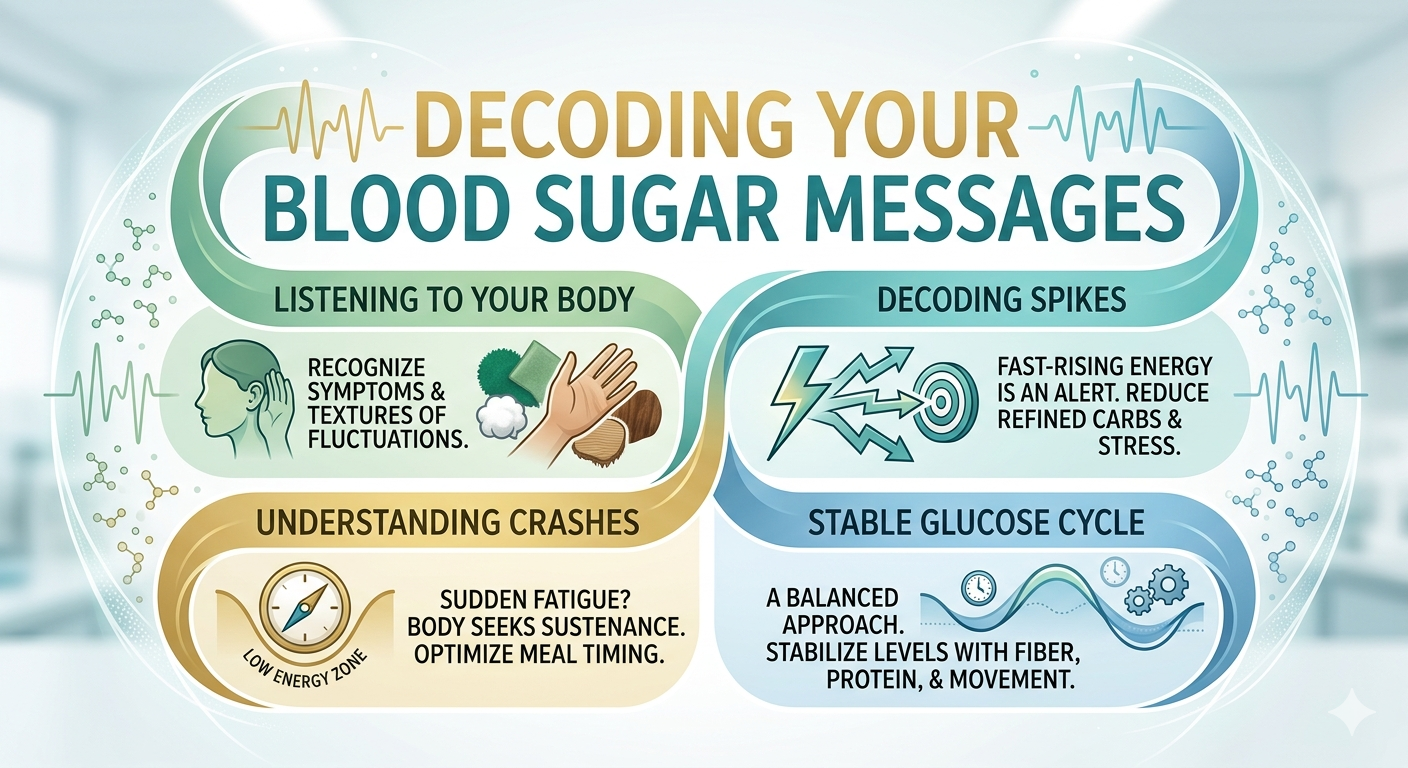

This week is Diabetes Week in UK whether you have diabetes, are at risk, or simply want to understand your body better, this post is for you.
Because here’s something most people don’t realise: your blood sugar is talking to you every single day. Through your energy levels, your mood, your cravings, your concentration, and the way you feel between meals. Most of us just haven’t been taught how to listen.
What Blood Sugar Instability Actually Feels Like
You don’t have to have diabetes to experience blood sugar fluctuations. In fact, millions of people live with the symptoms of blood sugar instability without ever connecting them to what they’ve eaten.
Here are some signs your blood sugar may be on a rollercoaster:
You feel irritable, anxious, or shaky if you skip a meal.
You experience an energy crash in the mid-morning or mid-afternoon..
You crave sugar or carbohydrates after eating.
You feel foggy or unable to concentrate between meals.
You wake at 3am and can’t get back to sleep.
You feel better immediately after eating but tired again an hour later.
If any of these feel familiar, your blood sugar is asking for support.
Why This Matters Beyond Diabetes
Chronically unstable blood sugar puts your nervous system under stress. Every time your blood sugar crashes, your body releases cortisol and adrenaline to bring it back up. Over time, this constant stress response contributes to fatigue, anxiety, inflammation, hormonal imbalance, and yes over time, an increased risk of Type 2 diabetes.
Understanding your blood sugar isn’t just for people with a diagnosis. It is for every person who wants to feel well in their body.
5 Ways to Support Your Blood Sugar Every Day
Never eat carbohydrates alone. Always pair them with protein, healthy fat, or fibre. Toast with nut butter. Apple with almonds. Rice with eggs or salmon. This slows the release of sugar into the bloodstream and prevents spikes and crashes.
Eat within 90 minutes of waking. Skipping breakfast sends your blood sugar crashing first thing, triggering a cortisol spike that sets an anxious, reactive tone for your entire day.
Prioritise your sleep. Poor sleep directly impairs insulin sensitivity meaning your body struggles to manage blood sugar effectively when you’re tired. Seven to eight hours is not a luxury. It is metabolic medicine.
Move after meals. Even a ten-minute walk after eating helps your muscles absorb glucose from the bloodstream, reducing post-meal blood sugar spikes significantly.
Reduce ultra-processed foods gradually. You don’t have to be perfect. Start by crowding them out adding more whole foods to your plate rather than focusing on what to remove.
A Gentle Reminder This Diabetes Week
If you have diabetes Type 1, Type 2, or gestational please know that your condition is not a reflection of your worth, your willpower, or your character. Diabetes is a complex condition influenced by genetics, environment, stress, and so much more.
This week, let’s commit to understanding more and judging less.
💬 Did any of the blood sugar signs above resonate with you? Drop a comment below I read and reply to every one.
With warmth,
Leena 🌿

