
Why you’re always tired? It’s not because you need more sleep.

You’re getting 7, 8, maybe even 9 hours of sleep. Yet  every single morning you wake up exhausted.

Sound familiar?

Here’s what most people don’t realise: tiredness isn’t always about sleep. In fact, for many of the women I work with, sleep isn’t the problem at all. The problem is what’s happening inside their nervous system  and their body is using exhaustion as the only way it knows how to ask for help.

Let me explain.

Your Body Is Running on empty  not  Sleep deprived. When we’re chronically stressed, our bodies produce high levels of cortisol our primary stress hormone. In small doses, cortisol is helpful. It gets us out of bed, helps us focus, and keeps us alert.

When cortisol is elevated day after day  from work pressure, emotional stress, poor nutrition, or simply never switching off your body starts to burn through its reserves at an alarming rate.

The result is a deep, bone-level exhaustion that no amount of sleep can fix.

4 Real reasons you are exhausted that has nothing to do with sleep.

Your blood sugar is on a rollercoaster skipping meals, eating refined carbs alone, or relying on caffeine to get through the day sends your blood sugar crashing and every crash triggers a cortisol spike. This cycle is quietly draining your energy all day long.

Your nervous system never fully switches off, If you’re checking your phone last thing at night, sleeping with notifications on, or mentally running through tomorrow’s to-do list in bed your nervous system is never getting the deep rest it needs. Your body may be asleep but your brain is still on duty.

You’re not eating enough magnesium

Magnesium is essential for energy production at a cellular level and most of us are deficient. Low magnesium means low energy, poor sleep quality, and higher anxiety. Dark leafy greens, pumpkin seeds, and dark chocolate are your friends here.

Your emotions are exhausting you

Emotional labour l the constant managing of feelings, relationships, and other people’s needs  is genuinely physically draining. If you’re an empath, a people pleaser, or someone who carries everyone else’s stress, your tiredness has an emotional root that needs addressing too.

What Actually Helps

Eat breakfast within 90 minutes of waking up. Make it high in  protein and fibre to stabilise blood sugar

No screens for the last 30 minutes before bed

Add magnesium rich foods daily to your diet dark chocolate, spinach and pumpkin seeds.

Build one moment of genuine stillness into your day.

Move your body gently every day  even a 10 minute walk will help.

You’re Not Lazy. You’re Depleted.

There is a difference and once you understand that difference, everything changes.

Your exhaustion is not a character flaw it’s  your body asking you for something different. Small consistent changes you nourish and regulate your nervous system and your energy will return.

💬 I’d Love to Hear From You

 Which of these 4 reasons resonates most with you right now?

Drop a comment below. I read and reply to every single one. If this post helped you feel less alone, please share it with someone who needs to hear it today. 🌿

Hit subscribe at the bottom of the page for more posts like this straight to your inbox.

With warmth,

Leena 🌿

Are You Mentally Exhausted? 7 Gentle Ways to Feel Like Yourself Again

Let me ask you something.

When was the last time you felt truly, genuinely okay?

Not just “getting through the day” okay. Not “I’ll rest at the weekend” okay. But actually calm, present, and like yourself?

If you had to think about it for a while  this post is for you.

Mental exhaustion is one of the most common things I hear about from women I speak to. And yet it’s one of the least talked about. We normalise the tiredness. We push through the anxiety. We tell ourselves everyone feels this way.

But they don’t have to and  neither do you.

Here are seven gentle, realistic ways to start feeling like yourself again — no dramatic life overhaul required.

Stop Calling It “Just Stress”

The first step to feeling better is taking your mental exhaustion seriously.

Stress is not just a feeling. It is a full-body physiological response that affects your hormones, your immune system, your digestion, and your sleep. When we dismiss it as “just stress” we stop ourselves from getting the support we actually need.

Give yourself permission to say: *“I am not okay right now, and that matters.”

That one shift changes. everything.

Breathe Before You Reach for Your Phone

Most of us wake up and immediately check our phones  flooding our nervous system with news, notifications, and other people’s lives before we’ve even had a glass of water.

Tomorrow morning, try this instead: before you pick up your phone, take five slow deep breaths. Inhale for 4 counts, exhale for 7. It takes 60 seconds and it sets your entire nervous system up for a calmer day.

Small habit. Big difference.

Eat Something Before 10am

When we’re mentally exhausted, eating is often the first thing to go. We skip breakfast, grab coffee on the run, and wonder why we feel anxious and foggy by mid-morning.

Low blood sugar triggers a cortisol spike  which feels identical to anxiety. Something as simple as eating a protein-rich breakfast before 10am can noticeably reduce anxiety levels throughout the day.

Try Greek yogurt, or even a handful of nuts. Your brain will thank you.

Say No to One Thing This Week

Mental exhaustion often comes from a life that has too much in it and not enough rest between.

You do not need to justify saying no. You do not need a reason good enough for other people. “I don’t have the capacity right now” is a complete sentence.

Pick one thing on your list this week that you can cancel, delegate, or simply let go of. Notice how it feels.

Go Outside for 10 Minutes  Without Your Phone

Nature is not a luxury. It is a genuine, research-backed tool for mental health. Even 10 minutes outside  without scrolling  lowers cortisol, reduces anxiety, and improves mood.

You don’t need a park or a forest. A garden, a street, a patch of sky. Just step outside, leave your phone behind, and let your nervous system breathe.

Talk to Someone  Anyone

One of the cruelest things about mental exhaustion is that it makes us want to isolate at exactly the moment we need connection most.

You don’t need to have a deep conversation. You don’t need to explain everything. Simply being in the presence of someone who makes you feel safe  a friend, a family member, a coach  is enough to regulate your nervous system and remind you that you are not alone.

If you don’t feel you have that person right now, I want you to know: that is more common than you think, and it is something that can change.

Give Yourself One Moment of Joy Today  On Purpose

When we are burnt out we stop doing the things that light us up. We tell ourselves we’ll do them when we have more time, more energy, more of everything.

But joy is not a reward for getting through the hard stuff. It is part of what gets you through.

Today, on purpose, do one small thing that makes you feel like you again. A walk. A favourite meal. A song you love. A chapter of a book. Ten minutes of nothing at all.

You are allowed to feel good. Even now. Especially now.

 You Are Not Too Far Gone

Whatever you are carrying right now  however long you have been running on empty I want you to know that it is possible to feel better. Not perfectly. Not all at once. But genuinely, sustainably better.

Your nervous system wants to heal. Your body wants to rest. You just need to give it permission.

 💬 I’d Love to Hear From You

Which of these seven things do you need most right now?**

Drop a comment below and let me know — I read and reply to every single one. And if this resonated with you, please share it with someone who needs to hear it today. You never know whose week you might change. 

If you’d like to read more about stress, nutrition, and nervous system health, hit subscribe at the bottom of the page to get every new post straight to your inbox.

With warmth,

Leena 🌿

Fuelling the Calm: How Protein and Fiber Stabilise Your Mood

Have you ever noticed how a sugary breakfast leaves you feeling “on edge” by 11:00 AM? Or how skipping lunch makes you feel irritable, anxious, and unable to focus?

In the world of Inside Out Wellbeing, we often talk about meditation and mindset to find peace. Today, I want to talk about the physical foundation of your zen: Blood Sugar Stability.

The Rollercoaster of Mood

When we eat refined sugars or simple carbs alone, our blood sugar spikes and then crashes. This crash triggers a stress response in the body, releasing cortisol and adrenaline. Physically, this feels like anxiety. Mentally, it feels like burnout.

To find your calm, you need two secret weapons: Protein and Fiber.

1. Protein: The Building Block of “Happy” Hormones

Protein isn’t just for muscles. It provides the amino acids (like tryptophan) that your brain needs to produce Serotonin your feel-good hormone.

• The Inside Out Tip: Aim for a palm-sized portion of protein with every meal to keep your brain chemistry balanced.

2. Fiber: The Slow-Release Valve

Think of fiber as the brake for your digestion. It slows down the absorption of sugar into your bloodstream, preventing those spikes and crashes that leave you feeling shaky or moody.

The Inside Out Tip: Add a handful of leafy greens or chia seeds to your plate to “anchor” your energy.

The Calm Plate Formula

Next time you sit down to eat, ask yourself: Where is my protein? Where is my fiber? When you feed your body stability, your mind follows suit. You aren’t just eating for fuel; you are eating for peace.

🧘🏽‍♀️ Mindful Minute Reset

Before you take your first bite of your next meal, try this 30-second ritual to move from “Fight or Flight” into Rest and Digest.

1. Acknowledge (10 seconds): Look at your plate. Identify one source of protein and one source of fiber. Tell yourself: “I am fueling my calm.”

2. Breathe (10 seconds): Take one deep breath in through your nose for 4 counts, and exhale slowly through your mouth for 6 counts. This “long exhale” tells your nervous system it is safe to eat.

3. Savor (10 seconds): Take your first bite and notice the texture and flavor before you swallow.

The Result: You aren’t just eating; you are communicating with your body.

Let me know how you get on, below in the comments.

The Gut-Brain Axis: A Guide to Mindful Eating for Better Health

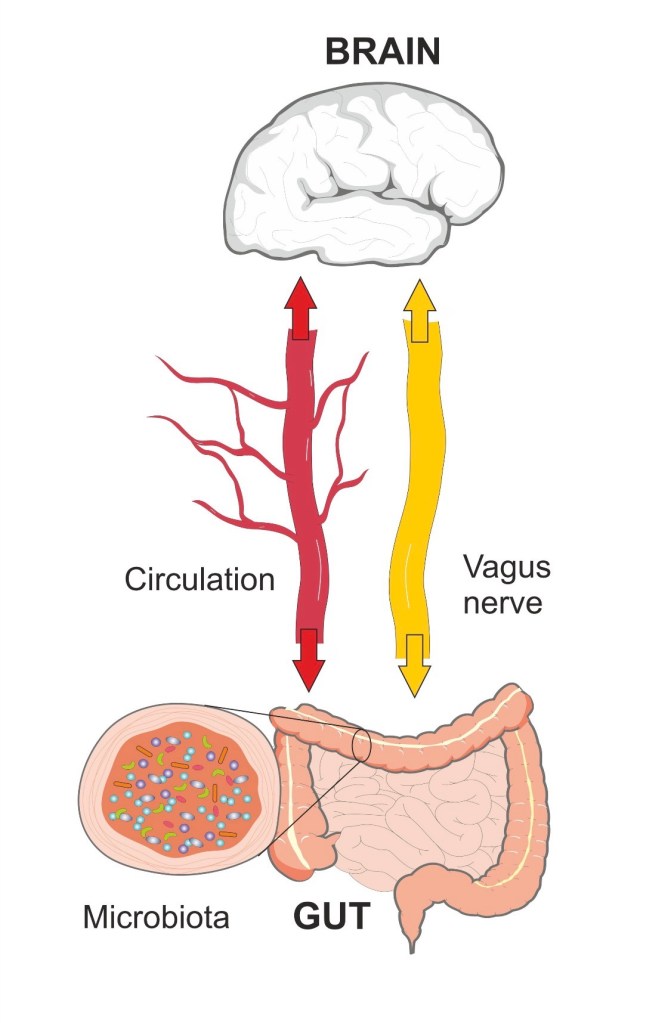
Have you ever had butterflies in your stomach before a big presentation? Or perhaps you’ve noticed that during a particularly hectic week at work, your digestion feels off, no matter how many salads you eat.

This isn’t a coincidence. It’s the Gut-Brain axis in action.

As a Nutrition and Wellness coach, I often see clients doing everything that’s right on paper like: tracking macros, eating whole grains, and staying hydrating. Yet they still feel bloated, sluggish, or unsatisfied. Often, the missing link isn’t on their plate; it’s in their nervous system.

The Science: Rest & Digest vs. Fight or Flight

Our bodies have two main settings for the nervous system:

1. Sympathetic (Fight or Flight): Designed for survival. When you’re stressed, your body diverts energy away from non-essential functions like digestion and sends it to your limbs so you can run or fight.

2. Parasympathetic (Rest and Digest): This is where the magic happens. In this state, your body produces digestive enzymes, moves food efficiently through the gut, and absorbs nutrients effectively.

The Problem: In our modern world, we are often stuck in a low-grade Fight or Flight mode. When you eat while stressed, scrolling through emails or rushing out the door, your body physically cannot prioritize breaking down that healthy meal.

How Stress Alters Your Nutrition

When chronic stress takes the wheel, several things happen inside:

Reduced Nutrient Absorption: Stress can decrease blood flow to the digestive tract, meaning you aren’t getting the full benefit of the vitamins and minerals you’re consuming.

Inflammation: High cortisol (the stress hormone) can irritate the gut lining, potentially leading to bloating and sensitivities.

• The Speed of Digestion: Stress can either slow things down leading to constipation or speed them up too much (leading to malabsorption).

The Solution: Meditation as a Digestive Aid

This is where the Inside Out approach becomes your secret weapon. You don’t need an hour of silence to fix your digestion; you just need to signal to your brain that you are safe.

The Mindful Minute Practice:

Before your next meal, try this:

1. Sit down (don’t eat standing up!).

2. Take three deep, belly breaths. Exhale longer than you inhale.

3. Look at your food and acknowledge the colors and smells.

This simple act of mindfulness flips the switch from Sympathetic to Parasympathetic. You aren’t just eating; you’re nourishing.

Carbs: Whole vs. Refined – What’s the Difference?

In the world of nutrition, carbohydrates often get a bad rap. You’ve likely heard advice to cut carbs, but the truth is more nuanced: it’s about quality, not just quantity.

Understanding the difference between whole and refined carbohydrates is the secret to fueling your body without the energy crashes.

1. What Are Carbs, Anyway?
Carbohydrates are one of the three primary macronutrients (alongside protein and fat) that provide energy. When you eat carbs, your body breaks them down into glucose, the preferred fuel for your brain and muscles.
However, the speed at which that fuel enters your system depends entirely on the structure of the carb.

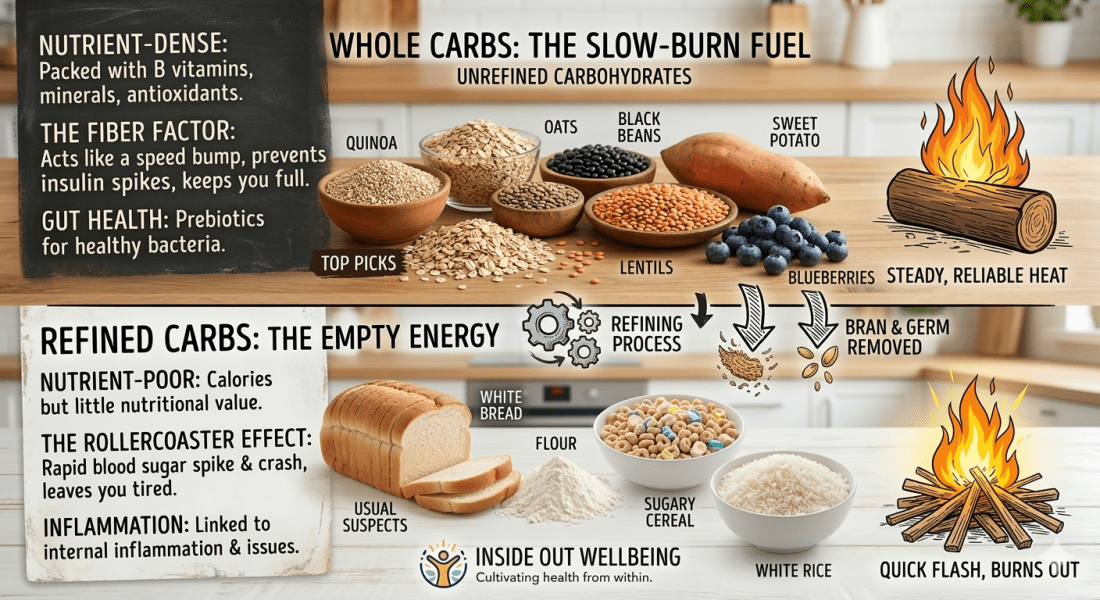
2. Whole Carbs: The Slow-Burn Fuel
Whole carbohydrates are minimally processed, meaning they arrive at your plate with their natural fiber and nutrients intact.

Nutrient-Dense: 
They are nature’s multivitamin, packed with B vitamins, minerals, and antioxidants.

The Fiber Factor: 
Fibre acts like a speed bump for your digestion. It slows down glucose absorption, preventing insulin spikes and keeping you satiated for hours.

Gut Health: 
The non-digestible fibers in whole carbs act as prebiotics—essentially “food” for the healthy bacteria in your microbiome.

Top Picks:
Grains: Quinoa, oats, buckwheat, and brown rice.
Legumes: Lentils, chickpeas, and black beans.
Produce: All fruits and starchy vegetables (like sweet potatoes).

Refined Carbs: The Empty Energy
Refined carbs have been milled a process that removes the bran (the fiber-rich outer layer) and the germ(the nutrient-rich core). What’s left is just the starchy endosperm.

Nutrient-Poor: Without the bran and germ, you’re left with calories but very little nutritional value.

The Rollercoaster Effect
aAs they lack fiber, these carbs hit your bloodstream almost instantly. This causes a rapid spike in blood sugar, followed by an inevitable “crash” that leaves you tired and reaching for more sugar.

Inflammation: Frequent consumption of highly refined carbs is linked to increased internal inflammation and metabolic issues.
The Usual Suspects:

White Flour Products: White bread, flour tortillas, and standard pasta.

Added Sugars: Soda, sugary cereals, and pastries.

Processed Grains: White rice and “instant snacks.

4. Easy Swaps for a Smarter Plate
Transitioning to whole carbs doesn’t require a kitchen overhaul.

For instance, replacing white rice with quinoa or farro not only introduces a pleasant, nutty texture to your meals but also increases your protein intake. You can transform your morning routine by trading sugary cereals for steel-cut oats, which provide the sustained fuel needed to keep you feeling full until lunch.

When it comes to wraps or tacos, opting for corn or whole wheat tortillas over standard flour varieties is an easy way to boost your fiber consumption. Even snack time offers an opportunity for a nutritional upgrade; swapping potato chips for air-popped popcorn gives you a satisfying, whole-grain crunch with much more volume and fewer empty calories.

Final thoughs
Think of Whole Carbs as a slow-burning log on a campfire providing steady, reliable heat. Think of Refined Carbs as kindling a bright flash of energy that burns out quickly.
By choosing whole more often, you aren’t just eating; you’re investing in steady energy, better digestion, and long-term health.
Next time you shop, look for “100% Whole Grain” on the label—your body will thank you!

Mastering Macronutrients: A Simple Guide to Counting Macros Correctly

Whether you’re a seasoned gym-goer, an athlete, or just beginning your wellness journey, understanding macronutrients can be a game changer for reaching your health goals.

If you’ve ever wondered how to break down your diet into protein, fats, and carbohydrates to maximise results, this guide will walk you through the process step by step.

Let’s get started.

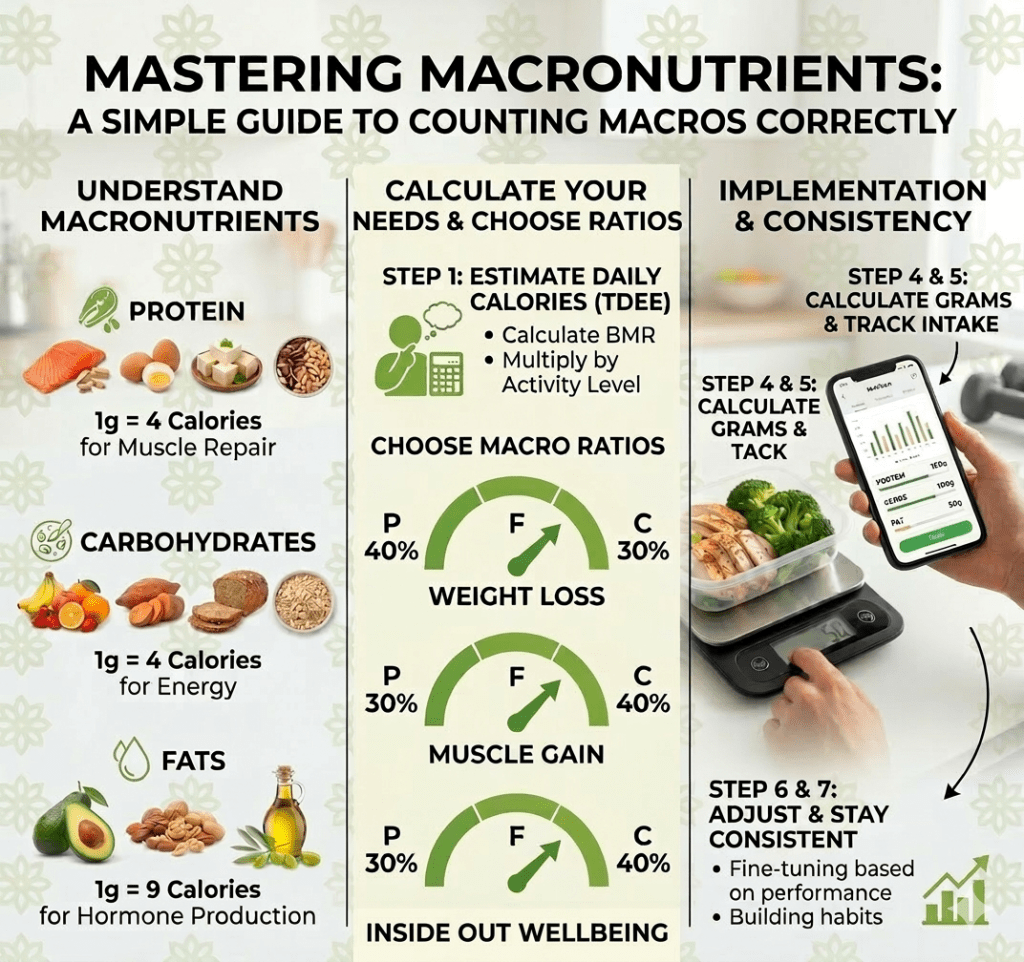
Step 1: Understand Macronutrients

Before you start counting macros, it’s important to know what they are and why they matter.

Protein

Protein is essential for muscle repair, growth, and overall body function.

1 gram of protein = 4 calories

Common sources include lean meats, fish, eggs, dairy, tofu, beans and legumes.

Fats

Healthy fats help with hormone production, brain health, and long-lasting energy.

1 gram of fat = 9 calories

Good sources include avocados, nuts, seeds, olive oil and fatty fish.

Carbohydrates

Carbohydrates are the body’s primary source of energy, especially for exercise and daily activity.

1 gram of carbohydrates = 4 calories

Healthy carbs include fruits, vegetables, whole grains and legumes.

Step 2: Calculate Your Daily Calorie Needs

To determine how many macros you should consume, you first need to estimate your daily calorie requirements.

This involves calculating your Basal Metabolic Rate (BMR) and Total Daily Energy Expenditure (TDEE).

1. Calculate Your BMR

BMR represents the calories your body needs to perform basic functions like breathing and circulation.

For men:

BMR = 88.362 + (13.397 × weight in kg) + (4.799 × height in cm) − (5.677 × age)

For women:

BMR = 447.593 + (9.247 × weight in kg) + (3.098 × height in cm) − (4.330 × age)

2. Calculate Your TDEE

Multiply your BMR by your activity level:

Activity Level Multiplier

Sedentary (little or no exercise) BMR × 1.2

Light activity (1–3 days/week) BMR × 1.375

Moderate activity (3–5 days/week) BMR × 1.55

Very active (6–7 days/week) BMR × 1.725

Extremely active (physical job/training twice daily) BMR × 1.9

Your TDEE gives you an estimate of how many calories you need each day.

Step 3: Choose Your Macronutrient Ratios

Your macro ratio depends on your health or fitness goal.

For Weight Loss

Protein: 40%

Fat: 30%

Carbohydrates: 30%

Higher protein helps maintain muscle and improves satiety.

For Muscle Gain

Protein: 30%

Fat: 30%

Carbohydrates: 40%

Extra carbs help fuel workouts and recovery.

For Maintenance

Protein: 30%

Fat: 30%

Carbohydrates: 40%

This balanced approach supports general health and energy levels.

Step 4: Convert Percentages into Grams

Once you know your daily calories and macro percentages, you can convert them into grams.

1. Calculate Calories per Macronutrient

Total Calories × Percentage

Example (2000 calories with 30% protein):

2000 × 0.30 = 600 calories from protein

2. Convert Calories into Grams

Use the calorie value of each macro:

Protein: Cal ÷ 4 Carbs: Calories ÷ 4

Fat: Calories ÷ 9

For example:

600 calories from protein ÷ 4 = 150g protein

Step 5: Track Your Food Intake

Tracking helps ensure you’re staying within your macro targets.

Use a Tracking App

Read Nutrition Labels

Check the macronutrient content per serving to track accurately.

Weigh Your Food

Using a kitchen scale ensures accurate portion sizes and macro tracking.

Step 6: Adjust and Fine-Tune

Your body is unique, so adjustments may be necessary.

Pay attention to:

Energy levels

Workout performance

Weight changes

Hunger levels

If your progress stalls, then tweak your calories or macro ratios accordingly.

Step 7: Stay Consistent

Consistency is the most important factor for long-term success.

Don’t worry about being perfect every day. Focus on building sustainable habits and finding a macro balance that works for your lifestyle.

Over time, tracking macros becomes easier and more intuitive.

Final Thoughts

Counting macronutrients might feel overwhelming at first, but with practice it becomes a powerful tool for improving your nutrition.

By understanding your calorie needs, choosing the right macro balance, and tracking your intake, you can fuel your body effectively and move closer to your health goals.

Remember: the goal isn’t perfection — it’s progress and consistency.

If you found this guide helpful, feel free to share it with friends and family who want to improve their nutrition. And if you have any tips or questions about macro tracking, drop them in the comments below!

Welcome to Inside Out Wellbeing 

A New Chapter Rooted in Health, Nourishment & Inner Calm

If you’ve been part of my journey for a while, you’ll remember my blog Lena’s Kitchen Veggie Lena  a space filled with plant-based inspiration, wholesome recipes, and a love for nourishing food.

That chapter will always be special to me.

But as I’ve grown personally and professionally so has my vision. I’m so excited to officially welcome you to Inside Out Wellbeing.

Why the Rebrand?

Over the years, my work has expanded far beyond the kitchen.

As a qualified Nutrition Coach and Health & Wellness Coach, I’ve had the privilege of supporting people not just with what’s on their plate, but with how they feel in their bodies, how they manage stress, how they nourish their minds, and how they reconnect with themselves.

Food is powerful  but true wellbeing goes deeper.

I wanted a space that reflects the full picture:

🥦 Nourishing nutrition

🧠 Holistic health

🧘🏽‍♀️ Meditation & mindfulness

💚  lifestyle habits

Inside Out Wellbeing represents what I truly believe:

Real health starts from within.

When we support our inner world  our thoughts, stress levels, emotional health, gut health, nervous system  everything on the outside begins to shift.

What You Can Expect Here

This new space is about whole-person wellbeing.

You’ll still find nutrition guidance and realistic, nourishing food ideas. But you’ll also see more:

Practical wellness tools you can actually implement.

Mindset shifts for sustainable change.

Simple ways to reduce stress and feel calmer.

Meditation guidance

 (including my online course)

Honest conversations about balance 

This isn’t about extremes.

It isn’t about restriction.

It isn’t about chasing ideal health.

It’s about creating wellbeing that feels good, sustainable, and aligned with your real life.

Why “Inside Out”?

Because no amount of green smoothies can compensate for chronic stress.

No perfect meal plan replaces self-awareness.

No external routine creates lasting change without inner alignment.

When we:

regulate our nervous system

build supportive habits

nourish our bodies properly

create space to breathe

We transform from the inside out. That’s  the work I’m most passionate about now.

Thank You for Growing With Me

If you’ve been here since the Veggie Lena days — thank you.

If you’re new here — welcome.

Inside Out Wellbeing is more than a blog. It’s a space for grounded, realistic health. A space for women who want to feel energised, calm, strong, and connected  without overwhelm.

This rebrand isn’t about starting over. It’s about stepping fully into who I am now.

And I’m so glad you’re here for it.

With warmth,

Leena 

Macronutrients 101: Balancing Carbs, Proteins, and Fats

Welcome to the world of macronutrients—the essential building blocks of our diet that keep us energised, healthy, and functioning at our best. Whether you’re a fitness enthusiast, a health-conscious eater, or just someone trying to understand what makes up your meals, understanding macronutrients is key. In this guide, we’ll break down the three main types of macronutrients, their functions, benefits, and how you can balance them for optimal health. Ready to dive in? Let’s get started!

What Are Macronutrients?

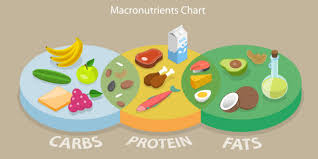
Macronutrients are nutrients that our bodies require in large amounts to function properly. They provide the energy needed for all bodily functions and are vital for overall health. There are three primary macronutrients: carbohydrates, proteins, and fats. Each plays a unique role in our body and offers its own set of benefits.

1. Carbohydrates: The Body’s Main Energy Source

What Are They?
Carbohydrates are the body’s primary source of energy, especially for high-intensity activities. They break down into glucose, which fuels your muscles and brain.

Types of Carbs:

  • Simple Carbohydrates: Found in foods like fruits, milk, and sugar. These carbs are quickly digested and provide a fast energy boost.
  • Complex Carbohydrates: Found in whole grains, legumes, and vegetables. These carbs take longer to digest and provide sustained energy.

Functions of Carbs:

  • Energy Production: Carbs are the body’s preferred source of fuel, especially during exercise or strenuous activity.
  • Brain Function: Glucose, derived from carbs, is the brain’s main energy source.

Benefits:

  • Quick Energy: Simple carbs can quickly replenish energy levels, ideal for pre- or post-workout snacks.
  • Sustained Energy: Complex carbs keep blood sugar stable and help you feel fuller for longer.

Carb-Balancing Tips:

  • Opt for whole, unprocessed carbs like oats, quinoa, and sweet potatoes.
  • Limit sugary snacks and refined grains (e.g., white bread) that spike blood sugar levels.

2. Proteins: The Body’s Building Blocks

What Are They?
Proteins are essential for tissue repair, muscle growth, and the production of enzymes and hormones. They’re often called the “building blocks” of the body.

Types of Proteins:

  • Complete Proteins: Contain all nine essential amino acids and are found in animal products like meat, eggs, and dairy, as well as plant-based sources like quinoa and soy.
  • Incomplete Proteins: Lack one or more essential amino acids and are found in most plant-based foods, like beans, lentils, and nuts.

Functions of Protein:

  • Muscle Repair & Growth: Protein helps repair tissues and build muscle after exercise.
  • Enzyme Production: It also plays a role in producing enzymes for vital biochemical reactions.

Benefits:

  • Muscle Strength: Adequate protein intake supports muscle growth and recovery, making it crucial for athletes and fitness enthusiasts.
  • Satiety: Protein helps keep you feeling full, which can assist in weight management.

Protein-Balancing Tips:

  • Incorporate a variety of protein sources in your meals—lean meats, fish, dairy, legumes, and nuts.
  • Choose plant-based proteins if you’re following a vegan or vegetarian diet.
  • Example: A hearty meal might include a grilled chicken breast (complete protein), quinoa (carb), and sautéed veggies (fibre and nutrients).

3. Fats: Essential for Overall Health

What Are They?
Fats are a dense source of energy and are crucial for maintaining cell structures and producing hormones. They also help the body absorb fat-soluble vitamins.

Types of Fats:

  • Saturated Fats: Found in animal products and certain plant oils. While necessary, they should be consumed in moderation.
  • Unsaturated Fats: Found in foods like avocados, nuts, seeds, and olive oil. These fats are heart-healthy and reduce inflammation.
  • Trans Fats: Found in processed foods and should be avoided as they can increase the risk of heart disease.

Functions of Fats:

  • Energy Storage: Fats are stored in the body as an energy reserve.
  • Cell Structure & Hormone Production: Fats are essential for building cell membranes and producing vital hormones.

Benefits:

  • Heart Health: Omega-3 fatty acids (a type of unsaturated fat) help reduce inflammation and improve cardiovascular health.
  • Nutrient Absorption: Fats are crucial for the absorption of fat-soluble vitamins (A, D, E, and K).

Fat-Balancing Tips:

  • Prioritise unsaturated fats from foods like fish, nuts, seeds, and avocados.
  • Limit saturated fats by reducing processed foods and fatty meats.
  • Avoid trans fats found in most processed snacks and fast foods.

How to Balance Your Macronutrients for Optimal Health

Balancing your macronutrients is essential for maintaining a healthy diet and achieving your fitness and wellness goals. Here’s how you can get it right:

1. Assess Your Needs:
Your macronutrient needs depend on factors like age, sex, activity level, and health goals. For example, athletes may require higher protein intake, while those following a keto diet focus on increasing fats and reducing carbs. You can use a macro calculator or consult a nutritionist for personalised advice.

2. Meal Planning & Example Meal Combinations:

  • Breakfast: Scrambled eggs (protein), whole grain toast (carb), avocado (healthy fat).
  • Lunch: Grilled chicken (protein), quinoa (carb), mixed greens with olive oil dressing (healthy fat).
  • Dinner: Salmon (protein + omega-3 fat), sweet potatoes (carb), steamed broccoli (fibre).

3. Listen to Your Body:
Pay attention to how different macronutrient ratios affect your energy levels, mood, and overall health. Do you feel sluggish after a high-carb meal? Energised after a protein-packed snack? Adjust accordingly.

Diet-Specific Tips:

  • Keto Diet: Focus on higher fat, moderate protein, and very low carbs (e.g., avocado, cheese, eggs, and leafy greens).
  • Vegan Diet: Ensure adequate protein intake from plant-based sources (e.g., lentils, beans, tofu, and tempeh) and healthy fats from nuts, seeds, and oils.
  • Balanced Diet: Emphasise variety, including all macronutrients in every meal for sustained energy and well-being.

Final Thoughts: Your Path to a Healthier You

Understanding macronutrients and how they work can transform your approach to eating and health. By learning about the types, functions, and benefits of carbohydrates, proteins, and fats, you’ll be equipped to make informed food choices that align with your goals. Remember, balance is the key—and moderation is the secret to a diet that supports both happiness and health.

Ready to take control of your nutrition?
Start by evaluating your current diet, experimenting with macronutrient ratios, and observing how your body responds. You’ll feel more energised, stronger, and healthier in no time!

Engage with Us:
I’d love to hear your experiences with macronutrients. What meals or tips have worked for you? Leave a comment below and share your thoughts!

 Feel free to share this guide with friends and family who are curious about macronutrients.

Stay healthy, stay balanced, and happy eating!

Unlocking the Power of Micronutrients for Your Health

,

When we think about nutrition, our minds often jump to macronutrients: proteins, carbs, and fats. But there’s another category of nutrients that, while needed in smaller amounts, are just as crucial for our health—micronutrients. These tiny powerhouses, including vitamins and minerals, are essential for everything from energy production to immune function. Let’s dive into the world of micronutrients, exploring their types, functions, benefits, and why they deserve a place in the spotlight.

What Are Micronutrients?

Micronutrients are vitamins and minerals required by the body in minute amounts, yet they play an enormous role in maintaining optimal health. Unlike macronutrients, which provide the energy necessary to fuel our bodies, micronutrients are involved a vast array of physiological functions, ensuring that our bodies operate smoothly.

Types of Micronutrients

Micronutrients can be broadly categorized into two groups: vitamins and minerals.

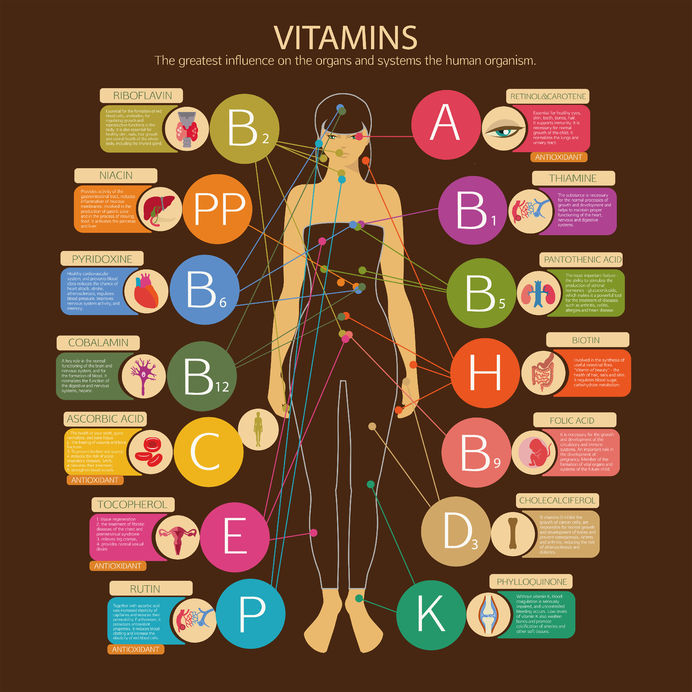
  1. Vitamins: These organic compounds are vital for various metabolic processes. There are two types of vitamins:
    • Water-soluble vitamins: These include the B-complex vitamins and vitamin C. They dissolve in water, meaning they are not stored in the body and need to be consumed regularly.
    • Fat-soluble vitamins: These include vitamins A, D, E, and K. They are absorbed along with fats in the diet and can be stored in the body’s fatty tissues.
  2. Minerals: These inorganic elements come from soil and water, and they’re absorbed by plants or consumed by animals. There are two categories of minerals:
    • Microminerals: Needed in larger amounts, these include calcium, potassium, magnesium, and sodium.
    • Trace minerals: Required in smaller quantities, these include iron, zinc, copper, and selenium.

Functions of Micronutrients

Micronutrients play diverse and critical roles in the body. Here’s a snapshot of their functions:

  • Energy Production: B-vitamins, such as B6 and B12, are crucial for converting food into energy.
  • Bone Health: Calcium and vitamin D are essential for strong bones and teeth.
  • Immune Support: Vitamins C and E, along with zinc and selenium, are key players in maintaining a robust immune system.
  • Blood Clotting: Vitamin K is necessary for the blood clotting process, which prevents excessive bleeding from injuries.
  • Antioxidant Protection: Vitamins A, C, and E function as antioxidants, protecting cells from damage caused by free radicals.
  • Growth and Development: Micronutrients like iron, iodine, and zinc are crucial for growth, development, and overall cellular function.

Benefits of Getting Enough Micronutrients

Adequate intake of micronutrients has far-reaching benefits for health and well-being:

  1. Boosts Immune Function: Regular intake of vitamins and minerals helps in building a strong immune system, reducing the risk of infections.
  2. Promotes Healthy Aging: Antioxidant vitamins protect the body from oxidative stress, slowing down the aging process and reducing the risk of chronic diseases.
  3. Enhances Mental Clarity: Certain micronutrients, like B-vitamins and omega-3 fatty acids, support brain health, improving focus, memory, and cognitive function.
  4. Supports Reproductive Health: Micronutrients like folate and zinc are essential for fertility and healthy pregnancy outcomes.
  5. Prevents Deficiencies: Ensuring an adequate intake of micronutrients prevents deficiency diseases such as scurvy (vitamin C deficiency), rickets (vitamin D deficiency), and anaemia (iron deficiency).

How to Ensure Adequate Intake of Micronutrients

To reap the benefits of micronutrients, it’s important to consume a balanced and varied diet. Here are tips to ensure you’re getting enough:

  • Eat a Rainbow: Consuming a wide variety of colourful fruits and vegetables ensures a diverse intake of vitamins and minerals.
  • Include Whole Grains: Whole grains like brown rice, oats, and quinoa are rich in B-vitamins and minerals like magnesium and iron.
  • Incorporate Lean Proteins: Meat, fish, eggs, and legumes provide essential minerals such as iron, zinc, and selenium.
  • Don’t Forget Dairy: Dairy products like milk, cheese, and yogurt are excellent sources of calcium and vitamin D.
  • Consider Fortified Foods: Foods like fortified cereals and plant-based milk can help fill in nutritional gaps.
  • Supplement Wisely: While a healthy diet should provide your nutrient needs, supplements can be useful in certain situations. Always consult with a healthcare provider before starting any supplementation.

The Bottom Line

Micronutrients may be needed in lesser amounts, but their impact on health is anything but small. From bolstering the immune system to supporting brain health and preventing chronic diseases, the importance of these nutrients cannot be overstated. By focusing on a nutrient-rich diet, you can ensure that your body gets the essential vitamins and minerals it needs to thrive.

So next time you’re planning a meal, remember to think beyond just carbs, protein, and fats. Pay attention to those vital micronutrients—they’re the tiny champions of your health!

Top 10 Nutrient-Dense Vegan Foods

in a world where health and wellness are more important than ever people are turning to plant-based diets for their myriad benefits. But with all the options out there, how do you know which vegan foods are the most nutrient-dense? We’ve got you covered! This blog is your ultimate guide to the most powerful plant-based foods that pack a nutritional punch.

1. Kale: The King of Greens

Kale has earned its crown as one of the most nutrient-dense foods on the planet. Rich in vitamins A, C, and K, kale is a powerhouse of antioxidants and anti-inflammatory compounds. Just one cup provides more than your daily requirement of vitamin K, which is crucial for bone health and blood clotting. Whether you blend it into a smoothie, toss it in a salad, or bake it into crispy chips, kale is a must-have in your diet.

2. Chia Seeds: Tiny but Mighty

Don’t be fooled by their size—chia seeds are a nutritional powerhouse. These tiny seeds are loaded with fibre, omega-3 fatty acids, protein, and essential minerals like calcium and magnesium. Just two tablespoons of chia seeds contain about 10 grams of fibre, making them a terrific addition to smoothies, oatmeal, or even as a vegan egg substitute in baking.

3. Sweet Potatoes: Nature’s Candy

Sweet potatoes are not only delicious but also incredibly nutritious. They are packed with beta-carotene, which your body converts into vitamin A, vital for maintaining healthy vision and a strong immune system. They also provide a good amount of fibre, vitamin C, and potassium. Roast them, mash them, or turn them into fries—sweet potatoes are a versatile and nutrient-rich addition to any meal.

4. Quinoa: The Complete Protein Grain

Quinoa is one of the few plant-based foods that provide all nine essential amino acids, making it a complete protein. This gluten-free grain is also high in fibre, iron, magnesium, and B-vitamins. Quinoa’s nutty flavour and fluffy texture make it a great base for salads, bowls, and even breakfast porridge.

5. Spinach: The Iron-Clad Leafy Green

Spinach is a leafy green that’s packed with iron, especially important for those on a plant-based diet. It’s also high in vitamins A and C, calcium, and folate, making it a nutrient-dense addition to any meal. Enjoy it raw in salads, sautéed as a side dish, or blended into smoothies for an extra nutrient boost.

6. Lentils: The Protein-Packed Legume

Lentils are an excellent source of plant-based protein, fibre, and essential nutrients like folate, iron, and manganese. They’re also incredibly versatile and can be used in soups, stews, salads, or even as a meat substitute in burgers. Lentils are particularly beneficial for heart health, as they help lower cholesterol and stabilize blood sugar levels.

7. Broccoli: The Detox Dynamo

Broccoli is another cruciferous vegetable that’s incredibly nutrient-dense. It’s high in vitamins C and K, fibre, and potassium, and it also contains sulforaphane, a compound that may help with detoxification and cancer prevention. Whether steamed, roasted, or raw, broccoli is a vegetable that should be on your plate.

8. Flaxseeds: The Omega-3 Booster

Flaxseeds are one of the best plant-based sources of alpha-linolenic acid (ALA), a type of omega-3 fatty acid that supports heart health. They are also high in lignans, which have antioxidant properties, and fibre. Ground flaxseeds can be added to smoothies, oatmeal, or used as an egg replacement in baking.

9. Avocado: The Creamy Nutrient Bomb

Avocados are rich in healthy monounsaturated fats, which are great for your heart. They’re also loaded with fibre, potassium, and vitamins C, E, K, and B-6. The creamy texture of avocados makes them perfect for spreading on toast, adding to salads, or blending into smoothies.

10. Seaweed: The Ocean’s Superfood

Seaweed is a nutrient-dense food that’s rich in iodine, which is essential for thyroid function. It’s also high in calcium, magnesium, and vitamins, including A, C, E, and K. Seaweed can be eaten as snacks, used in soups, or added to salads and sushi for a mineral boost.

How to Incorporate These Nutrient-Dense Foods into Your Diet

Now that you know which vegan foods are the most nutrient-dense, it’s time to start incorporating them into your daily meals. Here are simple tips:

  • Start your day with a green smoothie: Blend kale or spinach with fruits, chia seeds, and flaxseeds for a nutrient-packed breakfast.
  • Make nutrient-dense bowls: Combine quinoa or lentils with roasted sweet potatoes, broccoli, and avocado for a hearty, healthy meal.
  • Snack smart: Munch on seaweed snacks or add a sprinkle of chia or flaxseeds to your yogurt or oatmeal.
  • Power up your salads: Add a mix of leafy greens, avocado, and a sprinkle of nuts or seeds for a filling and nutritious salad.

Final Thoughts

Eating a nutrient-dense vegan diet is easier than you might think. By incorporating these superfoods into your meals, you’ll be fuelling your body with the vitamins, minerals, and antioxidants it needs to thrive. Whether you’re a seasoned vegan or just starting your plant-based journey, these foods are sure to elevate your health and wellbeing.

So, what are you waiting for? Start adding these nutrient-dense powerhouses to your plate today and feel the difference!

Join the conversation: What is your favourite nutrient-dense vegan foods? Share your thoughts and recipes in the comments below!