
We talk a lot about sugar and diabetes. But we don’t talk nearly enough about stress.
And that is a conversation that needs to change.
Your Stress Hormones Raise Your Blood Sugar
Here is something that surprises most people: you don’t have to eat anything to experience a spike in blood sugar. Stress alone can do it.
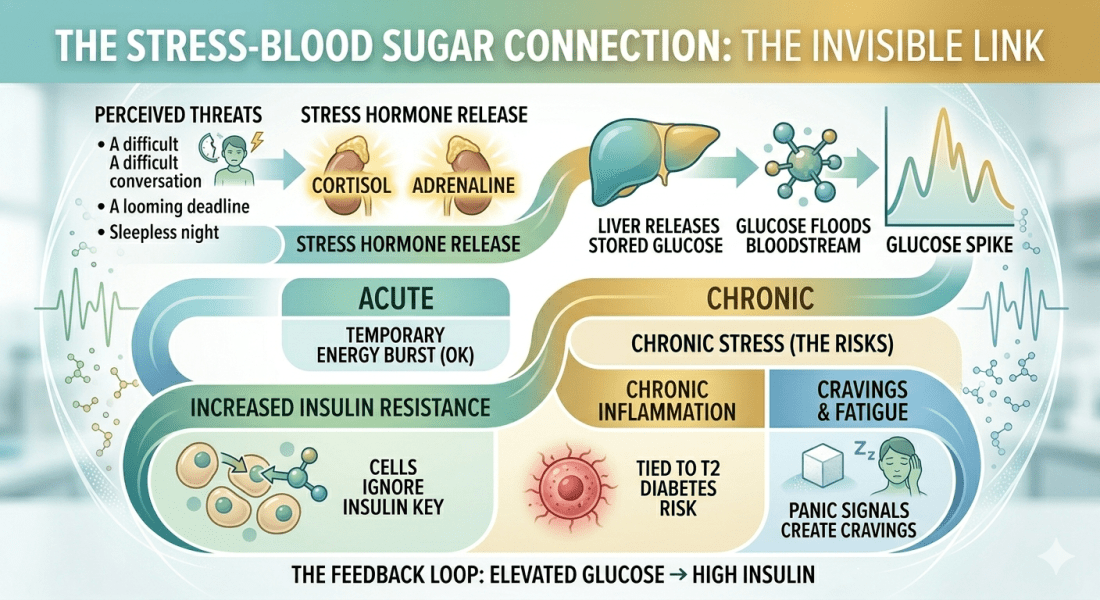
When your body perceives a threat — whether that’s a difficult conversation, a looming deadline, a sleepless night, or simply never switching off it releases cortisol and adrenaline. These hormones signal the liver to release stored glucose into the bloodstream, giving your body the energy it needs to fight or flee.
This is a brilliant survival mechanism. But when stress is chronic — when it happens day after day, week after week your body is constantly flooding your bloodstream with glucose. And your cells are constantly being asked to manage it. Over time, this wears the system down.
What Chronic Stress Does to Blood Sugar
Increased insulin resistance meaning your cells become less responsive to insulin’s signals
Elevated fasting blood sugar levels
Increased cravings for sugar and refined carbohydrates
Disrupted sleep, which further impairs blood sugar regulation
Increased inflammation, which is closely linked to Type 2 diabetes risk
This does not mean that stress causes diabetes. The picture is always more complex than that. But it does mean that nervous system health and metabolic health are far more connected than most people realise. L
The Women Who Are Most at Risk:
The women I speak to most often are the ones carrying everything. The ones who are managing households, careers, relationships, and everyone else’s emotional needs often while neglecting their own.
These women are frequently exhausted, frequently anxious, and frequently dismissing their own symptoms as “just stress.”
But the body keeps score. And chronically elevated cortisol is one of the most significant and least discussed risk factors for metabolic health challenges, including blood sugar dysregulation.
What Actually Helps
You cannot think your way out of a stressed nervous system, but you can nourish it.
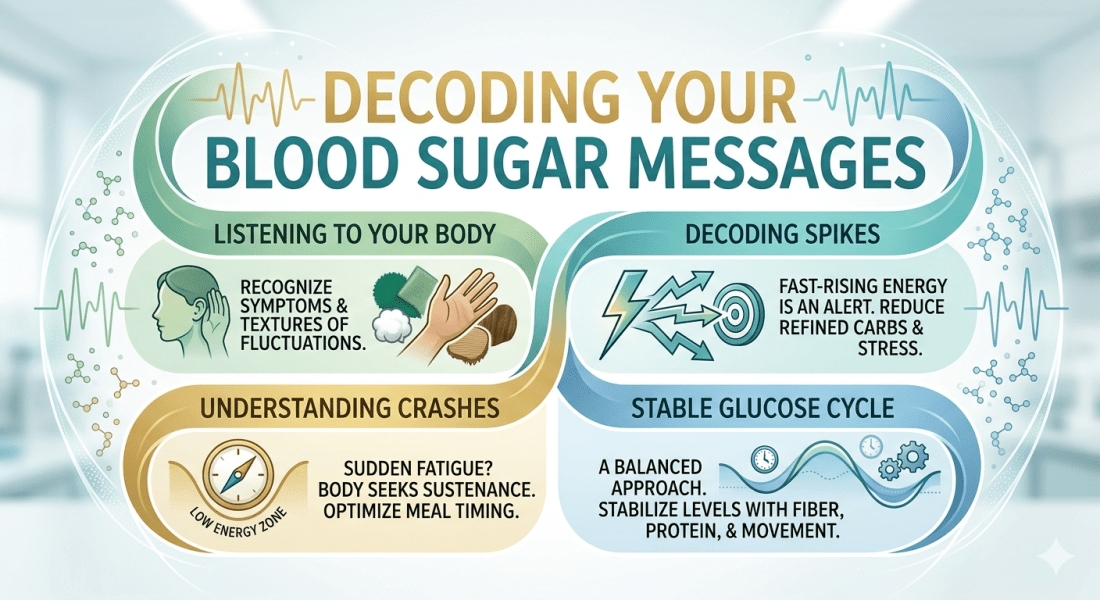
Eat regularly. Skipping meals when you’re stressed is one of the worst things you can do for your blood sugar. Three balanced meals with protein, fat, and fibre at each keeps cortisol from spiking and your energy from crashing.
Prioritise magnesium. Stress depletes magnesium rapidly, and magnesium plays a key role in insulin sensitivity. Dark leafy greens, pumpkin seeds, dark chocolate, and almonds are your friends.
Build moments of stillness into every day. Not scrolling. Not multitasking. Just breathing. Even five minutes of slow, intentional breath activates your parasympathetic nervous system and begins to lower cortisol.
Sleep as though your health depends on it. Because it does.
Seek support. Whether that’s a trusted friend, a therapist, or a coach you are not meant to carry all of this alone.
This Diabetes Week
If you are living with diabetes, I see the invisible work you do every single day to manage your condition. You deserve support, not judgement.
And if you don’t have a diagnosis but recognise yourself in these words your body is asking you for something. It’s worth listening.
💬 Did this change how you think about stress and your health? Share your thoughts in the comments below. And if this post spoke to you, please share it with someone who needs to hear it.
With warmth,
Leena 🌿