


When we think about exercise, we often think about getting fitter, losing weight, building strength or looking after our physical health.
But movement can offer us so much more than that.
What if going for a walk wasn’t just about getting your steps in, but about clearing your head after a difficult day?
What if ten minutes of stretching wasn’t “not enough”, but exactly what your body needed?
And what if movement wasn’t something you had to force yourself to do because you ate too much or missed a workout?
For me, movement is about much more than exercise. its about how it makes me feel.
When You’re Stressed, Your Body Feels It Too
Have you ever had one of those days where your mind just won’t switch off?
Your thoughts are racing, your shoulders feel tense, you’re tired but wired, and even when you finally sit down, you don’t feel relaxed.
Stress doesn’t just affect our minds. We can feel it physically too.
This is one reason movement can be so helpful.
Something as simple as going for a walk can give you the chance to step away from whatever has been overwhelming you. You change your surroundings, get some fresh air and give your mind something else to focus on.
You don’t need to run five miles or complete an intense workout.
Sometimes, a gentle walk around the block is enough to change how you feel.
And I think we often forget just how powerful those simple things can be.
You Don’t Have to Exercise to Exhaustion
There can be so much pressure around exercise.
We’re constantly told to push harder, burn more calories, get more steps and work towards the next goal.
But more isn’t always better.
If you’re already exhausted, stressed and running on empty, another punishing workout might not be what you need.
Maybe you need to slow down.
Maybe you need some gentle yoga.
Maybe you need to walk in the sunshine.
Maybe you need to dance around the kitchen while making dinner.
Movement doesn’t have to look a certain way to count.
It doesn’t matter whether you’ve been to an expensive gym or walked around your local park. Moving your body can still be a positive act of self-care.
Movement Can Help You Feel More Grounded
There is a reason you can sometimes return from a walk feeling completely different from when you left.
Physical activity can support our mood and help us manage stress. But there’s something else about movement that I particularly love.
It can help us get out of our heads and back into our bodies.
We’re often thinking about yesterday, worrying about tomorrow and trying to keep up with everything that needs doing.
Movement can bring us back to the present moment.
When you’re walking, you might notice the trees, the weather, the sounds around you, your breathing or simply the feeling of your feet touching the ground.
You don’t have to turn it into a mindfulness exercise.
Just being outside and paying attention to what’s around you can be surprisingly grounding.
What If You Don’t Feel Motivated?
This is something I hear all the time:
“I know I should exercise, but I just can’t motivate myself.”
And honestly, I don’t think you always need motivation.
Sometimes you just need to make the first step really small.
Don’t tell yourself you’re going to complete a one-hour workout.
Tell yourself you’re going to put your trainers on and walk for ten minutes.
If you want to carry on, great.
If you don’t, that’s okay too.
Ten minutes still counts.
And sometimes, once you’ve started moving, you’ll naturally feel like doing a little more.
The hardest part can simply be getting started.
Movement Can Support Better Sleep
Sleep, stress, movement and our overall wellbeing are closely connected.
When we’re stressed, sleep can suffer. When we don’t sleep well, we can feel tired and unmotivated. And when we’re exhausted, exercise can be the last thing we want to do.
It can become a cycle.
Regular movement can be one piece of the puzzle, helping us stay active during the day and supporting healthier sleep habits.
Again, it doesn’t need to be extreme.
A walk after dinner.
A few gentle stretches.
A little movement during the day when you’ve been sitting for too long.
The aim isn’t to create another thing on your “must do” list.
It’s about finding small things that support you.
Let’s Stop Thinking About Exercise as Punishment
This is something I’m particularly passionate about.
Exercise shouldn’t be a punishment for eating a piece of cake.
You don’t need to “burn off” your dinner.
You don’t have to earn your food.
Food and movement don’t need to be tools for guilt or punishment.
Your body needs food for energy and nourishment. It also benefits from movement for strength, mobility, fitness and overall health.
These things can work together beautifully when we take guilt out of the equation.
Instead of thinking:
“I need to exercise because I ate too much.”
Try:
“I’m going to move because I want to look after my body.”
That small change in language can completely change how we think about exercise.
Find Something You Actually Enjoy
If you hate running, you don’t have to run. There are so many ways to move your body that you will enjoy:
- Walking
- Swimming
- Cycling
- Dancing
- Gardening
- Pilates
- Yoga
- Strength training
- Tennis
- Hiking
- Fitness classes
Or simply put your favourite music on and dance around the house.
There is no single “best” form of exercise.
The best movement for you is something that fits into your life and that you’re actually going to want to do.
There’s no point following someone else’s perfect workout routine if you dread every minute of it.
Find what works for you.
Don’t Underestimate Walking
Walking is one of the simplest ways to add more movement to your day.
You don’t need special equipment.
You don’t have to be particularly fit.
You can do it alone, with a friend, with the family or even while listening to a podcast.
Or you can leave your headphones at home and simply enjoy some quiet.
One of my favourite things about walking is the space it creates.
Space to think.
Space to breathe.
Space to listen.
Or space to have absolutely nothing playing in your ears.
Just you, your thoughts and the world around you.
If you’re having a difficult day, try going outside for ten minutes before deciding that the day is a write-off.
You might be surprised by how much better you feel afterwards.
Movement and Nutrition Go Hand in Hand
As a nutrition and wellness coach, I also think it’s important to talk about food when we’re talking about movement.
Your body needs fuel.
If you’re constantly restricting food, skipping meals or trying to exercise as much as possible while eating as little as possible, you’re not necessarily supporting your wellbeing.
You need energy to move, nutrients to support your body and enough food to recover.
Eating well isn’t about being perfect.
It’s about giving your body what it needs most of the time.
Think about nourishing meals with plenty of variety — protein, whole grains, fruit and vegetables, healthy fats and plenty of fluids.
And please remember:
You don’t need to earn your food.
You are allowed to eat because you’re hungry.
You are allowed to enjoy food.
And you are allowed to move your body because it feels good.
So, How Much Movement Do You Really Need?
There isn’t one perfect amount of movement that works for everyone.
Your starting point matters.
Your health matters.
Your lifestyle matters.
And what feels realistic for you matters.
If you’re currently doing very little, you don’t need to suddenly decide you’re going to exercise for an hour every day.
Start somewhere manageable.
Ten minutes.
A short walk.
A few stretches.
Taking the stairs.
Getting up from your desk regularly.
Walking while you’re on the phone.
Those small moments of movement add up.
And once they become part of your routine, you can build from there if you want to.
Think About How You Want to Feel
Rather than focusing only on what exercise might change about your body, I’d encourage you to think about how you want to feel.
Do you want more energy?
To feel stronger?
To sleep better?
To feel less stressed?
To clear your head?
To feel more comfortable and confident in your body?
To spend more time outside?
Your answer might help you decide what type of movement feels right for you.
Because wellbeing isn’t just about how we look.
It’s about how we live and feel in our bodies every day.
Start Small
If movement hasn’t been part of your routine for a while, please don’t feel that you need to completely overhaul your life.
Start small.
Put your shoes on.
Go outside.
Walk around the block.
Stretch for five minutes.
Put some music on.
Do something that makes you feel good.
And tomorrow, come back to it again.
You don’t need to be perfect.
You just need to keep finding ways to look after yourself.
A Little Reminder From Me
I think sometimes we make looking after ourselves far more complicated than it needs to be.
We don’t always need another challenge, another diet or another intense workout programme.
Sometimes we need to eat a nourishing meal, get outside, move our bodies, have a good night’s sleep and give ourselves a little breathing space.
That’s what wellbeing means to me.
It’s not about doing everything perfectly.
It’s about making small choices, regularly, that help you feel more like you.
So next time you’re feeling stressed, tired or stuck in your head, try moving your body.
Not because you have to.
Not because you need to burn calories.
But simply because you deserve to feel good.
From the inside out. 🌿
I’d love to hear from you…
What’s your favourite way to move your body when you need a little lift?
Is it a walk, yoga, swimming, dancing, the gym — or something completely different?
I’d love to know.

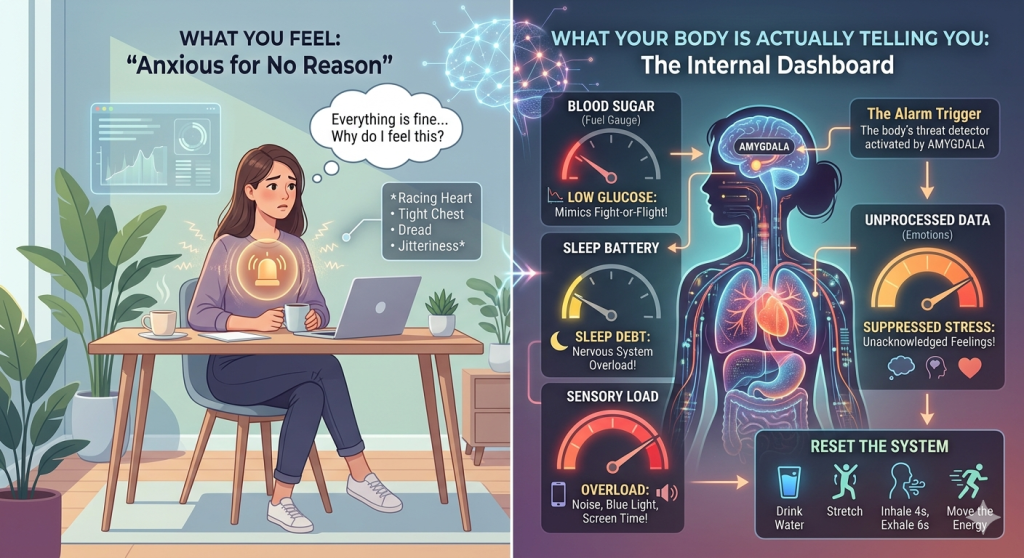
 Does any of this resonate with you? Which of the four causes feels most familiar?

