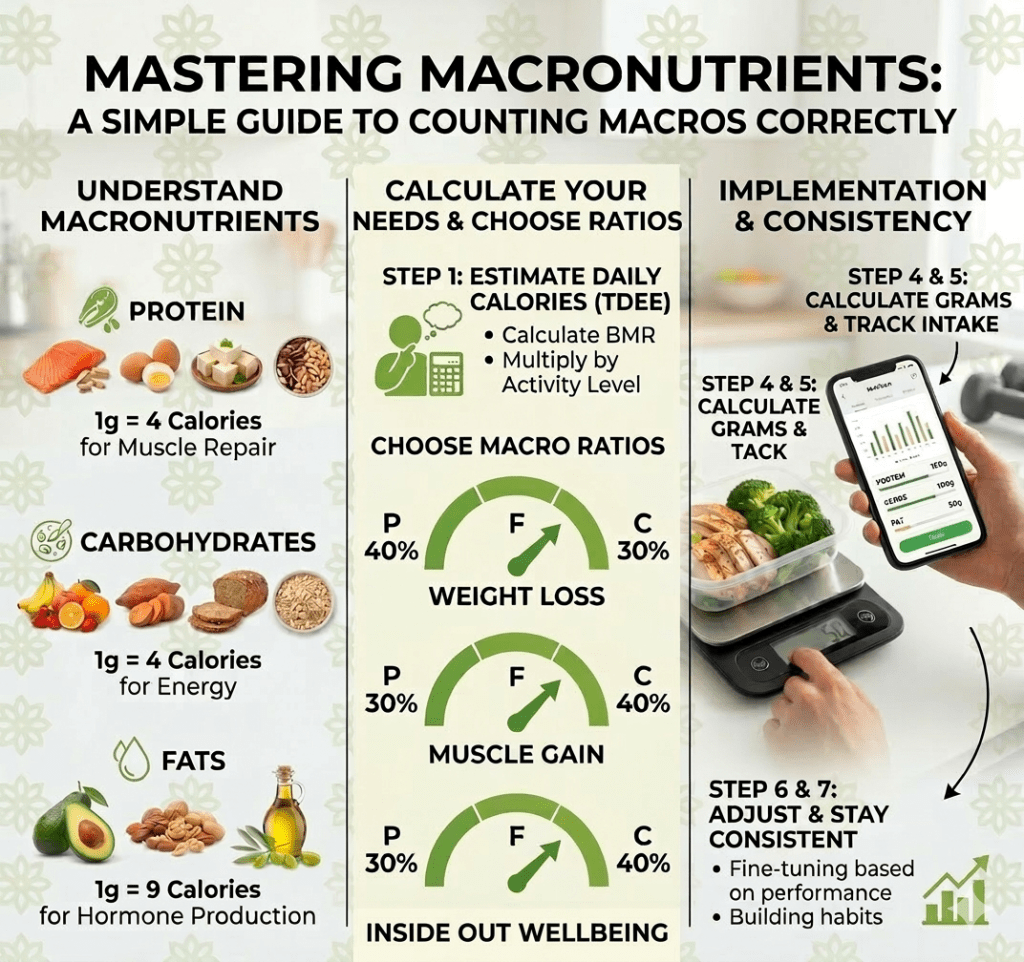
Mastering Macronutrients: A Simple Guide to Counting Macros Correctly

Whether you’re a seasoned gym-goer, an athlete, or just beginning your wellness journey, understanding macronutrients can be a game changer for reaching your health goals.

If you’ve ever wondered how to break down your diet into protein, fats, and carbohydrates to maximise results, this guide will walk you through the process step by step.

Let’s get started.

Step 1: Understand Macronutrients

Before you start counting macros, it’s important to know what they are and why they matter.

Protein

Protein is essential for muscle repair, growth, and overall body function.

1 gram of protein = 4 calories

Common sources include lean meats, fish, eggs, dairy, tofu, beans and legumes.

Fats

Healthy fats help with hormone production, brain health, and long-lasting energy.

1 gram of fat = 9 calories

Good sources include avocados, nuts, seeds, olive oil and fatty fish.

Carbohydrates

Carbohydrates are the body’s primary source of energy, especially for exercise and daily activity.

1 gram of carbohydrates = 4 calories

Healthy carbs include fruits, vegetables, whole grains and legumes.

Step 2: Calculate Your Daily Calorie Needs

To determine how many macros you should consume, you first need to estimate your daily calorie requirements.

This involves calculating your Basal Metabolic Rate (BMR) and Total Daily Energy Expenditure (TDEE).

1. Calculate Your BMR

BMR represents the calories your body needs to perform basic functions like breathing and circulation.

For men:

BMR = 88.362 + (13.397 × weight in kg) + (4.799 × height in cm) − (5.677 × age)

For women:

BMR = 447.593 + (9.247 × weight in kg) + (3.098 × height in cm) − (4.330 × age)

2. Calculate Your TDEE

Multiply your BMR by your activity level:

Activity Level Multiplier

Sedentary (little or no exercise) BMR × 1.2

Light activity (1–3 days/week) BMR × 1.375

Moderate activity (3–5 days/week) BMR × 1.55

Very active (6–7 days/week) BMR × 1.725

Extremely active (physical job/training twice daily) BMR × 1.9

Your TDEE gives you an estimate of how many calories you need each day.

Step 3: Choose Your Macronutrient Ratios

Your macro ratio depends on your health or fitness goal.

For Weight Loss

Protein: 40%

Fat: 30%

Carbohydrates: 30%

Higher protein helps maintain muscle and improves satiety.

For Muscle Gain

Protein: 30%

Fat: 30%

Carbohydrates: 40%

Extra carbs help fuel workouts and recovery.

For Maintenance

Protein: 30%

Fat: 30%

Carbohydrates: 40%

This balanced approach supports general health and energy levels.

Step 4: Convert Percentages into Grams

Once you know your daily calories and macro percentages, you can convert them into grams.

1. Calculate Calories per Macronutrient

Total Calories × Percentage

Example (2000 calories with 30% protein):

2000 × 0.30 = 600 calories from protein

2. Convert Calories into Grams

Use the calorie value of each macro:

Protein: Cal ÷ 4 Carbs: Calories ÷ 4

Fat: Calories ÷ 9

For example:

600 calories from protein ÷ 4 = 150g protein

Step 5: Track Your Food Intake

Tracking helps ensure you’re staying within your macro targets.

Use a Tracking App

Read Nutrition Labels

Check the macronutrient content per serving to track accurately.

Weigh Your Food

Using a kitchen scale ensures accurate portion sizes and macro tracking.

Step 6: Adjust and Fine-Tune

Your body is unique, so adjustments may be necessary.

Pay attention to:

Energy levels

Workout performance

Weight changes

Hunger levels

If your progress stalls, then tweak your calories or macro ratios accordingly.

Step 7: Stay Consistent

Consistency is the most important factor for long-term success.

Don’t worry about being perfect every day. Focus on building sustainable habits and finding a macro balance that works for your lifestyle.

Over time, tracking macros becomes easier and more intuitive.

Final Thoughts

Counting macronutrients might feel overwhelming at first, but with practice it becomes a powerful tool for improving your nutrition.

By understanding your calorie needs, choosing the right macro balance, and tracking your intake, you can fuel your body effectively and move closer to your health goals.

Remember: the goal isn’t perfection — it’s progress and consistency.

If you found this guide helpful, feel free to share it with friends and family who want to improve their nutrition. And if you have any tips or questions about macro tracking, drop them in the comments below!


How to Meal Prep — A Beginner’s Guide

Meal prepping is a fantastic way to save time, money, and effort while maintaining a healthy and balanced diet. Whether you’re a busy professional, a parent juggling multiple responsibilities, or simply someone looking to streamline their eating habits, meal prepping can revolutionise your approach to food. In this beginner’s guide, we’ll walk you through the basics of meal prepping and provide you with practical tips to get started.

1. Plan Your Meals

Before you embark on your meal prep journey, take some time to plan out your meals for the week. Consider your dietary preferences, nutritional goals, and any special dietary requirements. Aim for a balance of proteins, carbohydrates, and vegetables in each meal to ensure you’re getting a variety of nutrients.

2. Make a Shopping List

Once you have your meal plan in place, create a shopping list with all the ingredients you’ll need. This will help you stay organised and ensure you have everything on hand when it’s time to prep your meals. Try to stick to your list to avoid impulse purchases that can derail your budget and meal plan.

3. Invest in Quality Containers

Invest in a set of high-quality, reusable containers in various sizes. These will be your best friends when it comes to storing and transporting your prepped meals. Look for containers that are microwave and dishwasher safe for added convenience.

4. Set Aside Time for Prep

Choose a day of the week that works best for you to dedicate to meal prep. This could be a Sunday afternoon or whatever day aligns with your schedule. Block off a few hours for prep work, including chopping vegetables, cooking proteins, and portioning out meals.

5. Keep it Simple

Meal prep doesn’t have to be complicated. Start with simple recipes that are easy to prepare in bulk, such as grilled chicken, roasted vegetables, and quinoa. As you become more comfortable with meal prepping, you can experiment with more elaborate recipes and techniques.

6. Mix and Match

Don’t feel like you have to eat the same meal every day. Mix and match your prepped ingredients throughout the week to keep things interesting. For example, you could pair your grilled chicken with different vegetables and sauces to create a variety of meals.

7. Stay Organised

Keep your fridge and pantry organised to make meal prep a breeze. Label your containers with the date and contents to avoid any confusion. Consider investing in a meal prep planner or using a smartphone app to keep track of your recipes and grocery lists.

8. Stay Flexible

Life happens, and sometimes your meal prep plans may need to change. Be flexible and willing to adapt as needed. If you find yourself with extra ingredients at the end of the week, get creative and whip up a stir-fry or soup to use them up.

9. Enjoy the Benefits

Finally, remember to enjoy the benefits of meal prepping. Not only will you save time and money, but you’ll also have peace of mind knowing that you have healthy and delicious meals waiting for you throughout the week.

By following these simple steps, you’ll be well on your way to mastering the art of meal prep. With a little planning and preparation, you can make healthy eating a priority without sacrificing taste or convenience. Happy prepping!

How to Eat Healthy Without Breaking the Bank

In a world where the cost of living seems to constantly rise, maintaining a healthy diet can feel like a financial burden. However, ensuring you get your recommended “5 a day” of fruits and vegetables doesn’t have to break the bank. With a bit of planning, creativity, and smart shopping, it’s entirely possible to eat healthily on a budget. Let’s explore some strategies to help you achieve this goal.

1. Embrace Seasonal Produce

One of the simplest ways to save money on fruits and vegetables is to buy what’s in season. Seasonal produce tends to be more abundant, which often translates to lower prices. Visit your local farmer’s market or grocery store and look for fruits and vegetables that are in peak season. Not only will you save money, but you’ll also enjoy produce at its freshest and most flavourful.

2. Plan Your Meals

Meal planning is a game-changer when it comes to eating healthily on a budget. Take some time each week to plan out your meals, making sure to include plenty of fruits and vegetables. Look for recipes that utilise affordable ingredients and incorporate seasonal produce. By planning ahead, you can create a shopping list that helps you avoid impulse purchases and ensures you have everything you need for nutritious meals throughout the week.

3. Buy Frozen or Canned Produce

While fresh produce is fantastic, don’t overlook the value of frozen or canned options. Frozen fruits and vegetables are often just as nutritious as their fresh counterparts since they’re typically frozen at peak ripeness. Plus, they have the added benefit of a longer shelf life, reducing the risk of food waste. Canned fruits and vegetables are also budget-friendly and convenient, just be sure to choose options with no added sugars or excessive sodium.

4. Shop Smart

When shopping for fruits and vegetables, keep an eye out for sales, discounts, and bulk deals. Many grocery stores offer specials on produce, especially items that are in season or nearing their expiration date. Take advantage of these opportunities to stock up on your favourite fruits and vegetables at a lower cost. Additionally, consider joining a loyalty program or using coupons to save even more money on your grocery bill.

5. Get Creative in the Kitchen

Eating healthily on a budget doesn’t mean sacrificing flavour or variety. Get creative in the kitchen by experimenting with different recipes and cooking techniques. Look for budget-friendly meals that incorporate a variety of fruits and vegetables, such as stir-fries, salads, soups, and smoothies. Don’t be afraid to try new ingredients or substitutions to keep things interesting while sticking to your budget.

Getting your recommended “5 a day” of fruits and vegetables doesn’t have to be expensive. By embracing seasonal produce, planning your meals, opting for frozen or canned options when necessary, shopping smart, and getting creative in the kitchen, you can eat healthily without breaking the bank. With a little effort and mindfulness, you’ll be well on your way to achieving your health and budget goals simultaneously. So, the next time you’re grocery shopping, remember these tips and enjoy a nutritious and budget-friendly diet.

How to make your diet healthier

Maintaining a healthy diet is essential for overall well-being and vitality. However, the abundance of information on nutrition can be overwhelming. The good news is that adopting a healthier diet doesn’t have to be complicated. By making small, sustainable changes to your eating habits, you can significantly improve your overall health. Here are 25 ways to make your diet healthier.

  • Hydrate with Water:
  • Start your day by drinking a glass of water and aim to stay hydrated throughout the day. Water helps with digestion, nutrient absorption, and overall bodily functions.
  • Eat Colourful Fruits and Vegetables:
  • Include a variety of colourful fruits and vegetables in your meals. Different colours often indicate different nutrients, so a diverse palette ensures a range of health benefits.
  • Choose Whole Grains:
  • Opt for whole grains such as brown rice, quinoa, and whole wheat over refined grains. Whole grains are rich in fibre and nutrients, promoting better digestion.
  • Watch Portion Sizes:
  • Be mindful of portion sizes to avoid overeating. Using smaller plates can help trick your mind into feeling satisfied with smaller portions.
  • Prioritise Lean Proteins:
  • Include lean protein sources like poultry, fish, tofu, and legumes in your diet. Protein is essential for muscle health and overall body function.
  • Limit Processed Foods:
  • Cut down on processed foods high in added sugars, salt, and unhealthy fats. Opt for whole, natural foods whenever possible.
  • Cook at Home:
  • Prepare meals at home to have better control over ingredients and cooking methods. This also allows you to experiment with healthier recipes.
  • Snack Smart:
  • Choose nutritious snacks like fresh fruits, nuts, or yogurt instead of reaching for processed snacks. Healthy snacking can help maintain energy levels throughout the day.
  • Limit Added Sugars:
  • Read food labels to identify and reduce added sugars in your diet. Sugary beverages and sweets should be consumed in moderation.
  • Include Healthy Fats:
  • Incorporate sources of healthy fats, such as avocados, nuts, and olive oil. These fats are crucial for brain health and overall well-being.
  • Mindful Eating:
  • Practice mindful eating by savouring each bite and paying attention to hunger and fullness cues. This helps prevent overeating.
  • Experiment with Herbs and Spices:
  • Enhance the flavour of your dishes with herbs and spices instead of relying on salt. This adds variety and can have potential health benefits.
  • Limit Liquid Calories:
  • Be mindful of liquid calories from sugary drinks. Opt for water, herbal teas, or infused water to stay hydrated without unnecessary added sugars.
  • Eat Regularly:
  • Establish regular eating patterns to avoid excessive hunger, which can lead to poor food choices. Aim for balanced meals and snacks throughout the day.
  • Include Dairy or Dairy Alternatives:
  • Incorporate dairy or fortified dairy alternatives for a good source of calcium and vitamin D, crucial for bone health.
  • Read Food Labels:
  • Familiarise yourself with food labels to make informed choices. Look for products with simple, recognisable ingredients.
  • Plan Meals Ahead:
  • Plan your meals ahead of time to avoid last-minute unhealthy choices. This can also save time and make grocery shopping more efficient.
  • Limit Red and Processed Meats:
  • Reduce your intake of red and processed meats, as they have been associated with certain health risks. Opt for leaner protein sources.
  • Enjoy Treats in Moderation:
  • It’s okay to indulge in treats occasionally. The key is moderation – savour and enjoy special treats without overdoing it.
  • Faber-Rich Foods:
  • Increase your fibre intake with foods like whole grains, fruits, vegetables, and legumes. Fibre aids digestion and helps you feel full longer.
  • Be Cautious with Restaurant Portions:
  • When dining out, be aware of large portion sizes. Consider sharing dishes or packing half of your meal for later.
  • Stay Consistent:
  • Consistency is key to developing healthy eating habits. Small, sustainable changes over time are more likely to lead to lasting results.
  • Stay Physically Active:
  • Regular physical activity complements a healthy diet. Aim for a combination of cardiovascular exercise, strength training, and flexibility exercises.
  • Stay Informed:
  • Stay informed about nutrition trends and updates. The field of nutrition is continually evolving, and staying informed empowers you to make better choices.
  • Consult a Professional:
  • If you have specific dietary concerns or health conditions, consult a registered dietitian or healthcare professional. They can provide personalised guidance based on your needs.

Adopting a healthier diet doesn’t have to be a drastic overhaul of your eating habits. By incorporating these simple tips into your daily routine, you can make gradual, positive changes that contribute to improved overall health and well-being. Remember, small steps

Fasting for Health: Exploring Different Types of Intermittent Fasting

In recent years, the practice of intermittent fasting has gained significant attention for its potential health benefits. From weight loss to improved metabolic health, proponents of intermittent fasting argue that it can be a powerful tool for enhancing overall well-being. In this blog, we’ll delve into the various types of intermittent fasting, exploring their unique approaches and potential health advantages.

Understanding Intermittent Fasting

Intermittent fasting involves cycling between periods of eating and fasting, and it does not prescribe specific foods to eat or avoid. Instead, it focuses on when to eat. This approach is rooted in the idea that our bodies are well-adapted to periods of feast and famine, as our ancestors often experienced scarcity of food.

Different Types of Intermittent Fasting

The 16/8 Method (Time-Restricted Feeding):

  • How it works: This method involves daily fasting for 16 hours and restricting your eating to an 8-hour window.
  • Example: If you choose to eat between 12:00 pm and 8:00 pm, you would fast from 8:00 pm to 12:00 pm the next day.

The 5:2 Diet (Modified Fasting):

  • How it works: For two non-consecutive days of the week, calorie intake is limited to around 500-600 calories, while regular eating is maintained on the other days.
  • Example: Eating normally on Monday, Wednesday, Friday, and Sunday, while restricting calories on Tuesday and Thursday.

Eat-Stop-Eat:

  • How it works: This approach involves a complete 24-hour fast once or twice a week, with no food intake during the fasting period.
  • Example: Fasting from dinner on Monday to dinner on Tuesday.

Alternate-Day Fasting:

  • How it works: Alternating between days of regular eating and days of very low-calorie intake or complete fasting.
  • Example: Eating normally on Monday, fasting on Tuesday, eating normally on Wednesday, and so on.

Warrior Diet:

  • How it works: Involves eating small amounts of raw fruits and vegetables during the day and consuming one large meal at night within a 4-hour window.
  • Example: Eating small snacks like fruits and vegetables during the day and having a substantial dinner between 6:00 pm and 10:00 pm.

Health Benefits of Intermittent Fasting

  • Weight Loss:
    • Intermittent fasting may help reduce calorie intake, leading to weight loss.
    • Fasting periods promote the utilisation of stored fat for energy.

Improved Metabolic Health:

  • Intermittent fasting may enhance insulin sensitivity, lowering the risk of type 2 diabetes.
  • It may help regulate blood sugar levels and reduce inflammation.

Cellular Repair and Longevity:

  • Fasting triggers autophagy, a process where cells remove damaged components, promoting cellular repair.
  • Some studies suggest that intermittent fasting may contribute to increased lifespan.

Brain Health:

  • Intermittent fasting may support brain health by promoting the production of brain-derived neurotrophic factor (BDNF), a protein associated with cognitive function.
  • It may reduce the risk of neurodegenerative diseases like Alzheimer’s.

Intermittent fasting offers a flexible and diverse range of approaches, allowing individuals to choose a method that aligns with their lifestyle and preferences. While the health benefits are promising, it’s essential to approach intermittent fasting with caution and consult with a healthcare professional, especially for those with underlying health conditions. As with any lifestyle change, moderation and individualisation are key to reaping the potential rewards of intermittent fasting for improved health and well-being.

10 Evidence-Based Benefits of Green Tea: A Cup of Health

In the world of beverages, few can claim the title of “super drink.” Green tea, however, is one such beverage that has earned this accolade. With its rich history dating back thousands of years, green tea has been consumed and revered for its medicinal properties in various cultures. In recent times, scientific research has provided concrete evidence to support the numerous health benefits associated with green tea consumption. In this blog post, we will explore ten evidence-based benefits of green tea that make it not just a delightful drink, but also a powerhouse of health.

Rich in Antioxidants

Green tea is loaded with polyphenols, particularly catechins, which are powerful antioxidants that help combat oxidative stress in the body. These antioxidants protect cells and molecules from damage and play a crucial role in reducing the risk of chronic diseases.

Supports Heart Health

Regular consumption of green tea has been linked to a reduced risk of heart diseases. Studies suggest that it helps in lowering bad cholesterol levels and improving the ratio of good cholesterol to bad cholesterol, thus promoting a healthy heart.

Aids in Weight Loss

Green tea can boost your metabolic rate, making it easier to burn fat and lose weight. The combination of caffeine and antioxidants in green tea works synergistically to enhance fat oxidation, aiding in effective weight management.

Improves Brain Function

The caffeine content in green tea not only provides a mild stimulant effect but also improves brain function. L-theanine, an amino acid present in green tea, synergies with caffeine to enhance cognitive function, alertness, and concentration.

Lowers the Risk of Type 2 Diabetes

Several studies have shown that green tea improves insulin sensitivity and reduces blood sugar levels. Regular consumption can significantly lower the risk of developing type 2 diabetes by regulating glucose metabolism.

 Enhances Oral Health

The natural antibacterial and antiviral properties of green tea catechins help in inhibiting the growth of harmful bacteria in the mouth. This leads to improved dental health, reduced bad breath, and a lower risk of cavities.

Supports Cancer Prevention

While research is ongoing, some studies suggest that the polyphenols in green tea can help prevent certain types of cancer. These compounds have been shown to inhibit the growth of cancer cells and may reduce the risk of breast, prostate, and colorectal cancers.

 Boosts Immune System

The catechins in green tea have antimicrobial properties that support the immune system. Regular consumption can help your body fight off infections and strengthen your overall immunity.

Promotes Longevity

Some population studies have indicated that regular green tea drinkers tend to live longer than non-drinkers. While this link is not definitive, the numerous health benefits of green tea certainly contribute to a healthier, longer life.

Calms the Mind and Reduces Stress

The combination of L-theanine and caffeine in green tea has a calming effect on the mind without inducing drowsiness. This unique combination promotes relaxation, reduces stress, and enhances overall mental clarity and focus.

Incorporating green tea into your daily routine can be a simple yet powerful way to enhance your overall health and well-being. Its rich antioxidant content, combined with numerous other beneficial compounds, makes it a beverage that not only tantalises your taste buds but also nurtures your body and mind. So, why not make a steaming cup of green tea a part of your daily ritual and experience these evidence-based benefits firsthand? Your body will thank you for it!