
In the world of nutrition, carbohydrates often get a bad rap. You’ve likely heard advice to cut carbs, but the truth is more nuanced: it’s about quality, not just quantity.
Understanding the difference between whole and refined carbohydrates is the secret to fueling your body without the energy crashes.
1. What Are Carbs, Anyway?
Carbohydrates are one of the three primary macronutrients (alongside protein and fat) that provide energy. When you eat carbs, your body breaks them down into glucose, the preferred fuel for your brain and muscles.
However, the speed at which that fuel enters your system depends entirely on the structure of the carb.
2. Whole Carbs: The Slow-Burn Fuel
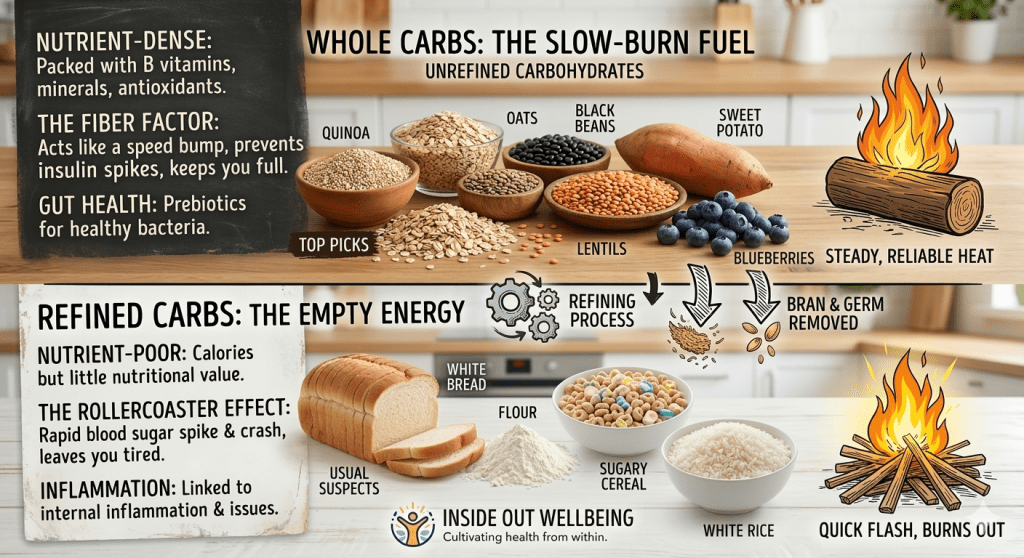
Whole carbohydrates are minimally processed, meaning they arrive at your plate with their natural fiber and nutrients intact.
Nutrient-Dense:
They are nature’s multivitamin, packed with B vitamins, minerals, and antioxidants.
The Fiber Factor:
Fibre acts like a speed bump for your digestion. It slows down glucose absorption, preventing insulin spikes and keeping you satiated for hours.
Gut Health:
The non-digestible fibers in whole carbs act as prebiotics—essentially “food” for the healthy bacteria in your microbiome.
Top Picks:
Grains: Quinoa, oats, buckwheat, and brown rice.
Legumes: Lentils, chickpeas, and black beans.
Produce: All fruits and starchy vegetables (like sweet potatoes).
Refined Carbs: The Empty Energy
Refined carbs have been milled a process that removes the bran (the fiber-rich outer layer) and the germ(the nutrient-rich core). What’s left is just the starchy endosperm.
Nutrient-Poor: Without the bran and germ, you’re left with calories but very little nutritional value.
The Rollercoaster Effect
aAs they lack fiber, these carbs hit your bloodstream almost instantly. This causes a rapid spike in blood sugar, followed by an inevitable “crash” that leaves you tired and reaching for more sugar.
Inflammation: Frequent consumption of highly refined carbs is linked to increased internal inflammation and metabolic issues.
The Usual Suspects:
White Flour Products: White bread, flour tortillas, and standard pasta.
Added Sugars: Soda, sugary cereals, and pastries.
Processed Grains: White rice and “instant snacks.
4. Easy Swaps for a Smarter Plate
Transitioning to whole carbs doesn’t require a kitchen overhaul.
For instance, replacing white rice with quinoa or farro not only introduces a pleasant, nutty texture to your meals but also increases your protein intake. You can transform your morning routine by trading sugary cereals for steel-cut oats, which provide the sustained fuel needed to keep you feeling full until lunch.
When it comes to wraps or tacos, opting for corn or whole wheat tortillas over standard flour varieties is an easy way to boost your fiber consumption. Even snack time offers an opportunity for a nutritional upgrade; swapping potato chips for air-popped popcorn gives you a satisfying, whole-grain crunch with much more volume and fewer empty calories.
Final thoughs
Think of Whole Carbs as a slow-burning log on a campfire providing steady, reliable heat. Think of Refined Carbs as kindling a bright flash of energy that burns out quickly.
By choosing whole more often, you aren’t just eating; you’re investing in steady energy, better digestion, and long-term health.
Next time you shop, look for “100% Whole Grain” on the label—your body will thank you!
 Inside Out Wellbeing