
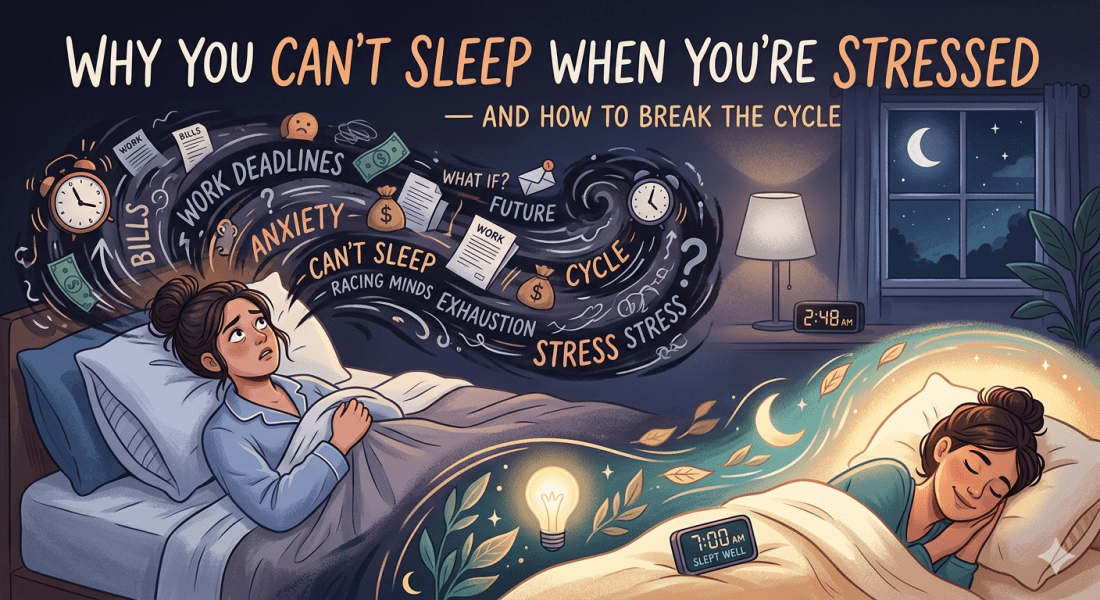
Why You Can’t Sleep When You’re Stressed and How to Break the Cycle

Let me paint a picture.

It’s 11pm. You’re exhausted. You’ve been looking forward to bed all day. And then the moment your head hits the pillow, your mind switches on. The to-do list. The conversation you keep replaying. The low hum of worry that refuses to be quiet.

Sound familiar?

You are not broken. You are not imagining it. What’s happening is a very real, very physical process inside your body and once you understand it, everything starts to make more sense.

Your Stress Response Was Never Designed for Modern Life

When your body detects stress any stress, whether it’s a physical threat or a difficult email from your manager  it activates the same ancient survival response. Cortisol and adrenaline flood your system. Your heart rate rises. Your muscles tense. Your brain sharpens into high alert.

This response was designed to help you run from danger. The problem is, your nervous system cannot tell the differe nce between a lion and a looming deadline.

And the cruel irony? This is precisely the state your body goes into when you most desperately need to sleep.

What Stress Actually Does to Your Sleep

Cortisol has a natural rhythm. It’s meant to be lowest at night that’s what makes you feel sleepy — and highest just before you wake up. But when you’re stressed, your body produces more cortisol than it should, at exactly the wrong time. It delays sleep, fragments the sleep you do get, and suppresses the deep, restorative phases your brain needs to process emotions and consolidate memories.

This is why a stressful week doesn’t just make you feel tired. It makes you feel emotionally fragile, foggy, and overwhelmed too. Sleep isn’t just rest for your body. It’s medicine for your mind.

And Then It Becomes a Cycle

Here’s where it gets particularly difficult. Poor sleep doesn’t just leave you tired it makes everything harder to cope with. Small things feel enormous. Your resilience drops. Your ability to regulate your emotions becomes compromised.

And so the very stress that kept you awake last night is now harder to manage today, because you’re running on depleted sleep. Which makes tonight harder. Which makes tomorrow harder.

This is the sleep-stress cycle. And so many women I speak to are living inside it without realising it has a name or a way out.

How to Gently Break the Cycle

You cannot force sleep. But you can create the conditions that make it possible.

Stop fighting the wakefulness. When you lie awake getting frustrated that you’re not asleep, you add another layer of stress onto an already activated nervous system. Try reframing bedtime as rest time. Even simply lying still, in the dark, is giving your body something it needs.

Give yourself a proper wind-down window. Your nervous system needs at least an hour to begin shifting from sympathetic (fight or flight) into parasympathetic (rest and digest) mode. Dim the lights. Step away from screens. Make something warm to drink. Signal to your body that the day is over.

Write it down before you lie down. Your brain holds onto unfinished thoughts to make sure you don’t forget them. A simple brain dump everything on your mind, onto paper gives your mind permission to let go. It doesn’t need to hold on if it’s already written.

Look at your cortisol triggers during the day. Skipping meals, too much caffeine, never taking a proper break — all of these keep cortisol elevated, which makes night-time winding down much harder. Eating regular meals with protein and fibre, moving your body gently, and building even ten minutes of genuine stillness into your day can make a real difference to how you sleep that night.

Be kind to yourself when sleep doesn’t come. Self-blame and frustration are themselves stressors. They raise cortisol. The most counterintuitive thing you can do and often the most effective is to release the pressure entirely.

When to Speak to Someone

If you’re regularly lying awake, waking repeatedly in the night, or finding that stress feels unmanageable, please don’t suffer in silence. Your GP can rule out any physical causes, and a qualified practitioner can support you in addressing the root of what’s driving the cycle.

You deserve sleep. You deserve rest. And you deserve to feel well not just surviving, but genuinely, deeply okay.

💬 I’d Love to Hear From You

Which comes first for you the stress or the sleeplessness? And which part of breaking the cycle feels hardest right now?

Drop your thoughts in the comments below. I read and reply to every single one.

With warmth,

Leena 🌿
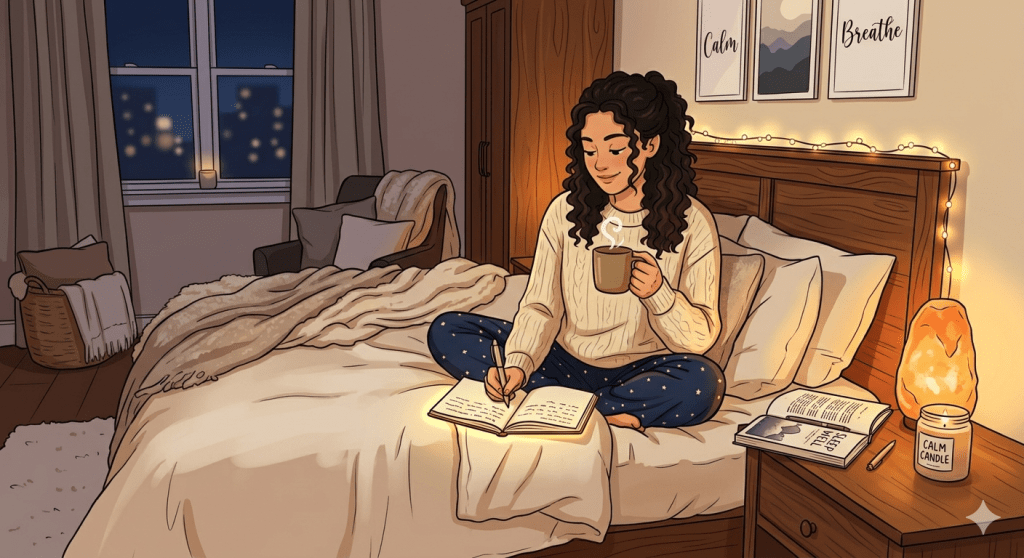
The 10-Minute Wind-Down Routine That Will Change How You Sleep

If you’re lying awake at night with your mind racing running through tomorrow’s to-do list, replaying conversations, wondering why you can’t just switch off this post is for you.

The problem isn’t that you can’t sleep. The problem is that you haven’t given your nervous system permission to stop.


Here’s a 10-minute wind-down routine that genuinely works. Not because it’s complicated. Because it’s consistent.

Minutes 1–2: Put your phone in another room not on silent. Not face down. Another room. The mere presence of your phone on your bedside table keeps your brain on low-level alert waiting, watching, ready to respond. Remove it completely and notice how the room feels different.


Minutes 3–4: Make a warm drink
Chamomile tea, warm oat milk, or simply warm water with honey. The act of making something warm and holding it in your hands is a signal to your nervous system that the day is over. You are safe. You can slow down now.


Minutes 5–7: Write a brain dump
Take a piece of paper and write down everything that’s in your head. Worries, tomorrow’s tasks, random thoughts all of it. Get it out of your mind and onto the page. Your brain holds onto unfinished thoughts to make sure you don’t forget them. Once they’re written down, it can finally let go.


Minutes 8–10: Legs up the wall
Lie on your back and rest your legs up against the wall. This gentle inversion calms the nervous system, reduces cortisol, and signals to your body that it’s time to rest. Even five minutes in this position can dramatically reduce the time it takes you to fall asleep.

That’s it. Ten minutes. The same ten minutes every night.

Consistency is what makes this work. Your nervous system loves routine. When you do the same calming sequence every evening, your body begins to anticipate sleep — and falling asleep becomes easier and easier over time.
You deserve rest, Leena 🌿


Which part of your evening routine do you find hardest to wind down from?

Tell me in the comments.

Unlocking the Secret to Effective Fat Burning: How to Increase Thermogenesis.

Thermogenesis

In the pursuit of a healthier lifestyle and a fitter body, understanding the science behind weight loss is crucial. One of the key concepts in this realm is thermogenesis, the process by which your body generates heat and energy from digesting food. By increasing thermogenesis, you can enhance your body’s ability to burn fat more efficiently. In this blog, we will explore the science behind thermogenesis and provide you with practical tips on how to increase it, thereby maximising your fat-burning potential.

Understanding Thermogenesis

Thermogenesis is the body’s natural way of producing heat. There are three primary types of thermogenesis:

Basal Metabolic Rate (BMR): The energy your body needs to maintain basic physiological functions while at rest.

Exercise-Induced Thermogenesis: The energy expenditure during physical activity.

Diet-Induced Thermogenesis (DIT): The energy used in the digestion, absorption, and processing of ingested food.

Among these, DIT is the aspect we can manipulate to increase thermogenesis and promote fat loss.

How to Increase Thermogenesis

Incorporate Metabolism-Boosting Foods:

Certain foods can rev up your metabolism and increase thermogenesis. These include spicy foods like chilli peppers, which contain capsaicin, a compound known for its thermogenic properties. Green tea and coffee also contain catching and caffeine, respectively, both of which can enhance thermogenesis.

Prioritise Protein Intake:

Protein-rich foods require more energy to digest compared to fats and carbohydrates. By increasing your protein intake, you can boost thermogenesis and promote muscle growth, which further enhances your metabolism.

Engage in Regular Exercise:

Physical activity not only burns calories during the workout but also increases your metabolism for hours afterward. Combining aerobic exercises with resistance training is particularly effective in promoting thermogenesis.

Stay Hydrated:

Drinking water is essential for many bodily functions, including metabolism. Cold water, in particular, can stimulate thermogenesis as your body works to warm the water to body temperature.

Get Sufficient Sleep:

Quality sleep is crucial for overall health, including metabolism regulation. Lack of sleep can disrupt hormones related to hunger and satiety, leading to poor food choices and reduced thermogenesis.

Manage Stress:

Chronic stress can lead to hormonal imbalances that slow down your metabolism. Incorporate stress-reducing practices such as meditation, yoga, or hobbies to keep stress levels in check.

Consider Thermogenic Supplements:

Some natural supplements, like green tea extract, caffeine, and capsaicin supplements, can aid in increasing thermogenesis. However, it’s essential to consult a healthcare professional before incorporating any supplements into your routine.

Increasing thermogenesis is a holistic process that involves a combination of dietary choices, regular exercise, and lifestyle habits. By incorporating metabolism-boosting foods, prioritising protein intake, staying hydrated, getting sufficient sleep, managing stress, and, if necessary, considering natural supplements, you can enhance your body’s ability to burn fat effectively. Remember, consistency and patience are key when it comes to achieving sustainable and healthy weight loss goals. Start implementing these strategies today, and watch your body transform as you harness the power of thermogenesis to achieve your fitness aspirations.