
Let me paint a picture.
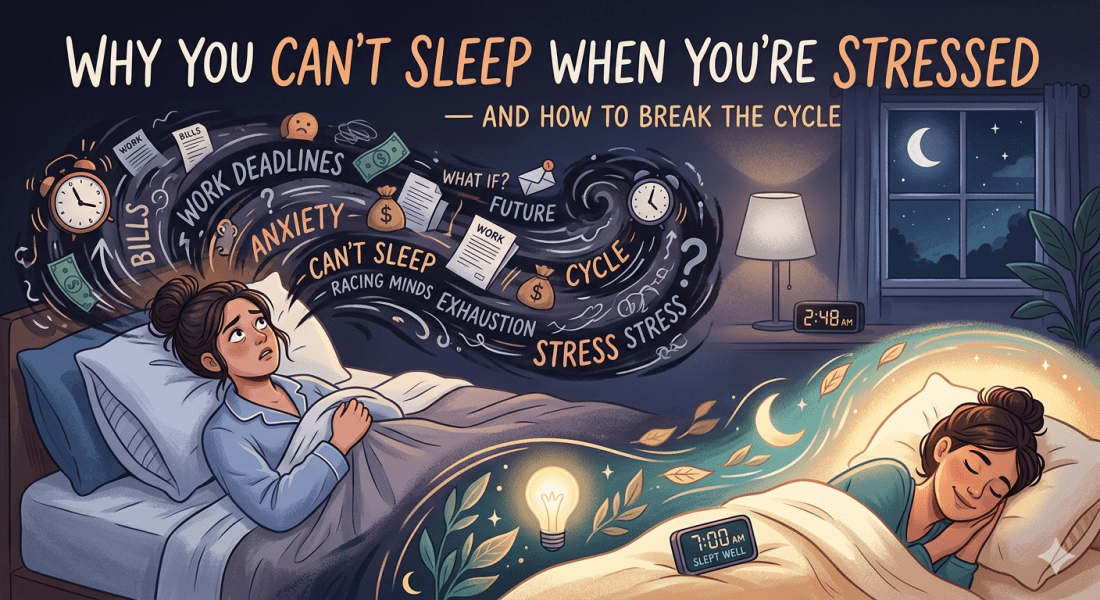
It’s 11pm. You’re exhausted. You’ve been looking forward to bed all day. And then the moment your head hits the pillow, your mind switches on. The to-do list. The conversation you keep replaying. The low hum of worry that refuses to be quiet.
Sound familiar?
You are not broken. You are not imagining it. What’s happening is a very real, very physical process inside your body and once you understand it, everything starts to make more sense.
Your Stress Response Was Never Designed for Modern Life
When your body detects stress any stress, whether it’s a physical threat or a difficult email from your manager it activates the same ancient survival response. Cortisol and adrenaline flood your system. Your heart rate rises. Your muscles tense. Your brain sharpens into high alert.
This response was designed to help you run from danger. The problem is, your nervous system cannot tell the differe nce between a lion and a looming deadline.
And the cruel irony? This is precisely the state your body goes into when you most desperately need to sleep.
What Stress Actually Does to Your Sleep
Cortisol has a natural rhythm. It’s meant to be lowest at night that’s what makes you feel sleepy — and highest just before you wake up. But when you’re stressed, your body produces more cortisol than it should, at exactly the wrong time. It delays sleep, fragments the sleep you do get, and suppresses the deep, restorative phases your brain needs to process emotions and consolidate memories.
This is why a stressful week doesn’t just make you feel tired. It makes you feel emotionally fragile, foggy, and overwhelmed too. Sleep isn’t just rest for your body. It’s medicine for your mind.
And Then It Becomes a Cycle
Here’s where it gets particularly difficult. Poor sleep doesn’t just leave you tired it makes everything harder to cope with. Small things feel enormous. Your resilience drops. Your ability to regulate your emotions becomes compromised.
And so the very stress that kept you awake last night is now harder to manage today, because you’re running on depleted sleep. Which makes tonight harder. Which makes tomorrow harder.
This is the sleep-stress cycle. And so many women I speak to are living inside it without realising it has a name or a way out.
How to Gently Break the Cycle
You cannot force sleep. But you can create the conditions that make it possible.
Stop fighting the wakefulness. When you lie awake getting frustrated that you’re not asleep, you add another layer of stress onto an already activated nervous system. Try reframing bedtime as rest time. Even simply lying still, in the dark, is giving your body something it needs.
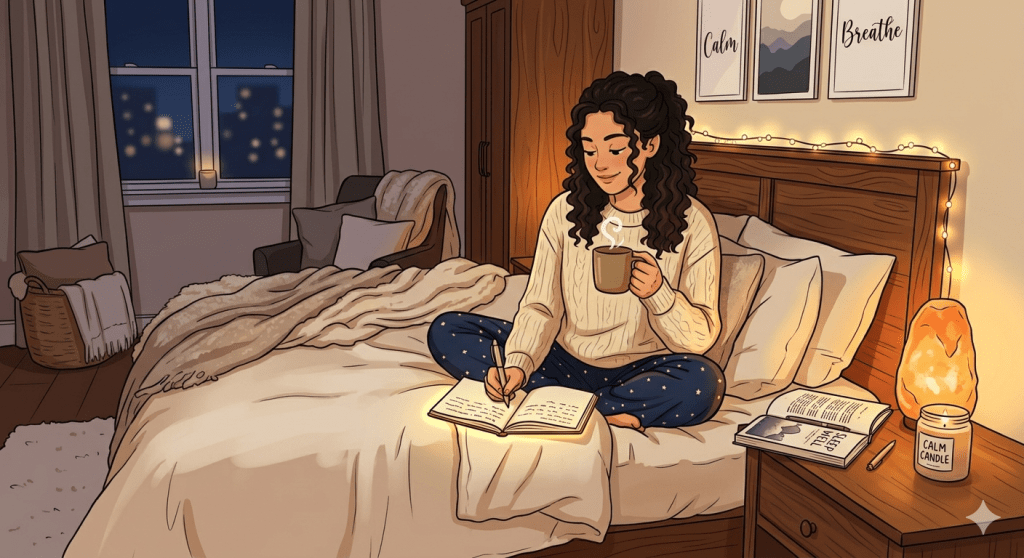
Give yourself a proper wind-down window. Your nervous system needs at least an hour to begin shifting from sympathetic (fight or flight) into parasympathetic (rest and digest) mode. Dim the lights. Step away from screens. Make something warm to drink. Signal to your body that the day is over.
Write it down before you lie down. Your brain holds onto unfinished thoughts to make sure you don’t forget them. A simple brain dump everything on your mind, onto paper gives your mind permission to let go. It doesn’t need to hold on if it’s already written.
Look at your cortisol triggers during the day. Skipping meals, too much caffeine, never taking a proper break — all of these keep cortisol elevated, which makes night-time winding down much harder. Eating regular meals with protein and fibre, moving your body gently, and building even ten minutes of genuine stillness into your day can make a real difference to how you sleep that night.
Be kind to yourself when sleep doesn’t come. Self-blame and frustration are themselves stressors. They raise cortisol. The most counterintuitive thing you can do and often the most effective is to release the pressure entirely.
When to Speak to Someone
If you’re regularly lying awake, waking repeatedly in the night, or finding that stress feels unmanageable, please don’t suffer in silence. Your GP can rule out any physical causes, and a qualified practitioner can support you in addressing the root of what’s driving the cycle.
You deserve sleep. You deserve rest. And you deserve to feel well not just surviving, but genuinely, deeply okay.
💬 I’d Love to Hear From You
Which comes first for you the stress or the sleeplessness? And which part of breaking the cycle feels hardest right now?
Drop your thoughts in the comments below. I read and reply to every single one.
With warmth,
Leena 🌿