Carbs: Whole vs. Refined – What’s the Difference?

In the world of nutrition, carbohydrates often get a bad rap. You’ve likely heard advice to cut carbs, but the truth is more nuanced: it’s about quality, not just quantity.

Understanding the difference between whole and refined carbohydrates is the secret to fueling your body without the energy crashes.

1. What Are Carbs, Anyway?
Carbohydrates are one of the three primary macronutrients (alongside protein and fat) that provide energy. When you eat carbs, your body breaks them down into glucose, the preferred fuel for your brain and muscles.
However, the speed at which that fuel enters your system depends entirely on the structure of the carb.

2. Whole Carbs: The Slow-Burn Fuel
Whole carbohydrates are minimally processed, meaning they arrive at your plate with their natural fiber and nutrients intact.

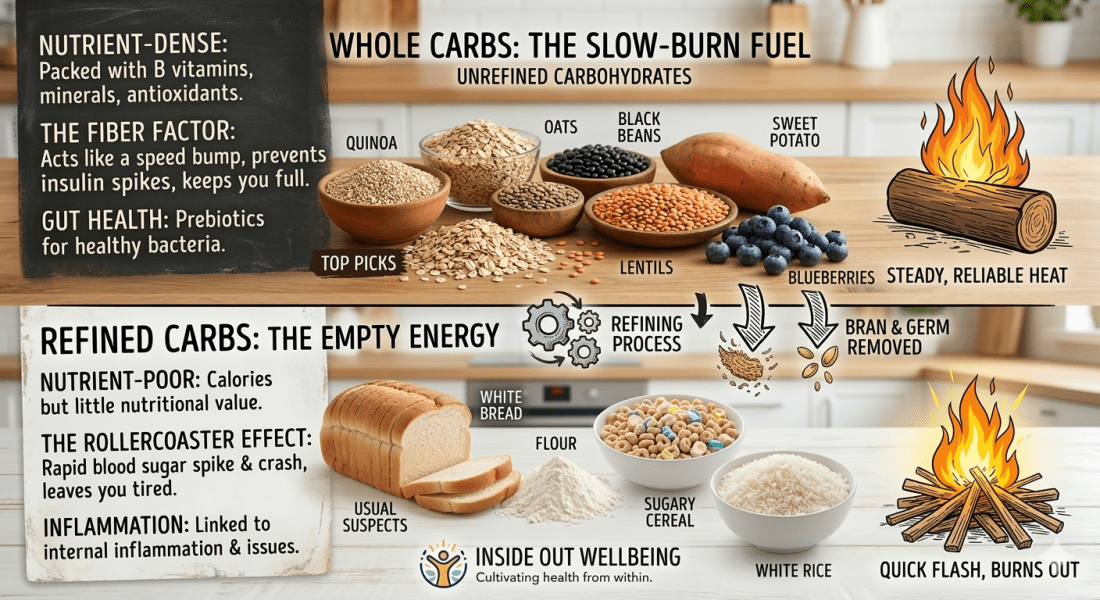
Nutrient-Dense: 
They are nature’s multivitamin, packed with B vitamins, minerals, and antioxidants.

The Fiber Factor: 
Fibre acts like a speed bump for your digestion. It slows down glucose absorption, preventing insulin spikes and keeping you satiated for hours.

Gut Health: 
The non-digestible fibers in whole carbs act as prebiotics—essentially “food” for the healthy bacteria in your microbiome.

Top Picks:
Grains: Quinoa, oats, buckwheat, and brown rice.
Legumes: Lentils, chickpeas, and black beans.
Produce: All fruits and starchy vegetables (like sweet potatoes).

Refined Carbs: The Empty Energy
Refined carbs have been milled a process that removes the bran (the fiber-rich outer layer) and the germ(the nutrient-rich core). What’s left is just the starchy endosperm.

Nutrient-Poor: Without the bran and germ, you’re left with calories but very little nutritional value.

The Rollercoaster Effect
aAs they lack fiber, these carbs hit your bloodstream almost instantly. This causes a rapid spike in blood sugar, followed by an inevitable “crash” that leaves you tired and reaching for more sugar.

Inflammation: Frequent consumption of highly refined carbs is linked to increased internal inflammation and metabolic issues.
The Usual Suspects:

White Flour Products: White bread, flour tortillas, and standard pasta.

Added Sugars: Soda, sugary cereals, and pastries.

Processed Grains: White rice and “instant snacks.

4. Easy Swaps for a Smarter Plate
Transitioning to whole carbs doesn’t require a kitchen overhaul.

For instance, replacing white rice with quinoa or farro not only introduces a pleasant, nutty texture to your meals but also increases your protein intake. You can transform your morning routine by trading sugary cereals for steel-cut oats, which provide the sustained fuel needed to keep you feeling full until lunch.

When it comes to wraps or tacos, opting for corn or whole wheat tortillas over standard flour varieties is an easy way to boost your fiber consumption. Even snack time offers an opportunity for a nutritional upgrade; swapping potato chips for air-popped popcorn gives you a satisfying, whole-grain crunch with much more volume and fewer empty calories.

Final thoughs
Think of Whole Carbs as a slow-burning log on a campfire providing steady, reliable heat. Think of Refined Carbs as kindling a bright flash of energy that burns out quickly.
By choosing whole more often, you aren’t just eating; you’re investing in steady energy, better digestion, and long-term health.
Next time you shop, look for “100% Whole Grain” on the label—your body will thank you!
7 Proven Health Benefits of Dark Chocolate

Chocolate, particularly dark chocolate, has long been enjoyed by many as a delicious treat. However, beyond its delectable taste, dark chocolate also offers a plethora of health benefits that may surprise you. Packed with antioxidants, vitamins, and minerals, indulging in moderate amounts of high-quality dark chocolate can contribute to improved well-being. In this blog post, we will explore seven proven health benefits of dark chocolate, backed by scientific research.

Rich in Antioxidants

Dark chocolate is a powerhouse of antioxidants, such as flavonoids and polyphenols. These compounds help combat free radicals in the body, which are responsible for oxidative stress and damage to cells. The higher cocoa content in dark chocolate makes it particularly potent in delivering these protective antioxidants, making it an excellent choice for promoting overall health.

Heart Health

Numerous studies have suggested that consuming dark chocolate in moderation can be beneficial for heart health. Flavonoids in dark chocolate have been shown to improve blood flow, reduce blood pressure, and enhance the function of blood vessels. Regular consumption of dark chocolate may help lower the risk of heart disease by decreasing LDL cholesterol levels and increasing HDL cholesterol levels.

Mood Booster

It’s no coincidence that chocolate is often associated with feelings of joy and happiness. Dark chocolate contains several compounds that can positively impact mood and reduce stress. One of these compounds is phenylethylamine, which triggers the release of endorphins, the “feel-good” hormones. Additionally, dark chocolate contains a small amount of caffeine and theobromine, which can enhance alertness and mental clarity.

Brain Health

The flavonoids in dark chocolate can have beneficial effects on brain health and cognitive function. Research suggests that regular consumption of dark chocolate may improve memory, attention, and problem-solving skills. Moreover, the antioxidants present in dark chocolate can help protect brain cells from damage, potentially reducing the risk of neurodegenerative diseases.

Skin Protection

The antioxidants in dark chocolate can also benefit your skin. They help protect the skin from UV damage caused by sun exposure, reduce inflammation, and promote better skin hydration. The improved blood flow resulting from dark chocolate consumption can contribute to a healthy, radiant complexion.

Weight Management

Contrary to what some might think, moderate consumption of dark chocolate can be beneficial for weight management. The satisfying taste and richness of dark chocolate can help curb cravings and prevent overeating. Additionally, the presence of stearic acid in cocoa butter has been linked to a slower digestion process, leading to increased feelings of fullness and reduced appetite.

Blood Sugar Regulation

Dark chocolate has a lower glycemic index compared to milk chocolate or sugary treats, which means it causes a slower and more controlled rise in blood sugar levels. This characteristic can be especially advantageous for individuals with diabetes or those aiming to maintain stable blood sugar levels.

As with any indulgence, moderation is key when enjoying the health benefits of dark chocolate. Opt for high-quality dark chocolate with at least 70% cocoa content to ensure maximum health benefits. Including dark chocolate as part of a balanced diet, rich in fruits, vegetables, and other whole foods, can contribute to a healthier and happier lifestyle.

Remember that while dark chocolate offers numerous health advantages, it is not a substitute for a healthy lifestyle. Regular exercise, adequate sleep, and stress management are equally important components of overall well-being. So go ahead and savour a piece of dark chocolate guilt-free, knowing that you’re treating yourself to not only a delightful experience but also some incredible health benefits!